 Skip to content

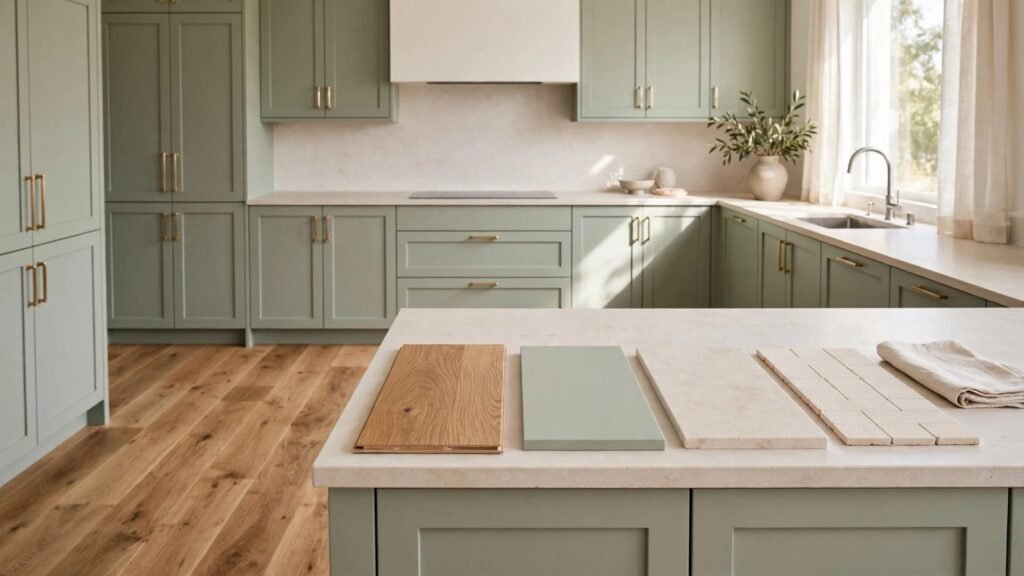
A cabinet finish can look right on its own and feel wrong beside the floor. When you’re choosing kitchen cabinets and wood flooring, compare their undertones, contrast, and grain in the room, not just in a showroom.
The finishes don’t need to match exactly. A more natural pairing gives each surface its own character while creating a shared color story. Start with undertones, then test the actual samples in your kitchen’s light.
Key Takeaways
- Compare warm, cool, or neutral undertones before settling on a cabinet color.
- Create definition with contrast instead of trying to duplicate the floor’s shade.
- Treat grain direction and color consistency as separate design choices.
- View full-size samples beside the countertop and backsplash in daylight and evening light.
- Consider water exposure and installation order as part of the flooring decision.
Read the Undertones Before Comparing Colors
Two finishes can both look beige or brown and still clash. One may lean golden, while the other reads gray or pink. These subtle differences matter when the cabinet run and flooring cover large areas of the kitchen.
Compare each finish against fixed surfaces
Place a cabinet-door sample beside the floor sample, countertop, backsplash, and wall color. Look at the whole group rather than judging each finish in isolation. A warm floor, for example, can make a cooler cabinet finish seem more pronounced.
Consider the colors in nearby rooms, too. In an open-plan home, the cabinets and floor sit within view of living-area furnishings and finishes. They should make sense with that palette, even if they aren’t identical to it.
Wood names alone won’t predict the finished color. Each species and stain has its own undertone, so compare the actual door finish with the floor and countertop. Our guide to choosing cabinet colors to complement flooring covers why the finished sample matters more than a small printed image.
Look for a shared temperature
A useful starting point is to decide whether the room’s fixed finishes feel warm, cool, or neutral. Then choose cabinets that support that direction, or add a deliberate contrast that still feels balanced. A neutral cabinet color can help bridge finishes with different undertones.
Don’t expect every wood surface to have the same color. Instead, look for a relationship that feels intentional. Similar warmth, a shared muted quality, or one clear contrasting element can connect the palette.
Use Contrast to Give Each Finish Definition
If cabinets and floors are nearly the same shade, their edges can disappear. That may be a subtle look, but it can also make the room feel flat. Contrast helps the cabinetry stand out and gives the floor a distinct role.
Choose which surface should lead
When the floor has bold grain or noticeable color shifts, quieter cabinets can keep the room from feeling visually busy. Painted cabinetry or a restrained wood pattern can balance a more active floor. Conversely, if the floor is light and understated, wood cabinets can add warmth and texture.
A two-tone cabinet layout offers another way to control contrast. For example, a wood island can anchor the room while painted perimeter cabinets keep the larger cabinet area visually lighter. The contrast should have a purpose, such as distinguishing the island or adding depth to a long cabinet wall.
Keep strong contrast in proportion
Dark cabinets against a pale floor, or pale cabinets against a dark floor, can create a clear focal point. However, the result depends on how much of each color appears and how much light the kitchen receives. A dark island may feel balanced with light perimeter cabinets, while dark cabinetry across every wall can carry more visual weight.
Look at the kitchen from the entry and from connected rooms. If one surface draws attention immediately, keep other large finishes calmer. Our kitchen cabinet color ideas for Fort Myers homes include ways to use wood tones and deeper accent colors without letting them dominate the room.
Coordinate Wood Tones Without Copying the Floor
Wood cabinets and wood flooring can work together even when they come from different species or have different stains. In fact, exact matching is difficult to maintain across separate products. The goal is a considered combination, not a single uninterrupted wood color.
Compare tone, depth, and variation
Look at three qualities together: how light or dark each finish appears, how warm or cool it feels, and how much variation it shows. A pale, quiet cabinet finish may sit comfortably beside a deeper floor with visible grain. Two finishes with similar depth can also work if their undertones relate.
When comparing wood species, examine finished doors rather than relying on the species name. Maple and cherry, for instance, have distinct color and grain characteristics. Our maple and cherry wood cabinet comparison discusses why the room’s light and your preference for natural variation matter alongside color.
Avoid repeating the same pattern everywhere
If both surfaces have strong, active grain, the eye may not find a place to rest. Balance a prominent floor pattern with a simpler cabinet finish, or use wood cabinetry selectively on an island while keeping the perimeter painted.
A more coordinated look can come from shared warmth rather than identical stain. Repeat a related tone in a smaller element, such as wood stools or open shelving, instead of trying to make the floor and cabinet doors appear to be one matched set.
Decide How Much Cabinet Grain You Want to See
Grain affects the mood of a kitchen. A fine, restrained pattern can feel calm across a large cabinet run, while a more pronounced pattern adds movement. The floor’s grain should inform how much visual activity you add above it.
Separate grain matching from color matching
Grain matching is about the direction and shape of the pattern across doors or panels. Color matching is about the tones of those neighboring pieces. Aligned grain doesn’t guarantee identical color, because even pieces of the same species can take stain differently.
Natural variation can still look balanced. Before choosing a wood finish, ask how the pattern and color range will appear across the full cabinet layout. A small sample won’t show whether the kitchen’s broad surfaces feel calm or busy.
Match grain where it matters most
Large, uninterrupted areas draw the eye first. An island end panel, a long row of slab doors, or a tall pantry wall may benefit from a more planned grain arrangement. Smaller doors may need less coordination, particularly when the floor already provides strong pattern.
Sequence matching carries grain across neighboring doors, while bookmatching mirrors two veneer leaves. These are distinct visual effects, and availability depends on the cabinet brand, wood species, and door construction. See cabinet door grain matching options for examples of where different arrangements can work.
Test Samples in Your Kitchen’s Lighting
Light can change how a finish looks from one part of the day to another. A cabinet sample near a window may appear different from one under the ceiling fixtures, and a showroom’s lighting won’t reproduce your kitchen conditions.
Use actual materials, not small color chips
Bring home cabinet-door and flooring samples when possible. Place them beside the countertop and backsplash, and view the group in the positions where the finishes will meet. A full-size door shows more of the grain, sheen, and color variation than a small swatch.
If you’re replacing only some doors, compare the new sample directly with the existing cabinetry. Check it in daylight and again under the lights you use in the evening. Older wood may not look exactly like a new finish, so assess whether the difference feels acceptable across the room.
Check the whole palette at different times
Look at samples in morning, afternoon, and evening light. Turn on the kitchen fixtures for the evening comparison, and include under-cabinet lighting if it’s part of the plan. Notice whether the combination still feels balanced when the room shifts from natural light to artificial light.
Keep the countertop and backsplash in the sample group. A cabinet-and-floor pairing that looks appealing by itself may compete with a strongly patterned counter or tile. Reviewing the whole palette helps reveal that before you commit.
Account for Flooring Use and Installation Order
Appearance is only part of choosing a floor. Kitchens see regular activity around sinks and dishwashers, so the flooring material and the way it meets the cabinetry deserve attention.
Luxury vinyl plank is practical and comfortable underfoot. Engineered wood can also work, but it needs more care near sinks and dishwashers. The right choice depends on the kitchen and the finish you want, not color alone.
Installation order also affects the finished edges. A floor edge that tucks neatly to the cabinets can be easier to clean, with fewer seams where grit and moisture can collect. For kitchens expected to keep the same layout, cabinets first often make sense. A possible future layout change or a flooring system that needs uninterrupted movement may call for another sequence. Read more about whether to install cabinets or flooring first.
Make the Combination Feel Cohesive
A cohesive kitchen doesn’t require the floor, cabinets, and counters to share one color. Instead, give each finish a role. The floor can supply warmth, the cabinets can add contrast, and the countertop can connect the two.
Repeat a related tone in a smaller detail, such as hardware, a backsplash, or furnishings. Keep the strongest pattern to one or two large surfaces, especially in a compact kitchen. If the cabinetry is wood, a quieter counter can let its grain show. If the floor is visually active, simpler cabinet fronts may create a calmer balance.
This is where the wider cabinet design matters. Door style, grain direction, cabinet layout, and the amount of exposed wood all affect how the finishes read together. A 2-D or 3-D design can help you compare the cabinet arrangement with the room’s existing surfaces before settling on a finish. Our cabinet design consultation is available to homeowners planning cabinetry in Fort Myers and Southwest Florida.
Frequently Asked Questions
Should kitchen cabinets match wood floors?
No exact match is needed. A shared undertone or a considered contrast can connect the finishes while allowing each one to remain distinct. Compare the actual samples together to see how their color depth and grain interact.
Can wood cabinets go with wood flooring?
Yes. Start by comparing warmth, lightness, and grain activity. When both surfaces have pronounced patterns, choose a quieter cabinet finish or limit wood cabinetry to a focal area such as the island.
How should I test cabinet and floor samples?
Set the samples beside the countertop, backsplash, and wall color. View them in different parts of the kitchen and at several times of day, including under the evening fixtures. Use a full-size cabinet door when possible, since a small chip can’t show the whole grain pattern.
Choose a Pairing That Works Across the Room
The strongest cabinet and floor combinations share a clear relationship without repeating the same finish everywhere. Start with undertones, decide where contrast belongs, then consider how much grain the room can support.
Before ordering, view the real samples together in your kitchen’s lighting. That simple comparison can reveal whether the finishes feel connected and whether the design will still look balanced across the full room.
