
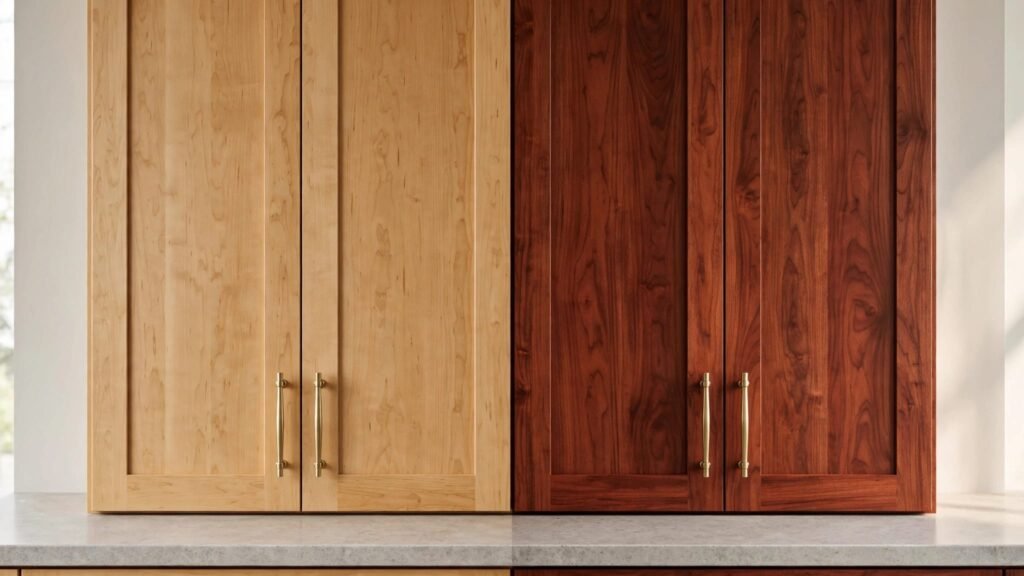
Two cabinet doors can look similar in a showroom and feel completely different beside your kitchen windows. When you’re comparing maple vs cherry cabinets, the finished samples matter more than the wood names alone.
Wood selection, finish, construction, and daily use all affect appearance and maintenance. The right choice starts with the complete cabinet, then narrows to the color and grain you want to live with.
Begin by comparing both options under the conditions they’ll face in your home.
Key Takeaways
- Compare finished maple and cherry doors from the cabinet line you’re considering, rather than relying on photographs.
- Evaluate grain direction separately from color consistency, especially across islands and tall cabinets.
- Cleaning requirements depend on the coating, so request written care instructions before ordering.
- In Southwest Florida, sealed edges, ventilation, and protection around moisture sources deserve as much attention as appearance.
Compare Maple vs Cherry Cabinets in Your Own Light
A species name doesn’t tell you the finished color. Wood selection, stain, paint, and the protective coating all influence the result.
For a useful comparison, request samples with the same door style and similar sheen. Otherwise, a glossy surface or different profile can distract you from the color.
Judge the finished tone beside permanent surfaces
Place each door beside your countertop, backsplash, flooring, and wall color. Look at whether the combination feels warm, cool, or visually busy.
White counters can make wood tones appear stronger. Meanwhile, warm flooring may bring out undertones you missed in the showroom.
Evaluate the entire palette rather than seeking an exact match between every surface. Cabinets and flooring can coordinate without sharing the same color.
Check daylight and evening lighting
Review samples in morning, afternoon, and evening light. Then turn on the fixtures you’ll use while cooking.
Pay extra attention to cabinets beside windows. Strong light can change how a finish looks immediately, while prolonged exposure may affect wood or coating over time.
Ask the supplier about color-change expectations for the exact product. For replacement doors, compare the new sample directly against the existing cabinetry before approving it.
Compare Grain Across Doors, Drawers, and Panels
Grain affects how calm or active a kitchen feels. However, a small sample can’t show how the pattern will look across an entire cabinet wall.
Request information about the wood selection, veneer arrangement, and acceptable variation. These details give you a clearer comparison than a species label.
Separate grain matching from color matching
Grain matching concerns the direction and shape of the wood pattern. Color matching concerns the tone across adjoining components.
Even wood from the same species can accept stain differently. Therefore, aligned grain doesn’t guarantee identical color.
A continuous grain pattern can still contain color variation. Approve both the pattern arrangement and the acceptable color range.
Decide where consistency matters most. An island face or tall pantry wall attracts more attention than a small upper cabinet.
Let door construction guide the comparison
Slab doors provide broad surfaces where grain continuity is easy to see. Veneer leaves can follow a planned sequence, depending on the manufacturer’s options.
Framed doors divide the face into rails, stiles, and a center panel. Those separate pieces limit the possibility of an uninterrupted pattern.
Ask whether the quoted design includes standard placement, sequence matching, or bookmatching. Bookmatching places neighboring veneer leaves in a mirrored arrangement, creating a more deliberate feature.
Confirm grain direction on drawer fronts, end panels, and appliance panels before ordering.
How Clear, Stained, and Painted Finishes Change the Choice
Finish selection can narrow your maple-versus-cherry decision before you compare individual doors. It determines how much wood character remains visible and how consistent the surface appears.
These finish categories create different comparison priorities.
| Finish | What you see | What to check |
|---|---|---|
| Clear finish | Natural wood color and grain | Variation across several components |
| Stained finish | Wood grain with an adjusted tone | Evenness, undertones, and topcoat |
| Painted finish | An opaque color over the door material | Surface preparation, joints, and edge coverage |
Choose the finish category first, then compare the actual products within it.
Clear and stained finishes reveal variation
Stain doesn’t erase mineral streaks, differences between boards, or uneven absorption. A showroom door may show only part of the variation your order allows.
Ask to see additional doors or a manufacturer-approved range sample. Also remember that the protective topcoat, rather than stain alone, handles surface protection.
Painted finishes shift attention to construction
With opaque paint, visible wood grain becomes a smaller part of the decision. Door construction, preparation, and coating quality deserve closer review.
Seasonal wood movement can show at painted joints. Ask how the manufacturer addresses this and what the warranty covers.
Comparing painted and stained cabinet finishes can help you settle the finish direction before choosing the species.
Care Depends on the Coating and How You Use the Kitchen
Neither a wood name nor a finish color tells you which cleaner is safe. Two similar-looking cabinet doors can have different maintenance requirements.
Request written instructions for the exact cabinet line and finish. Those instructions should explain approved cleaners, drying requirements, and touch-up methods.
Keep everyday cleaning gentle
Use the manufacturer’s routine rather than a general furniture-care recipe. A soft cloth is a sensible starting point, but even mild soap should match the supplier’s guidance.
A practical cleaning sequence is:
- Remove loose dust with a clean, soft cloth.
- Apply an approved cleaner to the cloth rather than spraying the cabinet directly.
- Wipe gently, then dry the surface as directed.
Avoid abrasive pads and repeated scrubbing. A patch that looks shinier may have altered sheen rather than remaining grease.
Vinegar, bleach, ammonia, oil products, and furniture polish aren’t universal cabinet cleaners. Wax or silicone buildup can also complicate later repairs.
Inspect high-touch and splash-prone areas
Handles, lower corners, sink bases, and dishwasher-adjacent panels face frequent contact and moisture. Check that sample edges and corners have complete, even coverage.
Detailed profiles collect more residue than simpler faces, so door style also affects cleaning time.
Dark finishes may reveal dust, while light finishes can make cooking residue easier to spot. Sheen influences fingerprint visibility too.
Review easy-care cabinet finish options alongside the manufacturer’s care sheet rather than choosing by color alone.
Southwest Florida Adds Humidity and Sun to the Decision
Fort Myers kitchens need cabinetry suited to indoor humidity, cooking steam, and strong daylight. Wood responds to changes in moisture, so construction and installation matter alongside the finish.
Run the range hood during cooking and wipe standing water promptly. In bathrooms, use ventilation and keep wet towels away from vanity doors.
Ask how sink-side edges, dishwasher openings, and exposed cabinet ends receive protection. A finished face can’t compensate for water reaching an unprotected edge or damaged joint.
The guide to humidity-resistant cabinet construction explains why the complete assembly deserves attention.
Also ask about direct-sun care requirements. For a lanai or outdoor kitchen, specify an outdoor-rated system; interior cabinetry isn’t automatically suitable for rain or constant exposure.
Compare Complete Quotes, Not Just Wood Upcharges
A fair price comparison requires matching specifications. Changing the door style, finish, storage accessories, or construction at the same time makes the species cost difficult to isolate.
Ask for maple and cherry quotes using the same layout, cabinet dimensions, hardware, and installation scope. Then request separate pricing for finish upgrades and any matching services.
This makes it easier to see where your budget goes.
Confirm what the species label covers
“Maple cabinets” or “cherry cabinets” may describe doors and face frames rather than every cabinet component. Boxes, shelves, drawer parts, and exposed panels can use different materials.
Request a specification sheet identifying solid wood, veneer, and engineered components. Also confirm how visible ends coordinate with the fronts.
Compare availability and future repairs
TEC Cabinetry Plus carries brands including KraftMaid, Fieldstone Cabinetry, and Decora. Available species, finishes, and matching services depend on the selected line.
Ask about lead times, touch-up kits, replacement-door ordering, and warranty terms. A lower initial price may be less appealing if the finish you want requires additional upgrades.
Use Samples to Make the Final Choice
Bring home a manageable selection, ideally no more than four or five samples at once. Too many similar tones make differences harder to judge.
For a maple vs cherry cabinets comparison, use full-size doors when possible. They reveal proportions, joinery, grain placement, and edge treatment that small chips leave out.
Hold your planned hardware against each door. Then inspect the front, side, and back for rough areas, incomplete coating, or gaps.
A practical cabinet design considers storage and daily traffic alongside appearance. Make sure your preferred finish works around the sink, cooking area, and heavily used drawers.
Follow the cabinet door sample evaluation guide to compare materials and finishes consistently.
Before approving the order, document the selected door, finish, sheen, exposed-panel treatment, and any grain-matching request. These details should appear in the written specifications.
Frequently Asked Questions
Is maple or cherry easier to maintain?
Compare the finished products rather than assigning maintenance requirements by species alone. Coating quality, door profile, moisture exposure, and household use affect the cleaning routine.
Ask each supplier for written instructions. Similar colors don’t guarantee similar cleaner compatibility or repair methods.
Can new doors match existing wood cabinets?
A close match requires comparing new samples against the installed cabinets. Existing wood and finishes may have changed with age, light, and use.
Check the proposed replacement in daylight and evening lighting. Also confirm the door profile, sheen, grain direction, and panel construction.
Does grain matching make every door identical?
Grain matching organizes the pattern, but natural variation can remain. It also doesn’t guarantee uniform stain absorption.
Review the manufacturer’s matching options and acceptable variation before ordering, especially for large, uninterrupted surfaces.
Choose the Finished Cabinet You Want to Live With
The strongest maple-versus-cherry decision comes from comparing real doors, complete specifications, and the care each finish requires. Color and grain deserve attention, but construction determines how those surfaces handle everyday use.
Choose the combination that suits your room’s light and your tolerance for variation. A well-reviewed sample and clear written specifications provide a more dependable starting point than the wood name alone.