 Skip to content
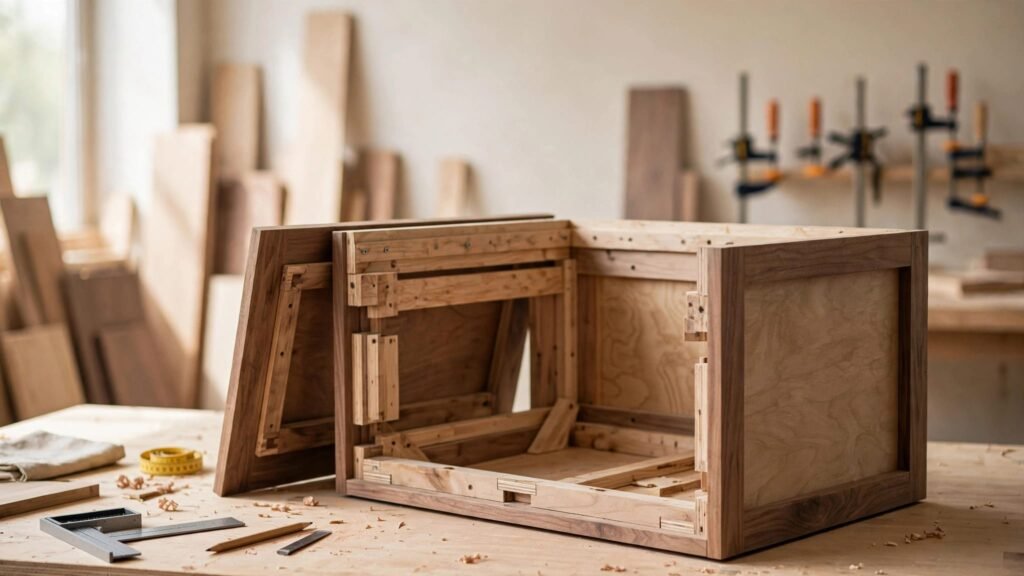
A cabinet’s doors may catch your eye first, but the parts you cannot see often determine how well it performs over time. Cabinet back panel construction affects mounting strength, box stability, and how the cabinet responds to everyday use.
Before you compare door styles or paint colors, ask what sits behind the cabinet box. A clear answer helps you judge value beyond the showroom display.
The back panel deserves the same attention as every other part of your cabinet order.
Know What the Back Panel Is, and What It Isn’t
The back panel is the flat material at the rear of a cabinet box. In a wall cabinet, it sits against the wall. In a base cabinet, it is usually hidden behind the cabinet and may help keep the box square.
It is different from the cabinet box sides, top, bottom, and shelves. Those parts form the basic structure around drawers and doors. It is also different from the finished cabinet exterior, such as a decorative end panel or a finished toe kick.
The back panel has practical jobs
A well-planned back can help a cabinet resist racking, which is the side-to-side shift that pulls a box out of square. It also provides a surface or rail area for installers to fasten wall cabinets to studs.
However, the back alone does not determine cabinet quality. Joinery, material thickness, shelf support, hardware, and installation all matter. A thin panel in a well-designed system may perform differently than the same panel loosely nailed to a basic box.
For a broader view of the details that separate stronger products from shortcuts, review these quality cabinet construction checks.
Finished exterior panels are a separate choice
A decorative end panel covers a visible cabinet side. It helps an island, appliance run, or cabinet end look complete, but it does not replace the rear panel inside the cabinet structure.
This distinction prevents a common ordering mistake. A quote may include beautiful panels and door fronts while offering little detail about the box behind them. Consider decorative cabinet end panels as part of the visible finish plan, then evaluate the cabinet back on its own terms.
Compare Cabinet Back Panel Construction Details
Ask for the actual back-panel thickness in writing. Terms like “durable backing” or “reinforced construction” sound reassuring, yet they do not tell you what material the cabinet uses or how the panel connects to the box.
Common thicknesses range from about 1/4 inch to 1/2 inch or more, depending on the cabinet line and component. A thicker panel can offer more material for fastening and stiffness. Still, thickness means little without knowing the panel material and attachment method.
Look at the panel material
Plywood backs contain layered wood veneers. Quality plywood often holds screws well and handles normal household moisture better than many lower-density alternatives. It can be a sensible choice near kitchen sinks, dishwashers, or bathroom plumbing.
MDF creates a smooth, consistent surface and is common in many cabinet components. Yet it can swell after prolonged water exposure, especially when edges are not sealed. Hardboard and thin fiberboard backs may appear in value-focused cabinet lines. They can work in limited roles, but buyers should review how the manufacturer supports and mounts the cabinet.
Particleboard needs the closest scrutiny in damp areas. A small leak can damage exposed edges and weaken fastener holding over time.
Read past phrases like “all wood”
“All wood” may describe cabinet doors, face frames, or drawer boxes, rather than the back panel. Similarly, “plywood construction” might refer only to the cabinet sides.
Request a specification sheet that identifies each box component. For homes in Southwest Florida, material choices around wet zones matter even more. This comparison of plywood versus MDF cabinet boxes can help place the back panel within the larger cabinet box decision.
How the Back Panel Connects to the Box
A back panel performs best when the cabinet maker treats it as part of the assembly, rather than a cover attached after the box is built. The construction method affects both rigidity and the available surface for installation screws.
Cabinet makers use several methods. The names vary, so ask for a drawing or sample cabinet if the wording feels unclear.
Captured or dadoed backs offer stronger integration
In a captured back, the panel fits into grooves or dadoes cut into the cabinet sides, top, and bottom. This approach gives the panel mechanical support along its edges. It can help the box stay square because the back is held within the cabinet structure.
A full-thickness inset back can also create a more substantial fastening area for wall cabinets. The exact benefit depends on the cabinet’s rails, joinery, and installation instructions.
Some frameless cabinets use thicker backs as part of their engineered box system. Framed cabinets may rely on a combination of a back panel and separate hanging rails. Neither style is automatically better. Compare the full assembly rather than one feature in isolation.
Applied backs deserve closer questions
An applied back attaches to the outside rear edges of the cabinet box. Manufacturers may use staples, nails, screws, glue, or a mix of fasteners.
A securely fastened applied back can be appropriate for certain cabinet designs. Yet a thin panel held mainly by a few staples deserves a closer look, particularly on wide wall cabinets or units that will carry heavy dishes.
A cabinet’s mounting method matters as much as its back-panel thickness. Ask where installers place screws and what supports that fastening area.
Ask whether the specified back is structural, decorative, or mainly a dust cover. The answer should be plain and consistent with the manufacturer’s installation guide.
Match the Construction to the Cabinet’s Location
Cabinet back panel construction should fit the cabinet’s job. A small wall cabinet for glassware has different demands than a wide pantry cabinet or a vanity near a shower.
Start with the room, the expected load, and the chance of moisture exposure. Then compare the cabinet line’s documented construction details.
Wall cabinets need secure mounting support
Wall cabinets carry dishes, cookware, food, and glassware above eye level. They must attach to properly located wall studs with the fasteners and methods the manufacturer specifies.
Ask whether the cabinet has an integrated hanging rail, a full back suitable for fastening, or both. Also ask if the design requires screws through designated rails rather than through the field of the back panel.
Do not assume a thicker back makes poor installation safe. A qualified installer must locate studs, use appropriate fasteners, keep cabinets level, and follow the manufacturer’s instructions.
Bathrooms and wet kitchen zones need protected edges
A vanity can face splashes, humid air, plumbing leaks, and wet floor cleanup. Sink bases and cabinets beside dishwashers face similar risks. Sealed edges and stable box materials matter in those areas.
Look behind the display cabinet if possible. Check for raw, absorbent edges at the back, bottom, and plumbing cutouts. A finished cabinet interior may look polished, yet concealed unfinished edges can still admit moisture.
For Florida homes, cabinets in humid rooms benefit from material choices that suit local conditions. Review humidity-resistant cabinet materials alongside the manufacturer’s warranty terms.
Warning Signs in Cabinet Specifications and Quotes
A detailed quote should make comparison easier. If a supplier cannot explain the back panel, material, thickness, and fastening method, you cannot fairly compare that cabinet with another line.
Marketing terms are not construction details. Press for measurements, drawings, and written product information before you place an order.
Phrases that need clarification
Watch for these statements in brochures, estimates, and online listings:
- “Engineered wood back” without a named material, panel thickness, or moisture protection details.
- “Reinforced back” without an explanation of whether the reinforcement is a rail, a thicker panel, or extra fasteners.
- “All-plywood box” when the specifications do not list the material used for the back, bottom, and shelves.
- “Stapled construction” without information about glue, grooves, screws, or the cabinet’s intended mounting method.
- “Assembly required” without a clear description of who squares, glues, and secures the cabinet box.
A lower price may reflect simpler materials or assembly. That can be a reasonable trade-off for a low-use room or a tight budget. The issue is not choosing the least expensive option. The issue is ordering without knowing what you are receiving.
Questions to ask every supplier
Bring these questions to a design appointment or include them in an email:
- What is the back-panel material and exact thickness for wall, base, and tall cabinets?
- Does the back sit in grooves, or does it attach to the outside of the box?
- Where do installers place mounting screws on wall cabinets?
- Does the cabinet include hanging rails, and what material are they?
- Are the panel edges sealed, especially near sinks, dishwashers, and bathroom plumbing?
- Can I see a cutaway sample, specification sheet, or installation document for this cabinet line?
- Does the warranty mention moisture damage, cabinet-box failure, or installation requirements?
Written answers make it easier to compare cabinet lines fairly. They also give your designer and installer a shared reference before cabinets arrive.
Compare Options With the Whole Cabinet in View
Avoid choosing a cabinet solely because it has the thickest listed back panel. A well-built box combines suitable materials, sturdy joinery, reliable hardware, and a mounting system designed for the cabinet’s weight.
Use the table as a starting point when reviewing construction details.
| Construction detail | What to confirm | Why it affects your order |
|---|---|---|
| Back-panel thickness | The actual measurement for each cabinet type | Thickness can affect stiffness and fastening support |
| Panel material | Plywood, MDF, hardboard, particleboard, or another named material | Materials differ in screw holding and moisture response |
| Connection method | Grooved, dadoed, screwed, glued, stapled, or a combination | The attachment affects how the box stays square |
| Mounting area | Hanging rails, full back, and installer instructions | Wall cabinets need a defined path to wall studs |
| Edge treatment | Sealed, finished, or raw edges | Protection matters near water and humidity |
A cabinet with a thinner captured plywood back and strong hanging rails may be a better fit than a thicker, loosely attached fiberboard back. Conversely, a thicker engineered back may suit a manufacturer whose entire box system is designed around it.
Your cabinet design should also account for access behind cabinets, plumbing locations, appliance clearances, and any need for on-site modification. Discuss those conditions before final measurements, not after delivery.
Final Thoughts
The right cabinet back panel construction is the one that fits the cabinet’s location, load, material package, and installation method. Clear specifications let you compare real construction instead of relying on broad sales language.
Look beyond doors and finish samples before signing the order. When you know how the back connects to the box and attaches to the wall, you can select cabinetry with greater confidence.
