
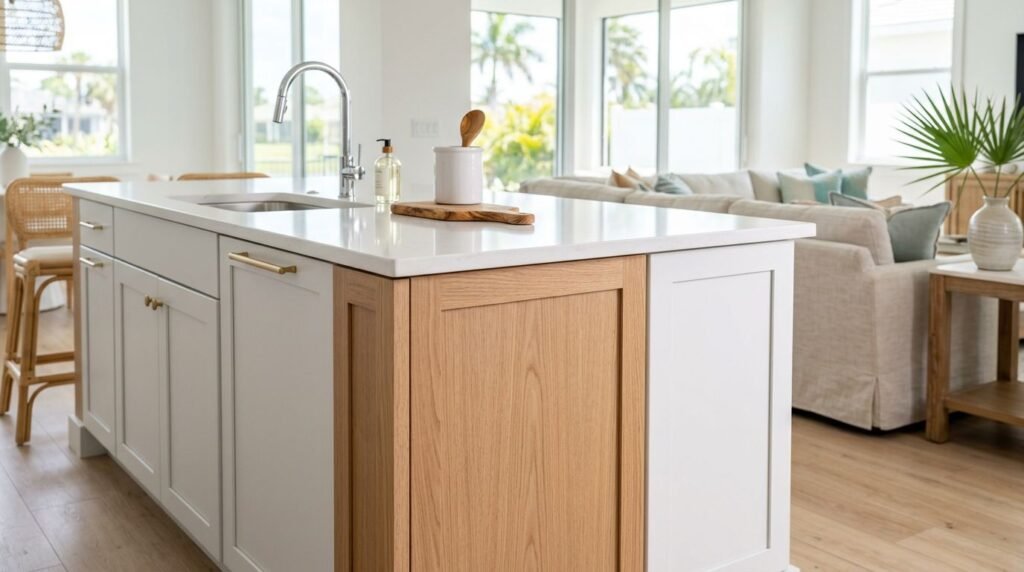
A cabinet side can weaken an otherwise polished kitchen in seconds. In Fort Myers homes, where kitchens often open to living and dining areas, those exposed ends stand out fast. Decorative end panels solve that problem with a cleaner, more finished look, and they help a kitchen feel intentional.
They also matter more in Southwest Florida than many homeowners expect. Humidity, bright light, and coastal-style interiors all affect how cabinet design reads in a room. The right panel can make the whole kitchen feel custom without making cleaning harder.
Why decorative end panels matter in open Fort Myers kitchens
Open layouts leave very little to hide. If an island end, peninsula side, or cabinet run faces a main room, the cabinet side becomes part of the view. A plain finished box can work, but it often looks incomplete next to detailed doors, stone counters, and trim.
That is where decorative end panels earn their place. They give the side of a cabinet the same visual weight as the front. In other words, the kitchen stops looking like a line of boxes and starts looking like one connected design.
Fort Myers homeowners also tend to favor kitchens that feel bright, relaxed, and easy to live with. A panel that matches the door style keeps that look clean. If the side gets noticed from the family room or breakfast nook, it should support the rest of the room instead of disappearing into it.
If a side is visible every day, treat it like part of the front.
Resale matters too. Buyers often notice the island, the sink wall, and any cabinet side they can see from across the room. A finished end gives the kitchen a more complete feel, and that can help the space present better during a showing. For style ideas, a gallery of finished kitchen projects is a helpful place to compare how small details change the whole room.
The decorative end panel styles that fit most kitchens
The best option depends on the look you want and how much attention the side needs to carry. This quick comparison shows where each style usually works best.
| Style | Look | Works best when | Watch for |
|---|---|---|---|
| Shaker | Clean, simple, and balanced | You want a coastal or transitional kitchen | It can feel plain in a very formal room |
| Raised panel | Traditional with more depth | Your cabinets already lean classic | It can look busy in a small kitchen |
| Flat panel | Smooth and modern | You want an easy-to-clean, simple finish | It may feel too plain for ornate cabinets |
| Beadboard | Casual with vertical texture | You want cottage or coastal charm | Grooves can catch dust and crumbs |
| Furniture-style end | Built-in and custom-looking | The island or peninsula is a focal point | It usually costs more |
| Matching finished end | Quiet and practical | The side is seen less often | It adds less detail than decorative options |
Shaker panels are the safest choice for many Fort Myers kitchens. They work well with coastal whites, light taupes, soft grays, and sandy tones. Raised panels fit homes that lean more traditional, especially if the rest of the room already has crown molding or detailed trim. Flat panels are a strong fit for clean, modern spaces, and they are easy to wipe down.
Beadboard brings in a softer, beach-friendly feel. It looks especially good on island ends and casual breakfast areas. Furniture-style ends take that a step further. They can make an island look like a real piece of furniture instead of a cabinet block.
Matching finished ends are still useful, even if they are less dramatic. They often make the most sense on sides that are barely visible. That choice can save money for the areas that deserve more detail. If you want to compare how these styles look in real homes, a cabinet design portfolio can make those differences easier to picture.
How to choose the right panel for your layout and budget
The smartest choice starts with where people can actually see the cabinet side. An island that faces the living room deserves more attention than a side tucked beside a pantry. A peninsula that anchors an open room also needs stronger visual treatment than a hidden wall run.
Here is a simple way to narrow it down.
- Start with the exposed sides. Mark every cabinet side that can be seen from a main walkway, dining area, or seating zone.
- Match the panel to the room’s style. A shaker or flat panel usually fits Fort Myers homes with a relaxed coastal look.
- Spend more where the eye lands first. Island ends and peninsula ends usually deserve the upgraded finish.
- Keep hidden sides simple. A matching finished end is often enough where the cabinet is not in view.
- Compare the remodel path. If the cabinet boxes are solid, refacing may free up budget for better end panels. If the layout needs major changes, replacement may make more sense.
Choosing between a simpler side and a decorative one often comes down to sightlines. If you stand in the room and notice the side right away, upgrade it. If you barely see it, save the money.
A cabinet refacing vs replacement guide can help when you are deciding how far to take the project. The right panel is easier to choose once you know whether the base cabinets are staying or going.
Humidity, cleaning, and long-term wear in Southwest Florida
Fort Myers weather changes how cabinets age. Humidity, air conditioning, and frequent use can test finishes over time. That makes panel choice about more than style.
Smooth surfaces are easier to keep clean. Flat panels and simple Shaker panels usually wipe down faster than heavily detailed ones. Beadboard still works, but the grooves need a little more attention. If you cook often, that matters.
Painted panels are common in coastal kitchens because they keep the room bright. Light colors also work well with the sand, shell, and driftwood tones many local homeowners prefer. Still, the finish should be durable and well sealed. Raw or lightly coated edges can show wear faster, especially near sinks, dishwashers, and cooking zones.
For busy kitchens, fewer grooves usually mean less daily fuss.
If your home sits near the coast, sand and salt air can add another layer of maintenance. That does not mean you should avoid decorative end panels. It just means the finish should match the way you live. A clean-lined panel with a tough coating often gives you the best mix of style and upkeep.
How to make decorative end panels look built in, not added on
The best cabinet design feels settled from the start. It does not look like pieces were added one at a time. Decorative end panels help with that, but the details around them matter too.
Start by matching the panel style to the door profile. A raised panel side on a flat-front kitchen can feel out of place. The same is true in reverse. When the side panel echoes the cabinet door, the whole run feels planned.
Color and sheen matter as well. A side panel that matches the doors but uses a different gloss level can stand out in the wrong way. Even the cleanest panel looks off if the finish catches light differently from the rest of the kitchen.
Hardware and counters help finish the look. For example, a simple brushed nickel pull pair well with Shaker or flat-panel ends in a coastal kitchen. A more traditional pull can support raised-panel or furniture-style sides. The point is consistency, not clutter.
A few common pairings work especially well in Fort Myers homes:
- Shaker doors with matching finished ends for a calm, coastal look
- Flat-panel doors with smooth decorative ends for modern spaces
- Beadboard on island ends for casual beach-inspired kitchens
- Furniture-style ends on a larger island that needs a stronger focal point
When the island is the center of the room, give its ends extra attention. If the island faces seating, people will study it from close range. That is where a decorative end panel can pull the whole kitchen together.
Choosing the option that fits your home
The best decorative end panel is the one that fits your layout, your style, and your budget. In Fort Myers kitchens, that often means balancing a clean coastal look with materials that can handle humidity and daily use.
Shaker and flat-panel ends usually offer the easiest path for most homes. Raised panels and furniture-style ends work well when the kitchen leans more traditional or the island needs a stronger visual anchor. Beadboard fits casual spaces, especially when you want a softer, beach-inspired feel.
If you focus on the cabinet sides that people can actually see, the decision gets easier. That is where decorative end panels do their best work, turning a basic cabinet run into something that feels finished and well planned. The right choice does more than dress up the side of a cabinet, it brings the whole kitchen into focus.