 Skip to content

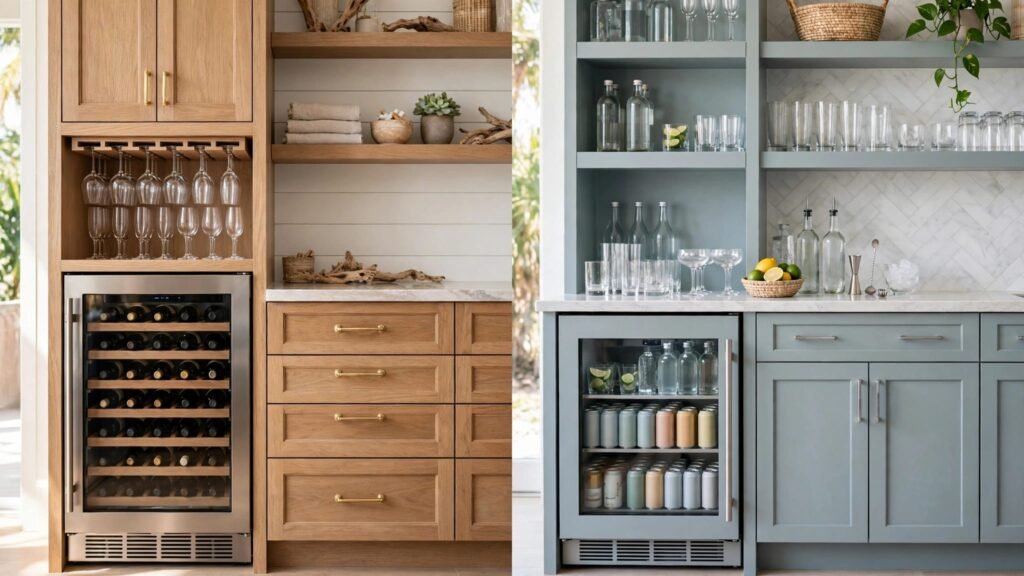
Choosing between wine cooler cabinets and a beverage center affects more than where the appliance sits. It changes how you store bottles, organize glassware, plan ventilation, and move through the room. The right choice depends on daily use, available space, and how much cabinetry you want around the appliance.
For Fort Myers homeowners, heat, humidity, sunlight, and indoor-outdoor entertaining also matter. A well-planned home bar should look built-in, remain easy to maintain, and support the way your household actually hosts.
Key Takeaways
- Wine cooler cabinets suit homeowners who want organized bottle storage, pull-out racks, and a dedicated wine station.
- Beverage centers offer more flexible placement for drinks, glassware, mixers, and everyday entertaining.
- Both options need accurate measurements, proper ventilation, door clearance, and access for future service.
- The appliance should be selected before the cabinet opening is finalized.
- Closed uppers, drawers, and nearby counter space often make a beverage zone more useful than the appliance alone.
- In Southwest Florida, sealed cabinet surfaces and moisture-conscious materials deserve careful attention.
Wine Cooler Cabinets vs Beverage Centers: Choose by Use
The names can suggest a clear difference, but appliance specifications vary. Some beverage centers accommodate bottles, while some wine coolers include flexible shelving. Review the individual model before designing the opening.
The broader distinction comes from how you plan to use the space. Wine-focused storage prioritizes bottle organization and access. A beverage center usually supports a wider mix of drinks and serving supplies.
| Planning factor | Wine cooler cabinet | Beverage center |
|---|---|---|
| Main question | How should bottles be stored and reached? | How should drinks and serving items stay together? |
| Useful cabinet pairings | Pull-out racks, bottle bins, stemware storage | Glassware drawers, shelves, trash pullout, counter space |
| Common location | Wine bar, dining area, entertaining wall | Kitchen island, wet bar, pantry, lanai route |
| Main design priority | Bottle access, ventilation, light control | Flexible storage, traffic flow, service access |
When wine-focused storage makes sense
Wine cooler cabinets work well when wine is a regular part of entertaining and deserves its own station. Pull-out racks can make bottles easier to reach than fixed storage, while horizontal bins provide a practical place for a larger collection.
A dedicated wine zone can also include stemware slots, a drawer for openers, and a small counter for pouring. For ideas suited to Southwest Florida homes, review these Fort Myers wine bar cabinets.
When a beverage center fits better
A beverage center makes sense when the household reaches for several types of drinks throughout the day. The surrounding cabinetry can hold tumblers, mugs, napkins, mixers, and serving pieces.
This setup often works well in a family kitchen because people can grab a drink without opening the main refrigerator. It can also support coffee service, sparkling water, or casual entertaining without requiring a separate wine collection.
Plan Around the Home Bar Workflow
A beautiful appliance loses value when guests must cross the kitchen to use it. Placement should support the route between food preparation, serving, cleanup, and outdoor entertaining.
Good cabinet design keeps related tasks close together. The sink, fridge, trash pullout, glassware, and landing space should form a practical working zone.
Keep the active items within reach
A small counter section beside the appliance gives you somewhere to fill a glass, set down a pitcher, or open a bottle. Drawers below can hold corkscrews, cocktail napkins, bar tools, and towels.
A nearby trash pullout also helps contain bottle caps, citrus peels, and used napkins. When these elements sit together, the home bar works without sending people back into the main prep area.
These wet bar layouts for entertaining include practical arrangements for narrow walls, under-stair areas, great room feature walls, and lanai transitions.
Protect kitchen and patio traffic
A beverage zone near the dining area or patio door can keep drink traffic away from the range and cleanup area. In homes with a lanai, the route to outdoor seating may be more useful than a location beside the main refrigerator.
The door swing still needs enough clearance. A unit that fits the opening may interfere with a drawer, walkway, or nearby cabinet when the door opens. Check the complete appliance dimensions, including the handle and hinge side.
Build the Cabinet Around the Appliance
The cabinet opening should follow the selected appliance manual. Overall width and height are only part of the planning process.
Before ordering cabinetry, confirm the required opening, air path, toe-kick details, electrical location, door clearance, and approved service access. A cabinet designer and appliance installer should review these details together.
Make the appliance look intentional
A fridge sitting alone beneath a counter can appear unfinished. Matching door styles, finished side panels, a consistent toe kick, and nearby drawers make the appliance feel connected to the room.
Panel-ready models may accept a decorative front, but the appliance manufacturer controls the panel’s allowed thickness, weight, attachment points, and handle placement. Never assume a cabinet door can cover the unit without reviewing those limits.
For ideas on framing an under-counter unit with surrounding storage, see this guide to beverage cooler cabinet design.
Add storage that supports the appliance
Storage above and beside the unit should reflect what your household uses most. Glassware drawers keep everyday cups close, while a shallow drawer can organize openers and napkins.
A slim wine rack or open shelf may suit a modern kitchen or relaxed coastal space. Closed uppers often work better when you want to hide extra supplies and reduce dusting. The best arrangement balances display space with storage that keeps the counter clear.
Choose Materials for Fort Myers Conditions
Southwest Florida homes deal with heat, humidity, strong sunlight, and frequent movement between indoor and outdoor spaces. Those conditions should influence the cabinet box, finish, hardware, and countertop.
A material that looks attractive in a showroom still needs to perform beside a refrigerator, sink, or open patio door. Ask how the proposed finishes handle moisture, condensation, cleaning, and regular use.
Pay attention to ventilation and moisture
A refrigerator can fit neatly inside a cabinet opening and still run poorly if warm air cannot escape. Ventilation requirements vary by appliance. Some units vent through the front toe kick, while others require clearance in another location.
Follow the exact installation manual rather than cutting a decorative grille based on appearance alone. Keep required vents clear of flooring, trim, caulk, storage items, and replacement toe kicks.
Wine storage deserves the same care. Proper airflow helps manage the appliance environment, while suitable bottle storage protects access and organization. Built-in ventilation may also help reduce conditions that contribute to cork drying.
Select finishes for maintenance
Sealed cabinet interiors and moisture-conscious finishes make cleanup easier around drink stations. Condensation, splashes, sandy feet, and outdoor entertaining can place more stress on lower cabinets than a standard dry storage area.
Closed storage also protects glassware and supplies from dust. If you choose open shelves, limit them to items you use often, such as favorite glasses or serving pieces. A combination of closed cabinets and one display shelf usually offers a comfortable balance.
Compare Layouts for Different Homes
The best location depends on the room, available wall space, and the path people already take. A full beverage wall may suit a large open kitchen, while a compact base cabinet can work better in a condo or narrow dining area.
| Home situation | Cabinet arrangement | Design advantage |
|---|---|---|
| Large open-plan kitchen | Full beverage wall with base cabinets and uppers | Creates high-capacity storage with a finished appearance |
| Narrow wall near dining room | Base cabinet, small sink, and under-counter unit | Keeps drinks close to meals without using much floor space |
| Butler’s pantry | Appliance bay with drawers and closed uppers | Hides supplies while keeping entertaining organized |
| Lanai transition | Durable lower cabinets with closed storage | Supports indoor-outdoor hosting and reduces kitchen traffic |
A butler’s pantry can give wine cooler cabinets or a beverage center a dedicated home without adding visual activity to the main kitchen. Plan for glassware, trays, serving pieces, and a nearby trash pullout. These beverage storage in a butler’s pantry ideas can help shape that zone.
For a kitchen remodel, placement should also relate to the island, prep sink, dining area, and patio door. These kitchen layouts with beverage fridges show why the appliance location should be part of the overall cabinet plan.
Verify Details Before Ordering
Use this sequence to reduce fit and installation problems:
- Select the appliance model, or narrow the choice to models with similar requirements.
- Download the current installation manual and record the opening dimensions.
- Confirm ventilation, electrical placement, door swing, and service access.
- Decide whether the unit will remain exposed or receive a decorative panel.
- Plan drawers, shelves, counter space, and waste storage around the appliance.
- Review the final opening after flooring, countertops, trim, and toe kicks are included.
Do not rely on a product listing’s outside dimensions alone. The manual may specify additional side, top, rear, or toe-kick clearance. It may also identify a required grille or a particular outlet location.
Service access deserves equal attention. A removable panel or clear removal path can prevent future repairs from requiring cabinet demolition. If the appliance uses water, place the shutoff where a technician can reach it without removing permanent construction.
Sunlight and nearby heat sources also deserve a place in the plan. Strong exposure can affect labels and finishes over time, while a tight enclosure can trap heat. Your designer and installer should coordinate the cabinet opening with the appliance supplier’s requirements.
FAQ: Wine Cooler Cabinets and Beverage Centers
Are wine cooler cabinets better than beverage centers?
Neither option is automatically better. Wine cooler cabinets are often the stronger fit for bottle-focused storage, while beverage centers usually offer broader flexibility for drinks and serving supplies. The appliance’s actual shelves, ventilation, and installation requirements should guide the final decision.
Can a beverage center go in a kitchen island?
Yes, if the selected model allows that installation and the island provides enough clearance, ventilation, electrical access, and service access. Check the door swing carefully, especially when drawers or seating are nearby.
Should the cabinet match the rest of the kitchen?
Matching the door style, finish, hardware, and toe kick usually creates a more unified appearance. A panel-ready appliance can blend even more closely, but its panel specifications must come from the manufacturer.
How much storage should surround the appliance?
Start with the items you use most. Frequent entertainers may need glassware drawers, an opener drawer, tray storage, and a nearby trash pullout. A smaller household may need only one drawer and a counter landing area. Closed storage can hold less frequently used items without crowding the main work zone.
Conclusion
The choice between wine cooler cabinets and a beverage center should begin with how you store, serve, and move through your home. Bottle-focused storage benefits from racks and dedicated organization, while a beverage center can support a wider range of daily drinks.
Whichever appliance you choose, confirm the installation requirements before finalizing the cabinet opening. With accurate ventilation planning, durable finishes, useful surrounding storage, and a location that supports entertaining, the beverage zone can feel like a natural part of the kitchen rather than an afterthought.
