 Skip to content
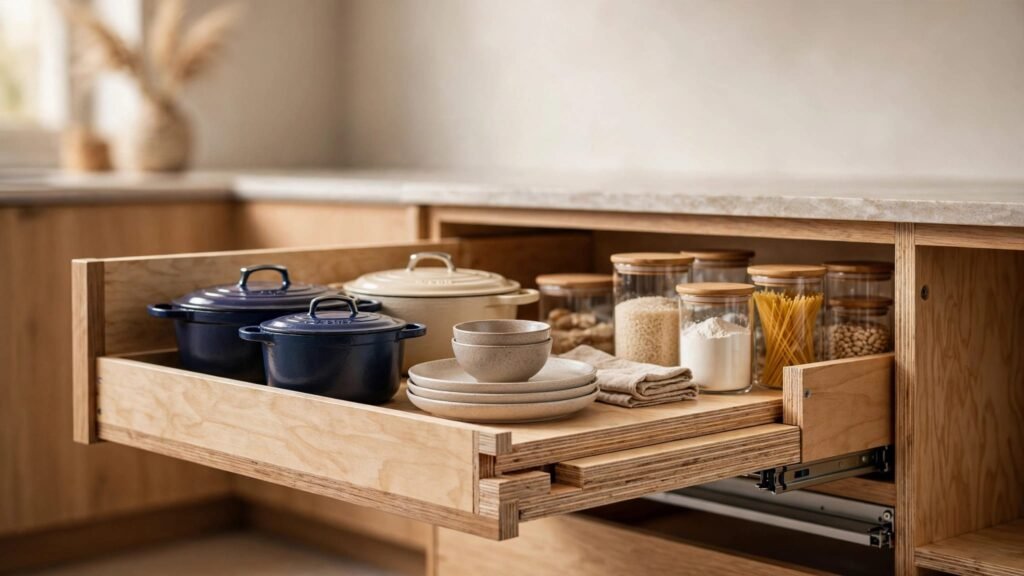
A drawer can look flawless on day one and still sag under a stack of Dutch ovens six months later. The right cabinet drawer bottom thickness protects your storage investment, keeps drawers moving smoothly, and prevents a frustrating dip in the center of the box.
Heavy cookware, dishes, small appliances, and bulk pantry goods put steady stress on a drawer bottom. Thickness matters, but the panel material, drawer width, joinery, and slide rating all share the load.
Choose the drawer box with the items you plan to store in mind, not only the finish you see from across the kitchen.
Cabinet Drawer Bottom Thickness for Real Kitchen Loads
For light-use drawers, such as cutlery or tea towels, a 1/4-inch bottom may perform well. It is common in basic drawer construction, especially when the drawer is narrow and the bottom fits securely into grooves on all four sides.
Heavy kitchen storage needs more support. A 1/2-inch plywood drawer bottom is a strong, practical choice for deep drawers that hold pots, pans, dishes, or pantry staples. It resists flexing better than thinner panels and holds up well under repeated loading.
Match the panel to the stored weight
A drawer full of spices weighs far less than one holding cast-iron skillets. Consider the intended contents before choosing a thickness.
- Use 1/4-inch bottoms for narrow utensil drawers and lightweight organizers.
- Choose 3/8-inch plywood for moderate loads, such as mixing bowls, food containers, or kitchen linens.
- Specify 1/2-inch plywood for cookware, stacks of dinnerware, pet-food bags, and other dense items.
- Ask about 5/8-inch material or added bracing for unusually wide, heavily loaded custom drawers.
A thicker panel costs more and adds some weight, yet it can prevent a drawer replacement later.
Width changes the equation
A 1/2-inch bottom in a 30-inch drawer has a shorter span than the same panel in a 42-inch drawer. As width increases, the middle of the panel carries more stress. Deep drawer boxes also invite heavier storage, so depth and width should be considered together.
A thick bottom cannot compensate for a wide drawer built without proper edge support, strong joints, and correctly rated slides.
Compare Drawer Bottom Materials Before You Buy
Material affects stiffness, moisture resistance, and how well the bottom holds up near sinks and dishwashers. In Southwest Florida homes, humidity and occasional water exposure also deserve attention.
| Material | Common Thicknesses | Best Fit | Main Limitation |
|---|---|---|---|
| Plywood | 1/4, 3/8, 1/2 inch | Heavy-use kitchen drawers | Costs more than basic panels |
| MDF or particleboard | 1/4, 3/8 inch | Light, dry storage | Can swell or sag when wet |
| Solid wood | About 1/2 inch | Premium drawer boxes | Moves with humidity and adds cost |
Plywood is usually the strongest all-around choice for heavy drawers. Its cross-laminated layers resist bending better than many engineered panels of the same thickness. A well-finished plywood bottom also handles normal kitchen humidity well.
Why thin engineered panels fall short
MDF and particleboard can create a flat, smooth drawer bottom at a lower cost. However, both materials are vulnerable when water reaches an exposed edge. They also tend to flex more under concentrated weight, such as a heavy stockpot placed in the center.
For a drawer beside the sink, dishwasher, or range, plywood provides more forgiveness. The same thinking applies to the cabinet box itself. Compare plywood versus MDF cabinet boxes when planning a kitchen where moisture and heavy storage meet.
Construction Details Matter as Much as Thickness
A 1/2-inch panel is only as reliable as the drawer box around it. Look for a bottom captured in grooves on the drawer sides, front, and back. This construction distributes weight across the whole box instead of relying on staples or a panel fastened underneath.
Dovetail or durable locked-corner joints also help the drawer sides stay square under repeated use. When sides spread apart, even a thick bottom can loosen or fail.
Check the slides and mounting
Slides carry the drawer, its contents, and the force of opening and closing. Ask for the hardware’s stated load rating, then compare it with what you expect to store. Heavy-duty slides are a smart match for wide cookware drawers, but they also need secure mounting into solid cabinet material.
Full-extension slides help because you can reach items at the back without overloading the front. Soft-close hardware reduces slamming, which limits shock to the drawer box over time. For a closer look at joints, bottoms, and hardware, review these signs of quality drawer box construction.
Plan Heavy Drawers Where They Work Hardest
The best cabinet drawer bottom thickness supports a storage plan, not a random collection of deep drawers. Place cookware drawers near the range and dish drawers near the dishwasher. That arrangement reduces carrying distance and makes the drawer’s capacity useful every day.
Deep drawers are especially effective for pots and pans because each item stays visible when opened. Pot and pan drawer cabinets work best with plywood bottoms, sturdy drawer sides, and slides designed for real cookware weight.
Build for the heaviest likely load
Don’t size a drawer bottom for the few items you own today. Account for holiday cookware, heavier serving dishes, and the small appliances that may move off the counter later.
Good cabinet design also separates heavy storage across several drawers instead of concentrating everything in one extra-wide box. A 30-inch cookware drawer with a 1/2-inch plywood bottom may be more dependable than a much wider drawer carrying the same load.
Choose Strength You Won’t Have to Think About Later
A durable drawer combines the right cabinet drawer bottom thickness with plywood material, captured construction, reliable joinery, and weight-rated slides. For most heavy kitchen storage, 1/2-inch plywood is the practical starting point.
Your kitchen should make daily tasks easier, not ask you to worry about sagging drawer bottoms. Strong drawer construction keeps heavy storage accessible and the cabinetry looking composed for years.
