 Skip to content

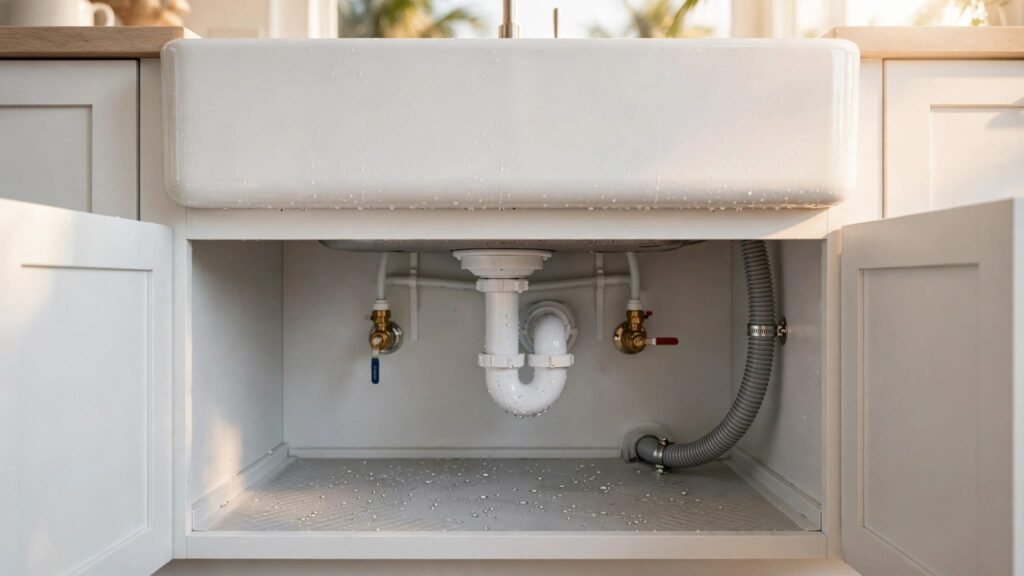
The cabinet beneath your sink faces more moisture than almost any other kitchen cabinet. In Fort Myers, humidity, splashes, heat, and sandy traffic can expose weak materials and unfinished edges quickly.
The goal with waterproof sink base cabinets is practical moisture protection, not a promise that wood-based cabinetry can survive unlimited standing water. A well-planned sink base uses suitable materials, sealed surfaces, accurate installation, and quick leak response. Start with the sink and plumbing, then build the cabinet design around them.
Why Fort Myers sink bases need extra protection
Humidity affects cabinets gradually. Moist air reaches seams, exposed edges, screw holes, and joints. A small plumbing drip can add standing water to the problem, especially when cleaning supplies hide the cabinet floor.
Common moisture exposure points
The sink rim, faucet connections, drain assembly, disposal, dishwasher hose, and water shutoff valves all deserve attention. Water can also collect beneath bottles or wet sponges, where it may sit unnoticed.
The cabinet floor is especially vulnerable. If it has an unfinished edge or a weak surface, repeated splashes can lead to swelling, staining, or a finish that begins to separate. The back of the cabinet also needs room for plumbing without forcing pipes against the box.
These concerns make Fort Myers sink base cabinets a planning decision rather than a last-minute cabinet selection. The sink should fit first, followed by plumbing access, storage, and the finish.
Water exposure is different from humidity
Humidity in the room is one challenge. Direct water is another. A cabinet may tolerate normal indoor moisture while still suffering damage from a loose drain connection or a soaked cleaning cloth.
That distinction matters when comparing products. Ask how the box, edges, interior, and joints handle occasional splashes. Also ask what areas receive extra sealing during installation. A cabinet that is moisture-resistant still needs prompt cleanup when water reaches the floor.
Waterproof sink base cabinets versus water-resistant cabinetry
In everyday remodeling language, “waterproof” often means a cabinet has been designed to reduce water damage. It doesn’t mean the cabinet is permanently watertight or safe from leaks.
A water-resistant sink base may include stable box construction, sealed edges, a durable finish, and installation details that limit moisture entry. Those features give you more time to wipe up a spill and help reduce damage from routine kitchen use.
No cabinet should be treated as a substitute for sound plumbing. Even well-built cabinetry can swell or stain after prolonged exposure to a leak. For that reason, moisture protection should combine cabinet selection with accessible plumbing and regular inspection.
A protected sink base can handle everyday splashes more effectively, but it still needs fast action when water collects inside.
When comparing designs, focus on the complete cabinet rather than the door style alone. Box material, edge treatment, interior finish, mounting, and the space around the pipes all affect performance.
Plan the sink base before choosing the finish
A finish cannot correct a cabinet that doesn’t fit the sink or plumbing. Measure the wet zone before selecting door style, color, or storage accessories.
Confirm the sink and plumbing clearances
Record the sink’s overall width, bowl depth, mounting style, and the location of the drain. An apron-front sink may require a different cabinet configuration than an undermount or top-mount model.
The plan should also allow space for the disposal, shutoff valves, drain trap, filtration equipment, and dishwasher connection. Pull-out trays and cleaning caddies need enough clearance to open without striking pipes.
Bring the sink specifications to your designer before ordering. A Fort Myers cabinet design consultation can help coordinate the sink, plumbing, storage, and surrounding doors before installation begins.
Use the right cabinet dimensions
A typical sink base is about 34.5 inches high and 24 inches deep. Common widths range from 30 to 36 inches, with 42-inch options sometimes available for larger layouts.
Those figures are starting points, not a substitute for field measurements. The sink may need more room than the cabinet width suggests, particularly when the bowl is deep or the countertop has limited landing space.
Review Fort Myers kitchen cabinet sizes alongside the sink manufacturer’s specifications. Confirm the finished countertop height, nearby fillers, dishwasher position, and door swing before approving the plan.
Choose materials and finishes for a humid kitchen
Fort Myers kitchens need materials that can handle heat, humidity, cooking steam, and frequent wiping. The strongest choice depends on the entire cabinet construction, not one attractive sample.
Start with the cabinet box and edges
Quality plywood construction is often a sensible option for sink bases because the box needs to stay stable around plumbing and daily use. Lower-quality particleboard can swell after direct water exposure, so ask what material is used in the sink base and whether the edges are sealed.
Look for a well-finished interior and protected seams. Edge banding, stable backs, and secure fastening all deserve attention because moisture often enters through small exposed areas.
Painted wood can work well in a Fort Myers kitchen when the preparation and topcoat are durable. Ask how the finish covers door edges, routed profiles, and interior surfaces. A beautiful front cannot compensate for an unprotected cabinet floor.
Consider easy-clean surfaces selectively
Thermofoil and rigid thermofoil may suit select areas that need a smooth, easy-to-wipe surface. They are options to discuss with a designer, not proof that a cabinet is waterproof in every condition.
Heat exposure also matters. Any material should be placed with appropriate clearance from ovens, ranges, and other hot equipment. The sink base has different risks, so its box and interior protection should receive more attention than a decorative upper cabinet.
A durable finish, sealed edges, and a cabinet box suited to the room create a more reliable combination than a finish chosen for appearance alone. Review the Fort Myers kitchen cabinets guide when comparing material and installation details.
Use installation details that limit moisture damage
Even a strong cabinet can perform poorly if the run is out of level or the wet areas are left unsealed. Installation needs to account for the whole cabinet wall.
Acclimate the cabinets before installation
Cabinets may need 48 to 72 hours inside the home before installation. This allows the materials to adjust to the indoor conditions rather than being installed immediately after delivery from a different environment.
Keep the cabinets protected from standing water during this period. Store them in a clean, dry area, and follow the installer’s handling instructions. Damage that occurs before installation can be difficult to separate from later moisture problems.
Level the full run and protect wet areas
Installers should shim and level the cabinet run as a complete unit, rather than leveling each cabinet in isolation. A straight, stable run helps doors, drawers, countertops, and plumbing connections fit as planned.
Sink-base and dishwasher areas should receive extra sealing wherever water could reach. Ask the installer which edges, joints, and penetrations will be protected. The goal is to reduce moisture entry without blocking access to valves, drains, or service connections.
Accurate measurements also matter before the cabinets arrive. Use this Fort Myers kitchen cabinet measurements guide to organize wall dimensions, appliance specifications, sink details, and photos for the design appointment.
Keep the cabinet interior dry and accessible
Water protection continues after installation. The space beneath the sink should stay easy to inspect, clean, and service.
Choose storage that leaves plumbing visible
Avoid packing bottles and accessories tightly around the drain, disposal, and shutoff valves. Leave a clear path so you can spot a damp connection quickly.
Removable liners and easy-clean organizers can help protect the cabinet floor from minor drips. Choose storage that lifts out when the plumbing needs attention. A fixed accessory that blocks the drain or valve creates a service problem.
Store frequently used supplies toward the front. Less-used items can occupy the sides, as long as they don’t press against pipes or trap moisture behind them.
Inspect the area regularly
Open the cabinet after cleaning and check for dampness, stains, swelling, soft spots, or a musty odor. Look beneath the drain connection and around the dishwasher hose. Run a dry hand along the cabinet floor and corners when the area appears dry.
Wipe up spills promptly, and don’t leave wet cloths or sponges on the cabinet floor. Good ventilation in the kitchen also helps reduce lingering steam during heavy cooking.
Know when professional help is needed
Some moisture problems are maintenance issues. Others point to plumbing failure or cabinet damage that should not wait.
Call a plumber for active leaks
Contact a licensed plumbing professional when water continues to appear after tightening an accessible connection, when a drain or supply line is damaged, or when the leak comes from a concealed area. A disposal, dishwasher connection, or shutoff valve may need repair or replacement.
Turn off the affected water supply when appropriate, remove stored items, and dry the area while waiting for service. Avoid cutting the cabinet or disconnecting plumbing unless you have the right experience.
Call a cabinet professional for structural damage
A cabinet specialist should assess swelling, delaminated surfaces, soft flooring, separated joints, or doors and drawers that no longer align. Cosmetic touch-up may be enough for a small surface mark, but swollen material can affect the cabinet’s fit and stability.
If you are replacing the kitchen, discuss sink-base protection before ordering. The difference between custom and semi-custom cabinetry may affect how the cabinet accommodates an unusual sink, plumbing layout, or storage feature. The custom versus semi-custom cabinets comparison can help frame that discussion.
Key Takeaways
- Treat “waterproof” as a goal of moisture protection, not a guarantee against leaks.
- Choose the sink, drain, disposal, valves, and dishwasher connection before finalizing the cabinet.
- Ask about the cabinet box, edge sealing, interior finish, and wet-zone installation details.
- Common sink-base dimensions are about 34.5 inches high and 24 inches deep, with widths often between 30 and 36 inches.
- Keep storage removable and leave plumbing visible.
- Respond quickly to moisture, swelling, or active leaks.
- Use a cabinet professional for structural damage and a plumber for plumbing failures.
FAQ
Can I make an existing sink base completely waterproof?
Usually, no. You can improve moisture protection with sealed surfaces, protected edges, careful storage, and prompt cleanup, but existing materials may still absorb water after prolonged exposure.
If the cabinet floor has already swollen or the box has lost its shape, a surface treatment may not solve the underlying problem. Have the cabinet assessed before applying a new coating or installing organizers.
Is plywood always the best choice for a Fort Myers sink base?
Plywood is often a strong option for a humid kitchen, but construction quality still matters. Ask about the grade, edge treatment, interior finish, back panel, and fastening.
A plywood box with exposed edges can still experience moisture damage. The material should be considered alongside the finish and installation details.
Should I install a liner under the sink?
A removable liner can make cleanup easier and provide a practical barrier against small spills. It should not cover or restrict plumbing connections, and it should be removed periodically so you can inspect the cabinet floor beneath it.
A liner also cannot correct an active leak. Repair the source first, then use the liner as part of routine protection.
When should I replace the sink base instead of repairing it?
Replacement deserves consideration when the floor is swollen, the sides are soft, joints are separating, or doors and drawers no longer align after a leak. Minor finish damage may be repairable, but structural damage can affect the cabinet’s stability and the countertop above it.
A cabinet professional can determine whether repair, a replacement box, or a larger cabinet update makes sense.
Conclusion
A Fort Myers sink base needs more than an attractive door. It needs a suitable box, protected edges, accurate plumbing clearances, extra sealing in wet areas, and enough access for inspection.
The best waterproof sink base cabinets are planned to resist everyday moisture while making leaks easier to detect and repair. When the sink comes first and the cabinet is built around real use, this hard-working area can remain clean, functional, and polished for years.
