 Skip to content
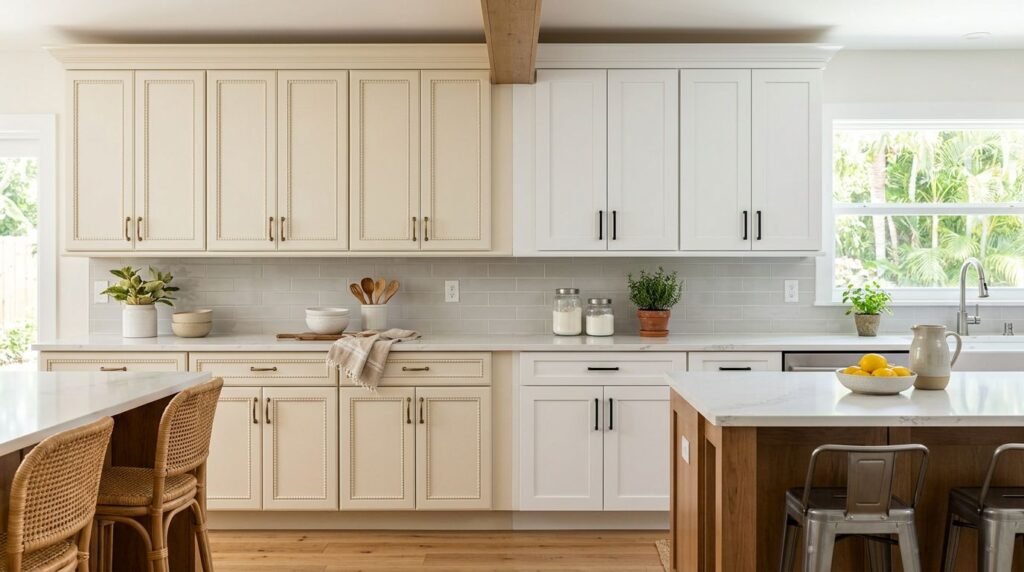
The cabinet door sets the tone for your kitchen before anyone notices the countertops or backsplash. For Fort Myers homeowners, the choice often comes down to beaded vs flat shaker cabinets, two related styles with different levels of detail.
Both options use the familiar Shaker frame and recessed center panel. The difference is the trim around that panel, which can change how the room feels, how much cleaning the doors need, and how well they fit your cabinet design.
How Beaded and Flat Shaker Cabinet Doors Differ
A Shaker cabinet door has a simple frame around a recessed center panel. The frame may have four separate rails and stiles, with clean square corners and minimal ornamentation. This construction gives Shaker cabinets their familiar balance between traditional and modern design.
A flat Shaker door keeps that profile clean. Its frame meets the center panel with a straight, uncomplicated transition. The result looks crisp and open, especially when you choose a light paint color, natural wood, or a simple hardware style.
A beaded Shaker door adds a narrow bead detail around the inside edge of the frame or the perimeter of the recessed panel. Depending on the manufacturer, the bead may look like a small rounded ridge, a fine groove, or a decorative transition. The detail is subtle, but it creates more shadow and texture on the door face.
The word “flat” can cause confusion. Flat Shaker cabinets aren’t slab doors. They still have a frame and recessed panel. “Flat” describes the clean transition and lack of added bead detail.
The main difference is visual detail, not the basic Shaker layout. Both styles can work in traditional, transitional, and modern Fort Myers kitchens.
Door construction also varies by cabinet line. Ask whether the door uses solid wood, engineered wood, a veneer, or another material. The finish, edge profile, joinery, and warranty matter as much as the door style. Two doors can share the Shaker name yet look different in person.
Before choosing, view a full-size door sample. Small showroom samples can hide how the bead catches light or how wide the frame looks beside your cabinets.
The Look and Feel of Each Cabinet Style
Beaded Shaker doors suit homeowners who want a little more character without moving into ornate cabinetry. The bead adds a furniture-like detail that can support a classic kitchen, a cottage-inspired space, or a transitional room with warm finishes.
This style pairs well with cup pulls, bin pulls, aged brass, oil-rubbed bronze, and other hardware with some visual weight. It can also soften a large wall of painted cabinets because the door face has more texture. In a kitchen with simple counters and a plain backsplash, that added edge detail gives the cabinets a stronger presence.
Flat Shaker doors create a calmer, more tailored appearance. Their straight lines work with bar pulls, knobs, integrated hardware, and slim metal handles. They also pair easily with quartz counters, wood accents, patterned tile, and mixed cabinet colors.
A flat Shaker door may be a better fit when you want the room to feel open or when other features already provide plenty of detail. For example, a bold backsplash, statement pendants, or a prominent range hood can take the visual lead while the cabinets provide a steady background.
Both choices can support these cabinet design directions:
- Warm white or soft gray cabinets with simple stone counters and brushed metal hardware.
- Natural wood cabinets paired with white walls and a restrained backsplash.
- Two-tone kitchens with one door style across the room and a contrasting island color.
- Transitional kitchens that combine traditional proportions with clean modern surfaces.
Your existing architecture should guide the decision. A home with raised-panel trim, detailed millwork, or classic furniture may welcome beaded doors. A condo or remodeled space with straight lines may feel more cohesive with flat Shaker cabinets.
Color changes the result as well. Dark paint can make a bead detail more noticeable through contrast and shadow. Light paint may keep the detail subtle. Natural wood highlights grain and can make the frame profile easier to see.
Choosing Cabinets for Fort Myers Homes
Fort Myers kitchens often support more than cooking. They may include space for casual meals, visiting family, entertaining, or storing items used on a nearby lanai. Cabinet layout matters because the room needs to handle daily activity without feeling crowded.
Start with the way you use the kitchen. If you frequently open doors with wet or messy hands, select hardware that gives you a comfortable grip. A small knob may suit upper doors, while a longer pull can make wide drawers easier to use.
Moisture deserves attention during any kitchen remodel. Cooking steam, spills, damp towels, and wet hands affect the areas around sinks and dishwashers. Ask your cabinet professional about the materials, finish care, and warranty for the cabinet line you are considering. Follow the manufacturer’s cleaning instructions instead of relying on harsh household products.
Fort Myers homes may also receive strong daylight through large windows or open living areas. Place door samples in the room when possible. A finish that looks gray in a showroom can appear warmer near a sunny window. The same light can make a beaded edge more visible at certain times of day.
Storage planning comes before door style. Measure ceiling height, wall length, window locations, appliance openings, and the space needed for doors and drawers to open. Include clearance for refrigerators, dishwashers, islands, and walkways.
Pay attention to details that affect the finished installation:
- Choose a cabinet finish that works with your floor, wall color, counters, and lighting.
- Confirm the door swing and drawer clearance near corners and appliances.
- Plan fillers where cabinets meet walls, so doors and pulls have room to operate.
- Use finished end panels when cabinet sides remain visible.
- Decide whether crown molding, light rail, or open shelving fits the room.
- Review the placement of trash pullouts, tray dividers, pantry storage, and deep drawers.
Beaded and flat Shaker doors can use the same cabinet layout. The door profile won’t solve a poor work triangle, limited landing space, or inadequate storage. Good cabinet design starts with function, then uses the door style to support the room’s appearance.
Beaded vs Flat Shaker Cabinets: A Practical Comparison
The right choice depends on how much detail you want and how the cabinets must work with the rest of the room. This comparison can help narrow your options.
| Feature | Beaded Shaker doors | Flat Shaker doors |
|---|---|---|
| Overall look | More traditional or decorative | Cleaner and more restrained |
| Door detail | Added bead around the recessed panel or frame | Straight transition around the panel |
| Best design matches | Cottage, classic, transitional kitchens | Modern, transitional, and minimalist kitchens |
| Hardware pairings | Cup pulls, knobs, substantial pulls | Bar pulls, knobs, slim handles |
| Visual texture | Creates extra shadow and definition | Keeps the door face visually quiet |
| Cleaning consideration | Detail may require more attention around the bead | Simpler profile is easier to wipe |
| Design flexibility | Adds personality to simple rooms | Blends easily with detailed finishes |
| Cost factors | Door profile and construction may affect the quote | Pricing depends on materials and cabinet line |
The table shows a design difference, but it doesn’t determine quality. A well-made flat Shaker door can outlast a poorly made beaded door, and the reverse is also true. Compare the actual cabinet specifications rather than choosing by name alone.
Your project quote may change based on cabinet material, box construction, finish, storage accessories, hardware, moldings, installation conditions, and the number of custom sizes. Beaded doors can involve additional profile work, but the price difference depends on the brand and product line. Request both options in the same finish and layout for a fair comparison.
Ask to see these items before approving an order:
- A full-size door sample in the proposed finish.
- A sample of the cabinet box, shelf construction, and finished edge.
- A written list of included hardware, moldings, panels, and accessories.
- A layout that shows appliance openings, fillers, and corner solutions.
- The manufacturer’s care instructions and warranty terms.
A good designer will also check how the new cabinets meet existing walls, floors, ceilings, and appliances. Those conditions can affect installation time and the final appearance, especially in a remodel where every wall isn’t perfectly square.
How to Make the Final Cabinet Door Decision
Begin by collecting photos of kitchens that feel comfortable to you. Look for patterns in the images. Do you prefer quiet doors with bold lighting and counters, or do you respond to cabinet details that add warmth?
Next, compare the door profiles beside your actual materials. Place samples near the floor, countertop, backsplash, and wall paint. Check them in morning and afternoon light. A finish should work in the entire room, not only under showroom lighting.
Consider the home’s long-term use as well. If you expect to sell within a few years, a straightforward Shaker profile may appeal to a wider range of buyers. If you’re remodeling for your own household, choose the detail level that feels right every time you enter the room.
Don’t overlook the island. A beaded profile on the perimeter and a flat profile on the island can create contrast, but the transition needs a clear reason. Mixing door styles without a consistent color, hardware choice, or layout can make the kitchen feel disconnected. In many rooms, using one profile throughout creates a more settled appearance.
The same principle applies to bathrooms and other storage areas. If the kitchen uses beaded Shaker doors, matching vanity doors can connect the spaces. A flat Shaker vanity may work better when the bathroom has sleek tile and contemporary fixtures.
Finally, review the complete design with your cabinet professional. Confirm dimensions, door openings, finish names, hardware locations, and installation details before placing the order. A free consultation can help you compare full-size samples and identify layout issues before construction begins.
Conclusion
Beaded Shaker doors add a small decorative edge that gives cabinets more texture and traditional character. Flat Shaker doors keep the same recessed-panel foundation with a cleaner, quieter profile.
For a Fort Myers kitchen, the strongest choice depends on your layout, daily habits, materials, and preferred style. Compare full-size samples, review the construction details, and select the door that supports the whole room. When the plan works well, the cabinet profile becomes part of a kitchen that feels natural to use every day.
