 Skip to content

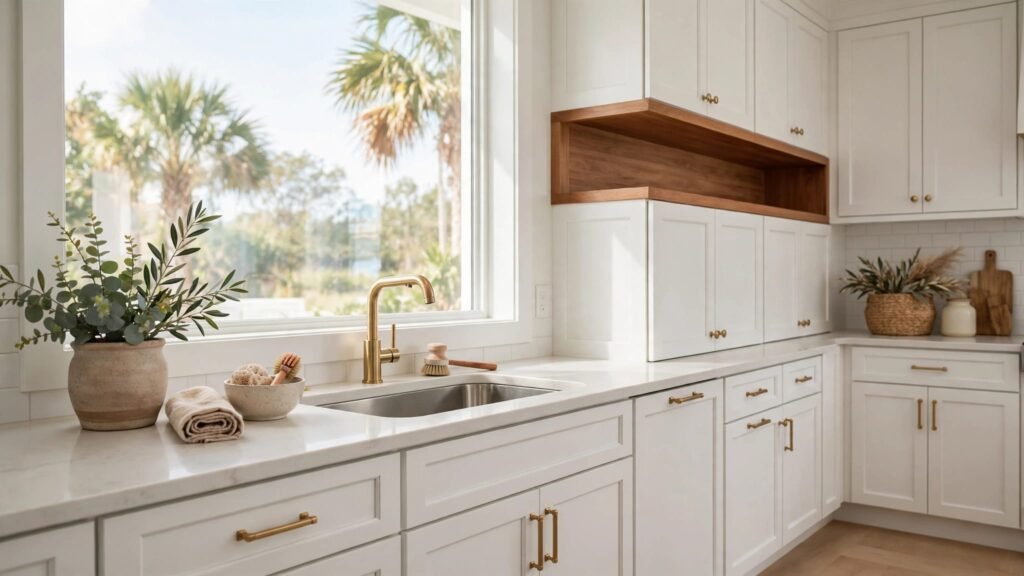
Your kitchen can sit unused for months while its cabinets still face moisture and heat. For a seasonal home in Southwest Florida, kitchen cabinets need durable construction and a care plan for the weeks you’re away.
Beautiful doors are only part of the decision; sealed edges, reliable hardware, and accessible storage matter just as much. Start with the home’s seasonal routine, then choose materials and finishes that support it.
Key Takeaways
- Prioritize well-built cabinet boxes, protected edges, and durable factory finishes, especially around plumbing.
- Choose simple door profiles and closed storage to reduce cleaning when you return.
- Confirm environmental requirements and arrange checks for leaks or moisture during extended absences.
- Compare complete quotes, including installation and accessories, rather than choosing by door style or brand alone.
How Seasonal Occupancy Changes Cabinet Planning
An empty kitchen still faces moisture
A Fort Myers home doesn’t stop experiencing humidity because nobody is cooking. Leaks, moisture changes, and strong sunlight can affect cabinetry while the house is unoccupied. However, an unnoticed plumbing leak creates a different problem than ordinary indoor humidity.
Tell your designer how long you typically leave and who checks the property. Also disclose previous leaks, musty odors, or sticking cabinet doors. These details help identify conditions that need attention before replacement cabinets arrive.
TEC Cabinetry Plus’s coastal kitchen cabinet buying guide connects local conditions with construction and installation choices.
Busy winter visits create different demands
When you’re home, the kitchen may handle visiting family, holiday meals, and frequent entertaining. Because use concentrates into a few months, storage should accommodate your busiest weeks.
Keep everyday dishes accessible and give serving pieces a dedicated location. Meanwhile, cabinets near a sink, dishwasher, or frequently opened lanai door deserve closer attention to edge protection and hardware.
A seasonal kitchen should be easy to reopen and comfortable to use without rearranging everything each visit.
Choose Cabinet Construction Before Door Color
Look beyond the plywood label
Quality plywood boxes are often a sensible starting point for Southwest Florida homes. However, the word “plywood” alone doesn’t establish construction quality or make a cabinet waterproof.
Ask about the box assembly, back panel, shelf support, and finish on exposed edges. Low-grade particleboard with unprotected edges deserves caution, particularly where leaks could reach the core.
If a cabinet line uses engineered panels, evaluate its documented specifications rather than dismissing every product in that category. Surface coverings and edge treatment affect how the complete assembly handles everyday moisture.
The guide to cabinet materials for humid climates offers context for comparing these details.
Inspect the sink base and dishwasher opening
The most vulnerable surfaces aren’t always visible when the doors are closed. Plumbing cutouts, exposed panel edges, and joints beside a dishwasher can become entry points for water.
Ask how the installer will protect cut edges and follow the cabinet manufacturer’s requirements. A durable door coating can’t protect an unfinished opening behind it.
Consider a removable sink-base liner and a leak sensor, but keep plumbing connections accessible for inspection. Neither replaces repairs or turns the cabinet into a watertight enclosure.
For bathroom vanities, apply the same attention to plumbing openings and splash-prone edges.
Select Finishes That Simplify Your Return
Compare surfaces, not just sheen names
Painted cabinetry can suit a bright coastal kitchen when the coating covers edges and routed details properly. Stained wood adds warmth, but it also needs a suitable protective finish.
Ask how each finish tolerates routine cleaning and what products the manufacturer approves. Satin, matte, and semi-gloss labels alone don’t establish durability.
Laminate and thermofoil fronts offer wipeable surfaces, although seams and edges still deserve inspection. Thermofoil also needs appropriate separation from heat sources according to product and appliance instructions.
Before ordering, handle a sample door and clean it using the approved method. That provides a better sense of upkeep than a showroom photograph.
Keep profiles simple and colors grounded
Slab fronts and uncomplicated Shaker doors have fewer recesses to clean than heavily detailed profiles. They’re useful when you want a quick refresh after months away.
For color, warm white, pale gray, and light wood tones fit many Southwest Florida interiors. Muted blue-green or navy can add contrast without turning the kitchen into a beach-themed room.
Review samples in the actual kitchen, especially beside sunny windows. Afternoon light can change how undertones appear, while prolonged direct sun may affect some finishes over time.
Ask about sunlight-related care requirements before choosing a finish for a bright window wall.
Plan Storage for Guests and Months Away
Use closed storage for less reopening work
Closed cabinets reduce exposed surfaces that collect dust, although they don’t prevent moisture problems. For a seasonal home, that often makes them more practical than extensive open shelving.
Good cabinet design starts with the items you leave behind. Allocate space for cookware, serving platters, and small appliances without packing every shelf tightly.
Deep drawers make heavy cookware easier to reach. Meanwhile, adjustable pantry shelves accommodate different packages during longer stays.
If several family members use the home, keep storage intuitive. A consistent place for everyday dishes saves searching when guests arrive.
Make difficult spaces accessible
Corner cabinets can hold plenty, but their usefulness depends on access. Compare a simple shelf with a pull-out mechanism using the cookware you intend to store.
Review kitchen corner cabinet solutions before committing to an accessory. Check its load rating, clearance, and reach with the door fully open.
Similarly, tray dividers should support heavier platters without excessive flex. Test the spacing with your largest baking sheets rather than relying on appearance.
Choose mechanisms you can operate comfortably, and ask how replacement parts or adjustments are handled. Serviceability matters when you’re only available locally for part of the year.
Compare Complete Quotes and Installation Details
Match specifications across cabinet lines
TEC Cabinetry Plus is an authorized dealer for KraftMaid, Fieldstone Cabinetry, Ultracraft, Decora, Jarlin Cabinetry, Eurocraft, and Quality Cabinets. Available construction, finishes, and accessories vary by collection.
Compare quotes using the same layout and requirements. Otherwise, a lower total may reflect fewer drawers, different box materials, or omitted finished panels.
Request itemized pricing for cabinetry, decorative panels, fillers, hardware, accessories, delivery, and installation. Also clarify whether demolition, plumbing, electrical work, and countertops fall outside the quote.
There isn’t a reliable single price for a seasonal-home kitchen. Dimensions, product choices, and project scope determine the cost.
Coordinate installation with your travel schedule
Confirm delivery and installation dates before arranging flights. Also establish who can receive materials and approve unexpected site changes if you’re away.
Installation needs to account for the actual wall construction, utilities, and cabinet manufacturer’s directions. Fort Myers properties may require different fastening methods depending on the wall assembly.
The guide to cabinet installation in Fort Myers outlines questions about mounting and project scope.
Before handover, check door alignment, drawer movement, appliance clearances, and access to plumbing. Keep the written specifications, finish information, and warranty documents somewhere accessible outside the home.
Prepare Cabinets for Extended Absences
A short departure routine makes it easier to spot problems when you return. However, cabinetry care should follow the product manufacturer’s instructions and your property’s operating plan.
Ask your cabinet supplier for its permitted indoor temperature and humidity ranges. Then have a qualified HVAC professional assess how the home will maintain appropriate conditions during vacancies.
Moisture-resistant cabinetry can’t compensate for a persistent leak or an indoor environment outside the manufacturer’s stated requirements.
Before leaving, empty perishable food and remove damp cleaning cloths or shelf liners. Clean cabinet surfaces with approved products, then dry them thoroughly. Avoid applying extra polish or sealant unless the manufacturer recommends it.
Arrange for a trusted local contact or home-watch service to inspect plumbing areas and report moisture, odors, or unusual door movement. Leak alerts help only when someone can respond.
During occupied months, use kitchen ventilation while cooking and wipe up standing water promptly. In bathrooms, run ventilation during use and keep wet towels off vanity doors.
When you return, inspect sink bases before restocking them. If you find swelling or discoloration, address the moisture source before requesting cosmetic repairs.
Specify Outdoor Cabinets Separately
A kitchen opening onto a lanai still needs indoor cabinetry suitable for its environment. An actual outdoor cooking area needs products designed for exterior exposure.
Southwest Florida outdoor cabinets face rain, strong sunlight, and salt-laden air. Options include powder-coated aluminum, 316 stainless steel, and exterior-rated marine polymer or HDPE systems.
However, material names alone don’t establish suitability. Confirm the specific product’s exposure rating, coating quality, UV performance, hardware, and warranty terms.
TEC Cabinetry Plus’s guide to outdoor kitchen cabinets for Southwest Florida compares these considerations. Plan drainage, appliance ventilation, and storm preparation separately from the indoor kitchen, especially when the property will be unattended.
Frequently Asked Questions
Are plywood cabinets enough for a seasonal Florida home?
Plywood is one construction choice, not complete protection against moisture. Sealed edges, sound assembly, suitable finishes, and proper installation also matter. During absences, the home still needs conditions within the manufacturer’s requirements and a way to identify leaks.
Can painted cabinets work in Southwest Florida?
Yes. A well-applied finish can suit local kitchens when the complete cabinet assembly receives appropriate protection. Ask about edge coverage, approved cleaners, and care near sunlight or appliances. Compare actual samples rather than assuming one sheen always performs better.
Which upgrades deserve priority on a limited budget?
Start with sound construction, protected vulnerable edges, and proper installation. Next, prioritize reliable hardware and storage you will use regularly. Decorative trim and elaborate accessories can follow once those needs fit the budget. Compare itemized quotes so you can see what each upgrade changes.
A Kitchen That’s Easier to Come Home To
Seasonal-home cabinetry needs attention behind the doors, where construction, plumbing openings, and hardware affect long-term performance. Attractive finishes work best when those details receive equal care.
Choose a kitchen that is straightforward to clean and inspect after time away. Then confirm its environmental requirements and maintenance plan before placing the order. Your next arrival should begin with a usable kitchen, without cabinet repairs competing with your visit.
