
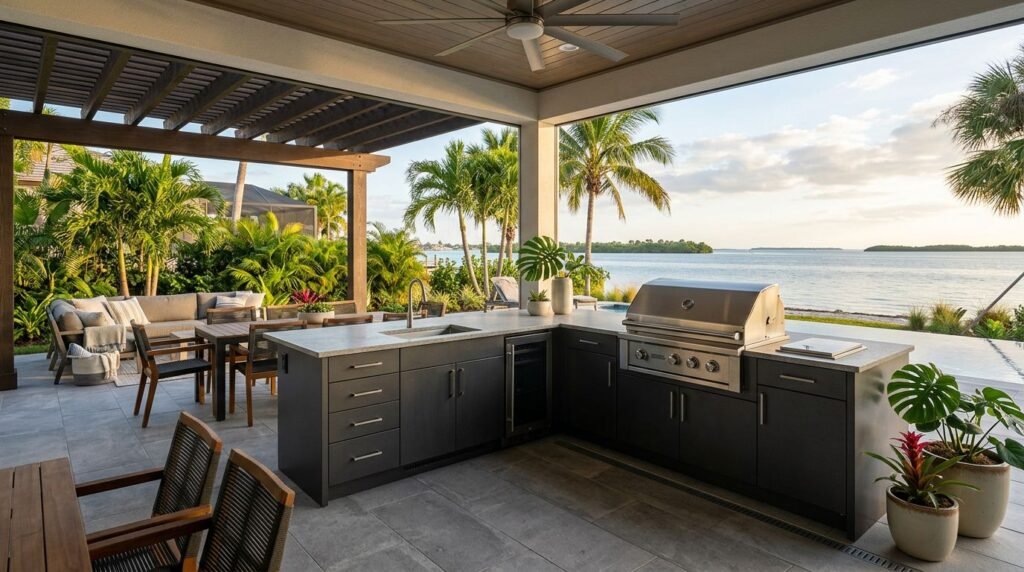
Southwest Florida gives outdoor kitchens plenty of use, but it also exposes them to intense sun, heavy rain, high humidity, and salt-laden air. The wrong materials can swell, fade, corrode, or become difficult to operate within a short time.
Outdoor kitchen cabinets need a different specification than indoor cabinetry. A Fort Myers, Naples, or Cape Coral homeowner should choose cabinet construction, hardware, finishes, and drainage details with the local climate in mind.
The right choices create a comfortable cooking area that looks polished after years of outdoor use. Start with the weather, then build the layout around how your household cooks and entertains.
Key Takeaways
- Choose cabinetry made for exterior exposure, not standard indoor cabinet boxes.
- Powder-coated aluminum, 316 stainless steel, and quality marine-grade polymers suit different Southwest Florida settings.
- Coastal homes may need more corrosion-resistant hardware than properties farther inland.
- Plan for drainage, shade, appliance clearances, ventilation, and storm preparation.
- A detailed quote should separate cabinetry, appliances, countertops, utilities, permits, and installation.
How Southwest Florida Weather Affects Outdoor Cabinetry
Outdoor cabinets in this region face several types of stress at the same time. Summer heat can raise surface temperatures, while strong sunlight fades finishes and breaks down lower-quality plastics. Frequent rain adds moisture to seams, corners, hardware, and the area beneath the cabinets.
Humidity creates another concern. If water enters a cabinet box and cannot drain or dry, materials may swell or develop an odor. Standard particleboard and many indoor-grade fiberboard products are poor choices for an exposed patio or pool deck because moisture can damage their core.
Salt exposure deserves separate attention. Homes near the Gulf, bays, canals, and barrier islands may see faster corrosion on hinges, fasteners, drawer slides, and appliance panels. Even stainless steel can show surface discoloration when salt residue remains on it for long periods.
A covered lanai reduces direct rain and sun, but it doesn’t turn an indoor cabinet into an outdoor cabinet.
Storm conditions also affect the planning process. Wind-driven rain can reach areas that normally stay dry, and loose outdoor items can strike cabinet doors or appliances. An island should have a stable base, and the installer should review appliance connections, utility lines, and local requirements before construction begins.
Your site matters as much as the regional climate. A cabinet wall protected by a roof and adjacent wall has different demands than an island beside a pool with no overhead cover. A professional designer can assess sun direction, prevailing exposure, drainage, and access before recommending a finish.
Choosing outdoor kitchen cabinets for coastal conditions
The cabinet material sets the foundation for long-term performance. Several options can work, but each has different strengths, maintenance needs, and price considerations.
| Cabinet material | Where it fits | Points to check |
|---|---|---|
| Powder-coated aluminum | Covered or open-air kitchens | Inspect finish quality, seams, and exposed edges |
| 316 stainless steel | Coastal properties and highly exposed areas | Confirm the stainless grade and finish |
| Marine-grade polymer or HDPE | Wet locations and pool areas | Review UV performance, color stability, and warranty |
| Exterior-rated wood | Sheltered spaces with regular maintenance | Confirm the finish system and moisture protection |
Powder-coated aluminum offers a light cabinet structure with a finish that can resist moisture and sun when properly applied. The coating should cover edges, corners, and cutouts well. Scratches that expose the metal need attention because coastal moisture can reach the substrate.
316 stainless steel is often a strong choice for homes with heavy salt exposure. Its composition provides better corrosion resistance than common 304 stainless steel in marine environments. However, the grade alone doesn’t remove maintenance needs. Salt, chlorine, food residue, and hard-water deposits should be rinsed away regularly.
Marine-grade polymer and HDPE don’t absorb water like wood-based products. That makes them useful near pools, sinks, and open patios. Ask about UV testing, because a material that handles moisture well may still fade or become brittle if its exterior finish doesn’t suit direct sun.
Exterior-rated wood can bring warmth to a covered outdoor kitchen, but it requires more care. The cabinet manufacturer should identify the wood, joinery, finish, and maintenance schedule. Interior plywood with an outdoor paint color isn’t the same as a cabinet system designed for exterior exposure.
Hardware deserves the same attention as the cabinet box. Standard hinges and drawer slides can corrode before the doors show any damage. Near the coast, ask whether the project calls for 316 stainless steel hardware or another product rated for the installation environment. A small hardware upgrade can prevent sticky drawers and rust stains later.
Plan the cabinet design around cooking and patio traffic
A beautiful outdoor kitchen still needs a practical work pattern. Place the grill where smoke and heat won’t move toward doors, windows, seating, or combustible surfaces. Follow the appliance manufacturer’s required clearances, ventilation instructions, and installation details.
The refrigerator, sink, and primary preparation surface should work together without forcing people to cross the main walking path. Keep frequently used items near the cooking zone, while less-used serving pieces can go in a wider drawer or tall storage cabinet.
Counter space matters outside because many outdoor kitchens have fewer nearby surfaces. Leave enough room beside the grill for trays and prepared food. A sink may need landing space on one or both sides, depending on the layout and local plumbing requirements.
If the kitchen sits beside a sliding glass door, preserve a clear route between the interior and patio. These cabinet layouts for patio access can help you keep storage useful without blocking the opening or narrowing the traffic lane.
Cabinet doors and drawers should open without colliding with appliance handles, screen doors, or nearby seating. Before finalizing the plan, mark door swings on the slab with tape. This simple step can reveal conflicts that a two-dimensional drawing may hide.
Your cabinet design should also account for how the space is used. A household that grills several nights a week may need deep drawers for tools, a trash pullout beside the preparation area, and closed storage for serving pieces. A family that hosts large gatherings may prefer wider drawers, an under-counter refrigerator, and extra landing space near the grill.
Avoid storing every item outdoors. Paper goods, sensitive electronics, and ingredients that attract insects may belong inside the house. Outdoor storage works best for durable cookware, grilling tools, trays, and items that can tolerate normal temperature changes.
Details that help cabinets handle heat, rain, and salt
Small construction details often decide whether an outdoor kitchen stays easy to maintain. Cabinet bases should allow water to drain away rather than trapping it against the slab. Adjustable legs, a masonry base, or another approved support system can lift vulnerable components above standing water.
Countertops should shed water away from doors and drawer fronts. The edge profile, seams, backsplash, and sink cutout all need careful installation. Water that repeatedly runs into a cabinet opening can cause trouble even when the cabinet material is rated for outdoor use.
Use weather-rated sealants and gaskets where the design requires them. Keep electrical outlets, lighting, and appliance connections compliant with local requirements. Outdoor refrigerators, ice makers, beverage centers, and grills need products approved for exterior installation, not simply indoor appliances placed under a roof.
Shade helps extend the life of finishes. A solid roof, pergola, lanai, or properly positioned wall can reduce direct sun and rain. Still, shade doesn’t replace suitable materials. Wind-driven rain and humid air can reach protected areas in Southwest Florida.
Salt and chlorine need regular removal. Rinse exposed stainless surfaces with fresh water, then dry them with a soft cloth. Use a mild cleaner recommended for the finish, and avoid abrasive pads or cleaners that can damage the surface. Chloride residue can contribute to corrosion, especially when it sits in seams or around fasteners.
After a major storm, inspect doors, hinges, drawer slides, countertop seams, appliance panels, and the cabinet base. Look for standing water, loose hardware, scratched coating, and debris trapped behind the island. Addressing a small coating or drainage problem early is easier than replacing a damaged cabinet section.
Budget for the complete outdoor kitchen project
Cabinet pricing is only one part of the installation. A useful quote should identify the cost of cabinetry, countertops, appliances, electrical work, plumbing, gas connections, permits, delivery, and installation. Comparing cabinet prices alone can make two projects appear similar when their scopes differ.
Material selection affects the budget. A highly exposed coastal kitchen may need upgraded hardware, 316 stainless construction, stronger finishes, or added protection around appliance openings. Sheltered installations may allow more material choices, but the cabinet still needs an exterior rating.
Custom sizing can improve the layout, especially when the kitchen includes a grill, sink, refrigerator, trash pullout, and existing columns. However, every modification should be reviewed against appliance specifications and the available utility connections.
Before ordering, gather the patio dimensions, photos of the installation area, appliance models, preferred countertop material, and information about nearby doors or windows. Ask the designer how the cabinets will drain, how the island will connect to the surface, and which parts require extra corrosion protection.
A clear design conversation also helps you decide which features matter most. You may choose durable polymer doors, stainless hardware, and a simpler interior rather than paying for storage features that will rarely be used. Good planning puts the budget into the parts that face the weather every day.
Conclusion: Build for the Climate First
Southwest Florida outdoor kitchens need more than attractive doors and ample storage. The cabinet material, hardware grade, drainage, appliance placement, and exposure level all affect how the space performs.
Choose outdoor kitchen cabinets rated for the site, then tailor the layout to cooking habits and patio traffic. With sound cabinet design and regular cleaning, your outdoor kitchen can remain comfortable, practical, and presentable through heat, rain, and coastal air.