 Skip to content
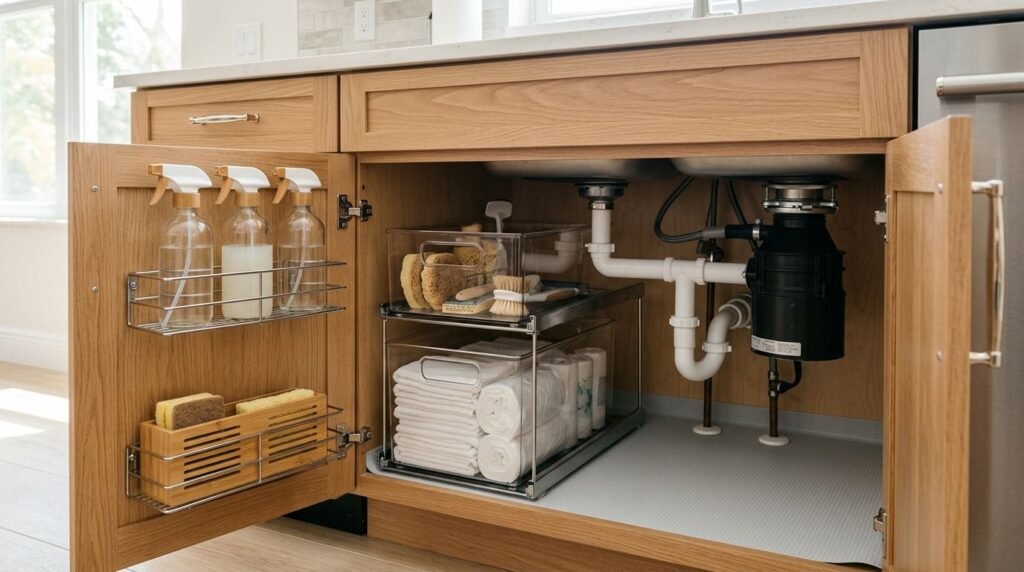
The cabinet beneath your kitchen sink handles some of the messiest jobs in the house, yet it often becomes the hardest space to use. Bottles tip over, sponges stay wet, and plumbing takes up valuable room.
In Fort Myers, heat and humidity add another concern. Your storage system needs to tolerate moisture, allow access to pipes, and stay easy to clean. Smart under-sink cabinet organization starts with the cabinet itself, then adds storage that fits the space instead of fighting it.
Key Takeaways
- Use moisture-resistant materials, removable liners, and easy-clean organizers.
- Measure around the drain, disposal, water lines, and dishwasher connection before buying accessories.
- Leave clearance around plumbing and avoid packing the cabinet so tightly that air cannot circulate.
- Store frequently used supplies in pull-out or door-mounted organizers.
- Include under-sink storage in your cabinet design before installation, not after the doors are in place.
Start With Fort Myers Conditions and Sink-Base Measurements
A Fort Myers kitchen can experience high indoor humidity, especially when exterior doors open often or the home has limited ventilation. The area beneath the sink also faces occasional splashes, small leaks, and damp cleaning tools. That combination can damage unsealed storage materials and create unpleasant odors.
Begin by emptying the cabinet completely. Dry the floor and inspect the corners, cabinet sides, shutoff valves, supply lines, drain trap, and dishwasher hose. A swollen cabinet floor, soft edge, or musty smell needs attention before you add organizers.
Next, measure the usable area rather than the cabinet’s outside dimensions. Record the width between the cabinet walls, the distance from the floor to the lowest plumbing point, and the depth from the doors to the back wall. Mark the disposal, drain, water lines, and any filtration equipment. These measurements determine whether a pull-out shelf, shelf riser, or narrow bin will fit.
A standard sink base often has less usable room than its width suggests. The sink bowl occupies the upper area, while the drain and disposal divide the lower section. A cabinet that appears roomy may only offer a slim area on each side of the plumbing.
For cabinet replacement or a major remodel, review standard kitchen cabinet dimensions before finalizing the layout. The sink base width, cabinet depth, and door configuration affect every storage decision underneath.
A good organizer fits the plumbing first. Storage comes second.
Choose a removable, waterproof liner for the cabinet floor. A raised edge can contain a small spill, while a light color makes leaks easier to spot. Avoid permanent adhesive liners that make repairs or cabinet replacement difficult.
Choose Organizers That Handle Moisture and Daily Use
The best under-sink organizers in a humid climate are simple, washable, and easy to remove. Look for stainless steel, powder-coated metal, rigid plastic, or sealed composite materials. Wire baskets can work well when they have a stable base and a finish that resists corrosion.
A full-extension pull-out tray is useful for heavy bottles and cleaning products. You can bring the entire tray forward instead of reaching around the drain. Choose a tray with a solid or removable bottom, because small containers can tip through wide wire openings.
Door-mounted racks add storage without using the cabinet floor. They work well for dish brushes, small spray bottles, gloves, and extra sponges. Keep the load light, and check that the rack clears the plumbing when the door closes.
A two-level shelf creates a second surface for smaller products. Use the lower section for larger bottles and the upper level for dishwasher detergent, scrubbers, or spare cloths. Select a shelf with adjustable feet or a shape that can fit around the drain pipe.
Here are common options and the jobs they handle best:
| Organizer | Best use | Fort Myers-friendly feature |
|---|---|---|
| Pull-out tray | Heavy bottles and containers | Removable, washable surface |
| Door rack | Brushes, gloves, and small supplies | Keeps items away from damp cabinet flooring |
| Shelf riser | Short bottles and dishwasher products | Creates vertical storage |
| Plastic bin | Loose items and refill products | Easy to lift out and rinse |
| Slim divider | Trays, cutting boards, or baking sheets | Uses narrow side space |
A plastic bin can hold refill bags, extra dish soap, or cleaning cloths, but avoid storing damp items inside it. Moisture trapped in a closed container can cause mildew even when the cabinet looks dry.
For safety, keep bleach, drain cleaner, dishwasher chemicals, and other harsh products in a secure location. If children or pets can reach the cabinet, use a child-resistant latch. Store food, medications, and pet supplies somewhere else.
Assign Every Supply a Practical Home
Organization works best when each item has a clear location and a reason for being there. Start with the products you use every day. Dish soap, a scrub brush, gloves, and a small supply of sponges should sit near the front of the cabinet or on the door.
Place heavier bottles on a low pull-out tray. This position lowers the risk of spills and makes the tray easier to handle. Keep the tallest containers away from the hinge side if the door swings close to them.
Group backup supplies separately from active supplies. Extra trash bags, unopened dishwasher detergent, and replacement filters can sit in a labeled bin farther back. You won’t need to move them during every cleanup.
A small container can hold loose items such as rubber bands, sink stoppers, brushes, and spare spray nozzles. Use an open or ventilated container for tools that may still be damp. Let sponges and cloths dry before placing them under the sink.
Keep the area around shutoff valves visible. You should be able to reach the valves quickly without unloading the entire cabinet. The same rule applies to the drain trap, disposal switch, water filter, and dishwasher connection.
Avoid storing items directly beneath a possible leak point. If a bottle sits below a supply connection, even a small drip can go unnoticed. A light-colored liner and an unobstructed floor make routine inspections easier.
A practical arrangement usually follows this pattern:
- Put daily-use items at the front.
- Place heavy containers on a stable lower tray.
- Store backup products in one removable bin.
- Keep plumbing and shutoff valves accessible.
- Leave open space around pipes and cabinet corners.
The goal is to reduce reaching and searching without filling every inch. An overpacked cabinet hides leaks, restricts airflow, and makes cleaning harder.
Make Storage Part of Your Cabinet Design
If you’re buying new kitchen cabinets, plan the sink base before selecting finishes or hardware. The cabinet design should account for the sink size, disposal, faucet plumbing, filtration systems, and the organizers you want to use.
Ask whether the sink base will have a full-height door, a drawer above the doors, or a false front. A drawer can hold small items such as dishwasher pods or scrub brushes, while the cabinet below handles larger bottles. However, the drawer depth must account for the sink and plumbing.
A wide sink base can provide better access to both sides of the cabinet. If your floor plan allows it, discuss whether a wider cabinet will improve storage without creating excessive dead space elsewhere. Your cabinet professional can compare the layout with appliance clearances and countertop plans.
Cabinet interiors also deserve attention. Ask about finished surfaces, sealed edges, moisture-resistant construction, and the best cleaning method for the selected material. Sealed edges matter because the cabinet floor and side panels may encounter water over time.
Door swing affects organization, too. A door-mounted rack needs enough clearance to open fully. Pull-out trays need space to extend without hitting adjacent cabinets, trim, or the sink plumbing. Confirm these details before installation.
When budget matters, stock cabinetry can still support a thoughtful storage plan. Budget-friendly cabinet options for Fort Myers can work well when the sink base, interior finish, and accessories match your daily needs.
Custom features may include a shaped pull-out, a built-in recycling bin, a removable cleaning caddy, or a dedicated compartment for water filtration equipment. These additions cost more than loose organizers, but they can make sense when the cabinet will be difficult to access or has unusual plumbing.
Bring your measurements and storage list to the design appointment. Tell the designer which products you keep under the sink, how often you use them, and whether you need child-resistant storage. A cabinet plan based on actual habits will work better than one based only on appearance.
Keep the Cabinet Dry, Clear, and Easy to Inspect
Even moisture-resistant storage needs regular care. Wipe spills as soon as they happen, and remove wet sponges or cloths instead of leaving them in a closed bin. A small leak can spread beneath a liner, so lift the liner occasionally and check the cabinet floor.
Once a month, remove the supplies from the front of the cabinet. Look at the plumbing connections, wipe the liner, and check for swelling, stains, corrosion, or an unusual odor. Replace cracked containers before they leak.
Clean organizers with warm water and a mild dish soap that suits their material. Dry metal racks fully before returning them to the cabinet. Avoid mixing cleaning chemicals, and never store an open bottle where it can fall against a pipe.
Ventilation needs practical boundaries. Don’t block a cabinet vent, if one exists, and don’t push bins tightly against every wall. Leave enough space to see the plumbing and allow air to move around stored items.
A leak sensor on the cabinet floor can provide an early warning, especially when the kitchen is vacant for extended periods. It should sit where water would collect first and remain visible during routine checks.
Conclusion
Effective under-sink cabinet organization begins with a dry, accessible cabinet and organizers that can handle everyday moisture. Measure around the plumbing, use removable storage, and leave enough open space for inspections and airflow.
When you’re replacing cabinets, discuss these details during the cabinet design stage. A sink base planned around your actual supplies will keep the space cleaner and easier to use, even when Fort Myers heat and humidity put the cabinet to work.
