 Skip to content
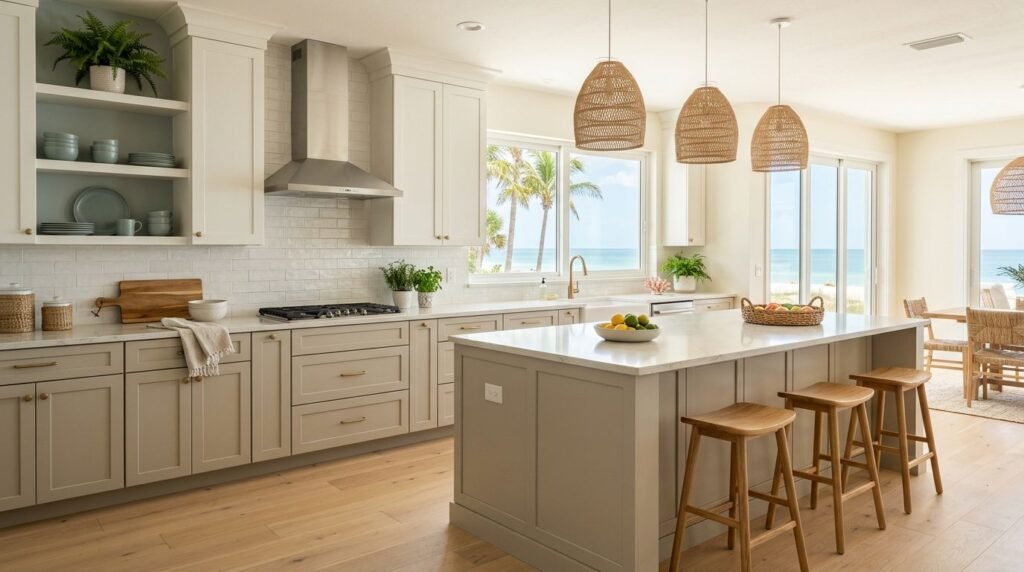
Bright Fort Myers kitchens can make color look completely different by midafternoon. A white cabinet may feel crisp in the morning, then appear yellow or glaring under strong Florida sun.
The best kitchen cabinet colors balance natural light, coastal surroundings, countertop tones, and the daily effects of humidity, sand, and fingerprints. Your kitchen’s window direction matters, too, so start with the light before choosing a finish.
Key Takeaways
- Warm whites and soft greiges suit many bright Fort Myers kitchens.
- South- and west-facing rooms often need muted colors that reduce glare.
- North-facing kitchens benefit from warmer cabinet tones.
- Blue-gray, sage, and pale aqua work well in coastal-inspired spaces when their undertones match the room.
- Matte and satin finishes usually create a calmer look than high-gloss surfaces in strong sunlight.
Start With the Light in Your Fort Myers Kitchen
Florida sunlight has a warm, direct quality, especially when it enters through large windows or glass doors. The same cabinet color can look pale and balanced in one kitchen, then appear yellow, gray, or overly bright in another.
Before ordering cabinets, place large samples near the main windows. Check them in the morning, around midday, and late afternoon. Small paint chips rarely show enough surface area to reveal glare or undertones. A larger sample also lets you compare the cabinet color with the backsplash, flooring, counters, and wall paint.
The room’s exposure gives you a useful starting point:
- North-facing kitchens receive cooler, less direct light. Warm white, ivory, creamy beige, and light greige can keep the space from feeling cold.
- South-facing kitchens receive strong light for much of the day. Balanced greige, muted blue-green, soft taupe, and medium wood tones can absorb some visual intensity.
- East-facing kitchens get warm morning sun and cooler light later. Warm white, sand, pale blue-green, and light natural wood usually remain flexible throughout the day.
- West-facing kitchens receive strong afternoon sun, which can make warm colors look more intense. Soft gray-green, muted blue-gray, and restrained off-white can help balance the room.
Window placement still matters more than compass direction alone. A west-facing kitchen shaded by mature trees won’t behave like one with uncovered glass doors. Roof overhangs, blinds, nearby buildings, and wall color all affect the light that reaches your cabinets.
A good color also needs to work after sunset. Under warm LED bulbs, blue-gray cabinets may appear greener, while creamy whites can look more yellow. Use the lighting you plan to keep, rather than choosing color under temporary renovation lights.
The Most Versatile Cabinet Colors for Bright Homes
White remains popular in Southwest Florida because it keeps a kitchen open and pairs with almost every counter material. However, pure bright white can reflect intense sun and create a sharp, high-contrast look. In a bright room, a softer white often feels more comfortable.
Warm white and ivory
Warm white cabinets have subtle cream or beige undertones. They work especially well in north-facing rooms, kitchens with travertine floors, and spaces with warm wood accents. Ivory offers a similar effect with a slightly richer appearance.
Choose a warm white carefully if your walls already have yellow undertones. Too much warmth can make the room look dated or overly creamy. Compare the cabinet sample with your wall paint in natural light before committing.
Soft greige
Greige combines gray and beige, giving it more balance than either color alone. Light greige cabinets suit bright south- and west-facing kitchens because they soften glare without making the room dark.
This color also pairs well with white quartz, natural stone, brushed brass, black hardware, and medium wood flooring. Choose a greige with a clear undertone. Some lean taupe, while others look cool and gray beside warm floors.
Pale blue-gray
Blue-gray cabinets bring a coastal feeling without turning the kitchen into a themed space. The color works well with white counters, light oak accents, polished nickel, and sandy beige flooring.
In a north-facing room, choose a blue-gray with some warmth. Cold gray-blue can make limited natural light feel flat. South-facing kitchens usually give this color enough light to look clean and airy.
Soft sage green
Sage adds color while remaining quiet enough for a full cabinet run. It pairs naturally with white walls, rattan accents, warm wood, and stone counters. In bright sunlight, muted sage often feels fresh without the intensity of brighter greens.
For a cohesive cabinet design, repeat the green’s undertone in small details such as tile grout, upholstery, or artwork. A gray-based sage looks different beside creamy counters than it does beside stark white quartz.
Natural light wood
Light oak and other pale wood finishes add warmth without relying on a painted color. They suit open kitchens where white walls, glass, and large windows already provide plenty of brightness.
Wood grain also helps disguise small amounts of dust and everyday wear. However, every species and stain has its own undertone. Test the actual door finish beside your flooring and countertop rather than selecting from a tiny printed image.
Deep colors for islands and accents
Navy, charcoal, and deep green can work beautifully on a kitchen island, beverage station, or lower cabinets. In a bright room, sunlight gives these colors enough contrast and prevents them from feeling heavy.
Use deep colors selectively when the kitchen is small or has limited artificial lighting. A dark island with light perimeter cabinets can anchor the room while keeping the overall design open.
Match Cabinet Colors to Each Window Direction
Choosing by exposure helps narrow the options, but the final decision should account for the whole room. The table below offers a practical starting point for each direction.
| Kitchen exposure | Colors to consider | Colors to approach carefully |
|---|---|---|
| North-facing | Warm white, ivory, cream, light taupe, warm greige | Icy white, blue-gray with cool undertones, charcoal |
| South-facing | Soft greige, muted sage, blue-green, pale oak, balanced white | Highly reflective bright white, strong yellow, saturated orange |
| East-facing | Warm white, sand, pale aqua, light oak, soft sage | Heavy gray, intense yellow, dark colors across every cabinet |
| West-facing | Gray-green, muted blue-gray, soft greige, restrained white | Bright yellow, orange beige, glossy white, vivid red |
North-facing kitchens can handle more warmth because their light tends to flatten warm colors. South-facing rooms offer more freedom, though highly reflective white can create uncomfortable glare near windows.
East-facing kitchens change throughout the day. A color that feels golden at breakfast may appear cooler by late afternoon, so balanced finishes work well. West-facing kitchens need extra care because afternoon light can intensify beige, cream, and yellow.
The right sample should look appealing at the time you use the kitchen most. A breakfast area and an evening entertaining space may need different priorities.
Counters and backsplashes also change how cabinets appear. White quartz can make an off-white cabinet look darker, while a creamy stone counter can make the same door look whiter. Hold samples vertically, since cabinets receive light differently than a flat countertop sample.
If your layout or storage plan still needs work, review this guide to cabinet sizes before selecting color. Door proportions, tall pantry units, and wall cabinet heights affect how much of the chosen finish you see.
Choose Finishes That Suit Florida Conditions
Color is only one part of cabinet performance. Fort Myers kitchens deal with humidity, cooking moisture, tracked-in sand, and strong sunlight. A durable finish and properly sealed construction matter as much as the shade.
Painted cabinets make color selection easier, but they can show chips and scuffs more clearly than wood grain. Ask about the finish system, edge treatment, and care instructions. Cabinets should have well-sealed exposed edges, especially near sinks, dishwashers, and other moisture sources.
Wood finishes offer natural variation and can hide minor marks. Light oak works well in coastal-inspired interiors because it brings warmth without competing with bright walls or ocean-inspired accents. Medium walnut or stained oak can add contrast in a white kitchen, though darker finishes may feel visually heavier.
For most bright kitchens, matte or satin surfaces provide a comfortable balance. They reduce reflected glare and give painted doors a softer appearance. High-gloss cabinets reflect more light and clean easily, but they can highlight fingerprints, dust, and uneven lighting.
Hardware can shift the character of a cabinet color. Brushed nickel and chrome support cool blue-gray or white cabinets. Aged brass adds warmth to sage, ivory, and greige. Black pulls create stronger contrast, particularly on pale cabinets, but they can look severe if the kitchen already has many dark accents.
Humidity also affects daily care. Run the range hood during cooking, wipe standing water near the sink, and use a soft damp cloth instead of abrasive cleaners. Avoid soaking cabinet doors or allowing steam to collect around wall cabinets.
Homeowners working within a set budget can compare stock cabinets for kitchen remodels, especially when a flexible Shaker or slab door suits the room. A well-planned layout, consistent color, and carefully chosen hardware can give standard cabinet sizes a tailored appearance.
Build a Color Palette That Won’t Date Quickly
A successful kitchen usually has one main cabinet color, one counter direction, and a small number of supporting finishes. Too many competing undertones make a bright room feel busy.
For a calm coastal palette, pair soft white cabinets with pale oak flooring, a light stone counter, and muted blue-green accents. A warmer Fort Myers palette might use greige cabinets, creamy walls, natural wood stools, and aged brass hardware.
If you want more contrast, use light perimeter cabinets with a darker island. Navy, deep green, and charcoal provide definition without covering every wall in a dark finish. Keep the backsplash simple so the cabinet color remains the main visual feature.
White kitchens also benefit from texture. Shaker doors, woven counter stools, wood shelving, handmade-look tile, and veined stone can add interest without requiring a second cabinet color. In a compact kitchen, this approach helps preserve the sense of space.
Take home samples before making a final decision. View them beside the actual countertop and floor, then check them under both daylight and your planned fixtures. A cabinet color that looks slightly plain on a showroom wall may feel perfectly balanced once sunlight, hardware, and surrounding materials come together.
Conclusion
The best kitchen cabinet colors for a bright Fort Myers home depend on exposure, undertones, finish, and the materials around them. Warm whites and greiges suit many spaces, while sage, blue-gray, pale wood, and selective dark accents add personality without fighting Florida’s strong light.
Start by testing large samples in your kitchen at different times of day. When the color looks balanced in both sunlight and evening light, it has the foundation for a lasting cabinet design.
