 Skip to content
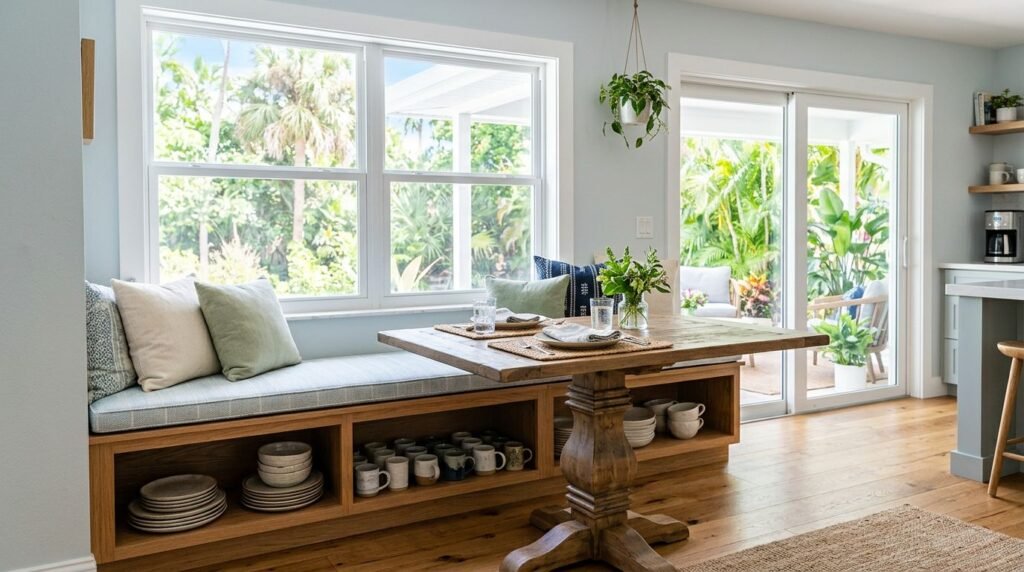
A Fort Myers eat-in kitchen often does more than serve meals. It holds school bags, coffee mugs, serving dishes, and the people who drift in and out all day. Banquette storage cabinets turn that busy corner into a seat, a storage zone, and a visual anchor at once.
That matters even more in Southwest Florida, where humidity, sunlight, and daily use can wear on weak materials fast. The right banquette feels built in, keeps the room open, and gives you storage that doesn’t look like an afterthought.
The best ideas start with how your kitchen works now, then shape the bench around that routine.
Why banquette storage works in Fort Myers eat-in kitchens
Many Fort Myers homes have a kitchen nook that never reaches its full use. A table and a pair of chairs can fill the space, but they rarely solve the clutter problem. A built-in banquette changes the footprint without making the room feel crowded.
It also fits the way families actually live. One person wants a quick breakfast. Someone else needs a place to sort mail. A child drops a backpack by the wall. Instead of adding more furniture, the banquette handles those small daily tasks with less visual noise.
In a coastal home, that clean look matters. Natural light can make a kitchen feel larger, but it also shows every extra object on the floor. A bench with storage keeps the room calmer. It also softens hard surfaces like tile, stone, and painted cabinets.
A well-placed banquette can do one more thing. It gives the kitchen a stronger center. The seat frames the nook, while the cabinets below hide the mess. That balance is what makes the space feel finished.
Built-in banquette storage cabinet ideas that make space work harder
The right layout depends on what you need to store and how often you need it. Some homeowners want fast access to everyday items. Others want a place for bulky extras that only come out a few times a year.
Here’s a quick look at a few smart options:
| Banquette style | Best storage use | Works well for | Design note |
|---|---|---|---|
| Drawer-base bench | Placemat, napkin, and kid-item storage | Busy families | Easy to reach without lifting cushions |
| Lift-up seat box | Seasonal items and larger supplies | Smaller homes | Offers deep hidden storage |
| Mixed drawers and cubbies | Chargers, books, menus, and daily essentials | Multi-use kitchens | Keeps small items from getting lost |
| Wraparound corner banquette | Linens, serving pieces, and board games | Larger nooks | Uses wall space that often goes unused |
The biggest advantage of drawers is access. You can open one in seconds and grab what you need. Lift-up seats hold more volume, but they work best for things you don’t use every day. A mix of both gives you the most flexibility.
A banquette should feel like a seat first and a storage unit second.
That simple rule keeps the design honest. If the storage gets too deep or the seat feels awkward, the nook stops being useful. If the cabinet layout matches your habits, the space starts working like a built-in helper.
Some kitchens also benefit from a shallow end cabinet or open shelf on one side. That spot can hold cookbooks, baskets, or a decorative bowl. It breaks up the bench visually and makes the banquette feel lighter.
Materials and finishes that handle coastal humidity
Fort Myers homes need surfaces that can handle moisture, temperature swings, and plenty of use. That starts with the cabinet box itself. Plywood is often a better choice than lower-grade particle board because it holds up better over time and resists swelling when conditions shift.
Finish choice matters just as much. Painted fronts should have a durable topcoat. Stained wood should be sealed well. If the bench sits near a sunny window or slider, the finish should also be able to handle extra heat and light without looking tired too soon.
Seat cushions need the same care. Performance fabric, easy-clean vinyl, or removable covers can save you trouble later. Light, sandy tones work well in Fort Myers because they keep the room bright. Warm whites, driftwood grays, and soft taupes also pair nicely with coastal kitchens.
Hardware should match the climate too. Hinges, slides, and pulls need to stand up to daily use. Soft-close parts are a smart choice because they reduce wear on the cabinet face and keep the nook quieter during busy mornings.
A good material list often looks like this:
- Moisture-resistant cabinet boxes with sealed edges
- Durable paint or stain with a strong finish
- Wipeable or removable seat fabric
- Corrosion-resistant hinges, slides, and pulls
Those choices do more than protect the bench. They keep the whole space looking polished for longer.
Cabinet design details that keep seating comfortable
Good cabinet design makes the nook pleasant to sit in, not just practical to store things in. Seat height should feel close to a standard dining chair once the cushion is added. Seat depth also matters. Too shallow, and the bench feels stiff. Too deep, and people sink back awkwardly.
The table should sit close enough for easy conversation and meals, but not so close that knees bump into the edge. The best layouts let people slide in and out without squeezing past chair legs or cabinet corners. That matters in an eat-in kitchen, where traffic often moves in every direction.
Storage access should match the seat layout. A shallow drawer is perfect for placemats, napkins, and chargers. Deeper drawers can hold serving bowls or larger pantry overflow. If you add a lift-up seat, make sure the opening path stays clear and the hinges feel sturdy.
For drawers and doors that get used every day, choosing the right cabinet hardware matters too. Pulls are often easier on the hands for bigger drawers, while a compact knob can work on lighter cabinet fronts. The best choice depends on how often the bench gets opened and who uses it most.
Small details also shape comfort. A back cushion should support the sitter without crowding the table. The edge of the bench should feel smooth. If the nook sits beside a cooking zone, keep the layout clear so the seat doesn’t interfere with meal prep.
Styling the nook so it looks built in
A banquette looks best when it feels connected to the rest of the kitchen. Matching the baseboard height, paint color, or wood tone helps the bench feel like part of the original plan. A paneled front can echo nearby cabinets and make the whole wall read as one finished unit.
Texture plays a big role too. In Fort Myers, a little softness goes a long way. Linen-look fabric, woven accents, and warm wood details keep the space relaxed without turning it into a themed coastal room. The goal is comfort with restraint.
The table shape should support the layout. A round pedestal table works well in tighter nooks because it frees up leg space and keeps traffic moving. A rectangular table fits longer benches and gives the room a clean line.
Lighting can finish the picture. A pendant, wall sconce, or small pair of fixtures above the nook gives the banquette a clear place in the kitchen. If the seat sits under a window, simple shades or light drapery keep the area bright without clutter.
When the bench, table, and finishes all relate to each other, the nook feels settled. It looks planned, not patched together.
Conclusion
The strongest banquette storage ideas do three things well. They hide clutter, keep seating comfortable, and fit the rhythm of a Fort Myers kitchen. When those pieces work together, the nook becomes one of the most useful spots in the house.
That’s where thoughtful cabinet design makes the difference. The right materials hold up in coastal weather, while the right storage layout keeps daily life easy to manage. A banquette built with care turns a simple breakfast corner into a space that feels calm, useful, and complete.
