
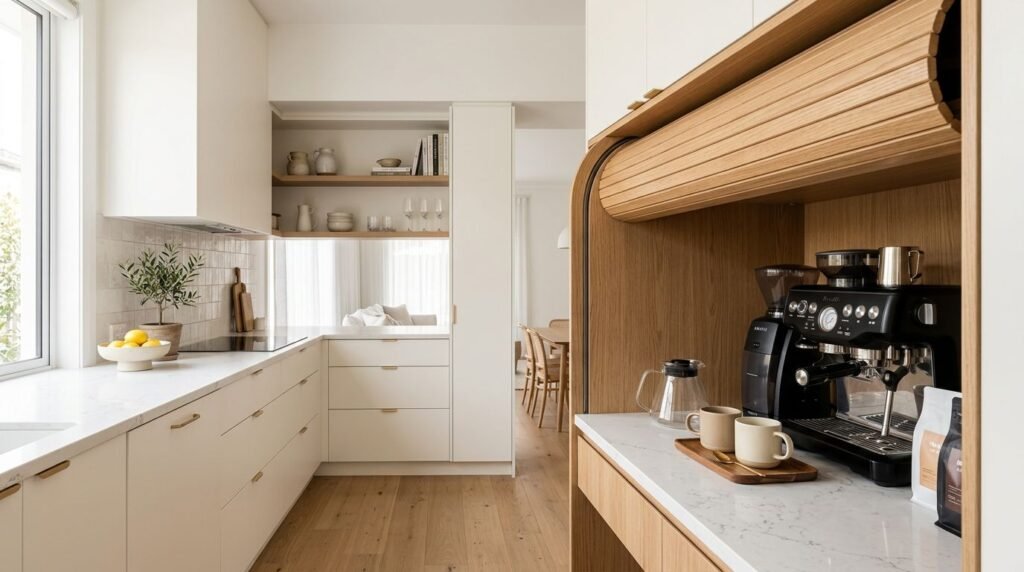
Open shelving can make a kitchen look airy, but it also puts everyday clutter on display. Tambour cabinet doors offer a cleaner solution by hiding appliances, pantry items, and workday mess without adding the visual weight of traditional swinging doors.
These doors use connected slats that roll or slide into the cabinet instead of opening outward. That small change can improve traffic flow, protect counter space, and give a modern kitchen a tailored look. The right design starts with cabinet placement, door size, material, and the items you plan to store.
Key Takeaways
- Tambour doors roll into or across a cabinet, so they need less clearance than hinged doors.
- They work well for appliance garages, coffee stations, pantry storage, and bathroom vanities.
- Slat material, track quality, ventilation, and interior dimensions affect daily performance.
- A careful cabinet design plan prevents clearance problems and keeps the storage practical.
- Professional measurements help coordinate tambour doors with appliances, outlets, countertops, and trim.
Why Tambour Cabinet Doors Suit Modern Kitchens
A modern kitchen often depends on visual order. Counters may hold a coffee maker, toaster, blender, or charging station, yet those items can quickly make the room feel crowded. Tambour doors conceal these zones while keeping frequently used equipment close at hand.
Unlike a hinged door, a tambour panel doesn’t swing into the room. Depending on the design, the slatted door rolls upward, moves vertically, or travels sideways into a pocket. This makes it useful beside a walkway, near a corner, or above a busy countertop.
The appearance also fits current kitchen styles. Tambour panels can add texture to flat-front cabinetry without introducing ornate details. Wood slats create warmth in a white kitchen, while painted or laminate finishes can coordinate with surrounding doors. A contrasting finish can identify the storage zone as a feature rather than making it disappear completely.
The door’s movement matters as much as its appearance. A well-built system should open smoothly, stay aligned, and stop without scraping the cabinet interior. Hardware quality makes a major difference, especially when the door is used several times each day.
A tambour door saves swing space, but it still needs room inside the cabinet for its track and rolled slats.
The Best Places to Use Tambour Storage
Tambour doors work best where you want access during food preparation but prefer a clear counter when the kitchen is finished. An appliance garage is one of the most practical applications. A mixer, espresso machine, or toaster can remain connected and ready for use behind the door.
A countertop cabinet with a tambour front can also hold a coffee station. Include space for mugs, coffee supplies, and small accessories, then add an outlet inside the cabinet if local electrical requirements allow it. The door can stay open while the machine runs and close afterward.
Other useful placements include:
- Small appliance cabinets beside the refrigerator or tall pantry units
- Breakfast stations with shelves for cups, cereals, and serving pieces
- Bar and beverage storage in an island or entertaining area
- Charging cabinets for household devices, when ventilation and electrical planning are handled correctly
- Bathroom vanities that conceal grooming tools or extra toiletries
- Outdoor kitchen cabinets where protected storage helps keep counters organized
A tambour door can also divide a kitchen workstation from the main living area. In an open-plan home, closing the panel after meal preparation gives the room a calmer appearance without requiring a separate pantry.
Placement should follow use, not appearance alone. Heavy appliances need a sturdy shelf and enough clearance for operation. Items used every morning should sit between comfortable reach heights. Rarely used serving pieces can go higher or deeper.
Tambour Cabinet Doors Compared With Other Options
Different door styles solve different storage problems. The best choice depends on available clearance, cabinet width, access needs, and the look you want.
| Door style | Best for | Main advantage | Planning concern |
|---|---|---|---|
| Tambour | Appliance garages and countertop stations | No outward swing | Requires interior roll-up space |
| Hinged | General base and wall cabinets | Full, familiar access | Needs clearance in front |
| Appliance or pantry zones | Door disappears beside the opening | Needs side space for the pocket | |
| Lift-up | Wide wall cabinets | Easy access above counters | Requires overhead clearance |
| Open shelving | Display storage | Quick visibility and access | Items remain exposed |
Tambour systems are especially helpful in narrow kitchens. A hinged door can block a passage when open, while a tambour panel stays within its planned path. However, the rolled door may reduce usable interior space. A designer needs to account for that loss before finalizing shelf depths.
Pocket doors offer a similar hidden-storage effect, but they require room beside the opening. Lift-up doors can work well above a counter, although their hardware and height may not suit every user. Open shelves cost less in hardware, but they require consistent organization and regular dusting.
The important comparison is not style alone. Ask how often you will use the storage, whether the contents need to remain plugged in, and how much clearance the room provides.
Planning Cabinet Size, Depth, and Clearance
A tambour cabinet needs accurate dimensions because the door system occupies part of the cabinet’s interior. Start with the opening width and height, then confirm the manufacturer’s required track space. Cabinet width also affects how much the slats weigh and how easily the door moves.
Standard cabinet dimensions may provide a starting point, but they don’t answer every question. Review this kitchen cabinet sizes guide before choosing a location. It covers common base, wall, and tall cabinet measurements, along with the way standard sizes can be adjusted for a specific room.
Depth deserves close attention. A cabinet that is too shallow may not fit an appliance, while excessive depth can make items difficult to reach. In a compact kitchen, added depth can also reduce the walkway behind an island or create conflicts with nearby doors.
Use these measurements during planning:
- Measure the available wall or countertop width.
- Record the opening height, including any trim or light rail.
- Confirm the interior depth after accounting for the tambour track.
- Check the appliance dimensions with handles, cords, and ventilation space included.
- Mark nearby outlets, switches, windows, and adjacent door swings.
- Verify that the open door won’t interfere with lighting or overhead cabinets.
For wall-mounted storage, consider how high the cabinet sits above the countertop. A door that rolls upward may be difficult to reach if the top of the cabinet is too high. A side-running tambour may offer better access in that location.
The usable size of a tambour cabinet is the space left after the door mechanism, shelves, outlets, and appliance clearances are planned.
Choosing Materials and Finishes
Tambour doors are available in several materials, and each creates a different effect. Natural wood slats add warmth and show grain variation. They work well with stained cabinetry, rift-cut oak accents, and kitchens that combine wood with painted doors.
Painted slats create a more uniform appearance. A matching color can make the cabinet blend with the rest of the kitchen, while a contrasting tone can frame a coffee station or bar area. Laminate and composite options may offer consistent color and easier care, depending on the product.
The finish should suit the location. Near a sink or cooktop, choose a surface that can handle regular wiping. Avoid placing untreated wood where it will receive frequent moisture or steam. In Southwest Florida homes, humidity and air conditioning changes also make material selection and installation quality important.
Hardware should match the door’s weight and width. A smooth track reduces frustration and helps prevent slats from shifting. Handles are not always necessary because many tambour doors use a recessed grip, but a handle can improve access for users with limited hand strength.
Ask your cabinet supplier about replacement parts, cleaning instructions, and finish samples. A small sample can reveal how the slats catch light, how the finish compares with your cabinet doors, and whether fingerprints show on darker colors.
Keeping the Interior Functional
Good tambour storage depends on what happens behind the door. Shelves should remain adjustable when possible, especially if the cabinet will hold appliances of different sizes. A fixed shelf may look tidy during installation but limit future use.
Use the lower portion for heavier equipment. Keep lighter accessories, filters, cups, or packaged goods on upper shelves. If the cabinet holds a coffee machine, place the machine where you can fill its reservoir without moving it into the room.
Ventilation needs attention when appliances generate heat. Toasters, espresso machines, and blenders should follow the manufacturer’s operating instructions. Never close a door around an active appliance if the product requires open-air use or additional clearance.
Interior lighting can improve access, particularly in a tall cabinet or deep countertop station. Low-profile LED lighting may help you see the back of the cabinet, but wiring should be planned before installation. The cabinet layout also needs enough space for cords without trapping them in the door mechanism.
For bathrooms, choose moisture-aware storage. A tambour vanity compartment can conceal hair tools and personal items, but wet products should not sit against unfinished wood or poorly sealed surfaces.
Coordinating the Design With the Rest of the Room
A tambour door should look intentional within the full cabinet layout. Align its top rail, side panels, and finish with nearby doors. If the panel sits above a countertop, coordinate it with the backsplash, under-cabinet lighting, and countertop edge.
The surrounding cabinet design also determines whether the door feels subtle or decorative. Flat-panel doors create a quiet backdrop for textured slats. Shaker cabinetry can support a wood tambour accent without making the room feel busy. In a two-tone kitchen, match the tambour to either the island or the perimeter cabinets.
Hardware placement deserves the same care. A recessed pull can preserve a clean front, while a small metal pull can connect the cabinet to the room’s faucets and lighting. Keep the pull comfortable to reach and clear of adjacent doors.
A design consultation can identify conflicts before cabinets are ordered. During a cabinet design consultation, bring appliance dimensions, inspiration images, and a list of items you want to store. The layout should account for work zones, clearances, door movement, and your daily routines.
In Fort Myers and nearby Southwest Florida communities, renovation plans may also need to account for outdoor entertaining areas. The same rolling-door concept can hide serving supplies or small equipment in an outdoor entertainment cabinet, provided the materials and hardware suit the location.
Common Mistakes to Avoid
The most common mistake is choosing a tambour door for a cabinet that is too narrow or shallow. The door may fit the opening but leave little room for useful storage. Confirm the system’s installation requirements before approving the cabinet dimensions.
Another problem occurs when homeowners place a heat-producing appliance inside without planning ventilation. The cabinet should support safe use, not only conceal equipment between uses.
Watch for these issues during the design process:
- A cabinet opening that blocks a window, switch, or light
- Shelves that prevent the door from rolling fully
- An appliance that extends into the door path
- A track that makes interior cleaning difficult
- A finish that clashes with nearby cabinetry
- A door height that is uncomfortable for regular use
Cost also varies with material, hardware, cabinet construction, and installation. Request a complete quote that identifies the door system, finish, interior accessories, electrical work, and installation. Comparing only the visible panel can leave out the parts that determine performance.
Conclusion
Tambour cabinet doors can give a modern kitchen a cleaner counter without sacrificing access to the appliances and supplies you use most. Their compact movement suits tight walkways, countertop stations, beverage centers, and selected bathroom storage.
The strongest results come from planning the complete cabinet, not adding a rolling door as an afterthought. Confirm the interior depth, track space, appliance clearances, finish, and daily reach before ordering. With those details resolved, tambour cabinet doors can turn an exposed work zone into practical, polished storage.