
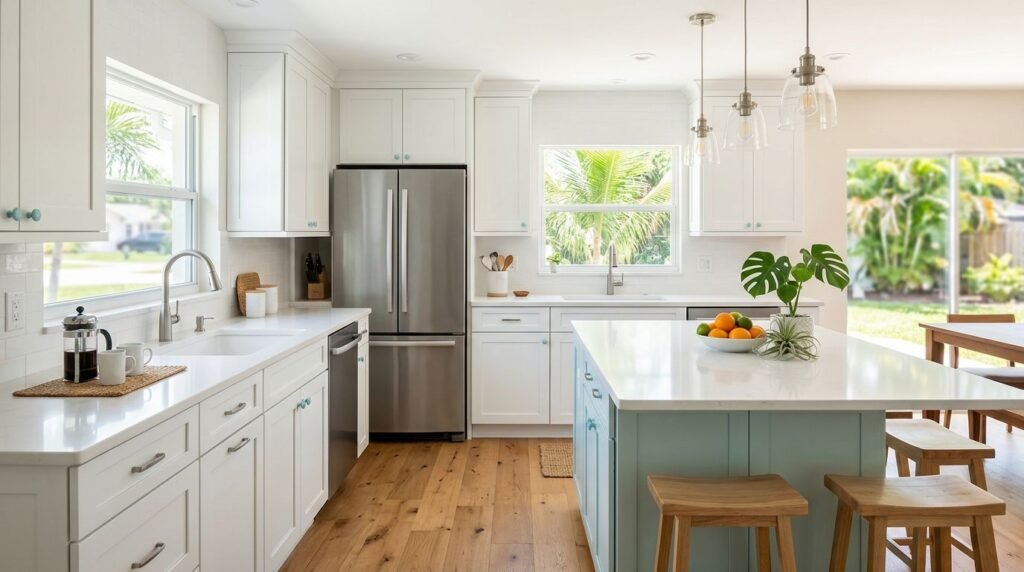
The space above your refrigerator can either look forgotten or pull the whole kitchen together. In many Fort Myers homes, that spot needs to do more than hide a gap. It has to fit the room, handle Florida humidity, and still look like it belongs.
That is where over refrigerator cabinets make a difference. With the right size, style, and finish, they add storage without crowding the kitchen.
Start With the Refrigerator Opening, Not the Cabinet
A good cabinet plan begins with the fridge, not with the cabinet itself. Measure the refrigerator width, height, and depth first, then check the surrounding wall space and trim. The cabinet should line up with the rest of the uppers and leave enough room for doors, hinges, and airflow.
That last part matters more than many homeowners expect. A fridge needs space to breathe, and a cabinet that sits too low can make the area feel tight. If the cabinet pushes into the ceiling line or blocks a trim detail, the whole wall can look awkward.
Measure the refrigerator first, then design the cabinet around the opening you actually have. Guessing usually leads to a box that looks squeezed or too small.
For Fort Myers kitchens, the goal is balance. You want extra storage, but you also want a clean line across the top of the room. That is why cabinet design should follow the kitchen’s layout, not just fill empty space.
If you’re planning a remodel, a simple consultation can save a lot of guesswork. The team behind about TEC Cabinetry Plus focuses on cabinetry planning and installation, which helps homeowners connect measurements to a finished look.
Styles That Fit Fort Myers Homes
The best over-fridge cabinet style depends on the rest of the kitchen. A modern coastal home often needs a lighter, simpler look. A traditional home may need more trim and detail. Either way, the cabinet should feel intentional, not like an add-on.
Before choosing a door profile, it helps to compare the common options side by side.
| Style | Best for | Look | Good use |
|---|---|---|---|
| Flat-panel cabinet | Modern or transitional kitchens | Clean and simple | Hides bulk items and keeps the wall calm |
| Shaker-style cabinet | Most homes in Fort Myers | Straightforward and versatile | Blends with existing cabinets easily |
| Raised-panel cabinet | Traditional spaces | More detail and depth | Softens tall wall space above the fridge |
| Glass-front cabinet | Display-focused kitchens | Open and airy | Works for dishes or accent pieces |
A flat-panel or Shaker cabinet usually fits best in coastal homes because it keeps the room light. Raised-panel fronts can work too, but they need the right trim and color to avoid looking heavy.
If you want a visual sense of how these choices change a room, browse custom cabinetry design examples. Looking at real projects makes the proportions easier to picture.
The takeaway is simple. The cabinet style should match the rest of the kitchen, while still fitting the refrigerator wall in a clean way.
Materials and Colors That Hold Up in Florida
Fort Myers kitchens deal with heat, humidity, and bright light. Because of that, the material and finish matter just as much as the style. A cabinet that looks great in a showroom can disappoint if it swells, fades, or shows wear too fast.
For many homes, painted cabinetry is a smart choice. Light colors work well with coastal interiors, and they make the room feel open. Warm white, soft sand, pale gray, and blue-gray are all strong options. They fit Florida homes without going full beach theme.
Durability matters too. Look for solid construction, sealed edges, and hardware that can handle daily use. In humid climates, a quality finish helps the cabinet stay smooth and clean. Matte or satin sheens often work better than high gloss because they hide fingerprints and glare.
Wood tone can also look great above a refrigerator, especially if the rest of the kitchen has natural textures. Just keep the stain balanced. Very dark finishes can make a small wall feel heavier than it should.
A few finish choices work especially well in Fort Myers kitchens:
- Warm white paint for a bright, fresh look
- Soft oak or driftwood tones for a relaxed coastal feel
- Pale gray or fog blue for a cooler, more tailored style
- Satin sheen for easier cleaning and less glare
The right color should tie into the rest of the kitchen, not fight it. When the finish, door style, and trim all work together, the cabinet feels built in.
Storage That Makes the Space Worth Using
A cabinet above the refrigerator should do real work. If it only hides empty air, it misses the point. Smart storage turns this spot into a useful part of the kitchen, even if it is not a place you open every day.
This is where cabinet design starts to matter in a practical way. Adjustable shelves, deep bins, and clear categories help the space stay useful instead of becoming a clutter trap.
Good items to store above the refrigerator include:
- Holiday platters and serving bowls
- Extra paper goods and backup napkins
- Rarely used appliances, like a slow cooker or roasting pan
- Bulk pantry items in sealed bins
- Lightweight serving pieces that do not need daily access
The key is to keep the heaviest and most-used items elsewhere. Reaching above a refrigerator takes effort, so this is a better spot for overflow storage than for daily cooking tools. Clear bins can help if the cabinet is deep, since they make it easier to pull out a full set of items at once.
In kitchens with limited pantry space, the cabinet can also help reduce visual clutter. A row of matching bins looks far better than stacked boxes and loose bags. That matters in smaller Fort Myers kitchens, where every visible surface affects how open the room feels.
Storage should support the rhythm of the kitchen. If the cabinet is hard to use, it won’t stay organized for long.
Design Mistakes That Make the Area Feel Off
Even a well-built cabinet can look wrong if the details are off. The most common problems are easy to spot once you know what to watch for.
Here are the mistakes that come up most often:
- Choosing the wrong height: A cabinet that crowds the ceiling looks cramped, while one that sits too low can feel disconnected.
- Ignoring door clearance: Refrigerator doors need room to open fully. If the cabinet interferes, daily use gets frustrating fast.
- Mixing finishes without a plan: A cabinet that clashes with the surrounding uppers pulls attention in the wrong way.
- Overstuffing the space: This cabinet should hold overflow items, not become a packed storage dump.
- Skipping trim details: Without crown or a clean transition, the cabinet can look like it was added later.
The best over-refrigerator cabinet ideas solve these problems before installation starts. That usually means matching proportions, using consistent trim, and keeping the style in line with the rest of the kitchen.
It also helps to think about the whole wall, not just the cabinet itself. The refrigerator, the side panels, and the upper cabinets around it all need to work together. When one piece is out of scale, the full layout feels off.
The most polished kitchens keep this area quiet. They don’t draw attention to the cabinet, because the cabinet already belongs there.
Conclusion
The space above your refrigerator is small, but it has a big effect on the kitchen. When the cabinet fits the opening, matches the room, and stores the right items, it adds both style and function.
In Fort Myers homes, the best choices usually lean light, durable, and well-proportioned. That mix works with coastal interiors, Florida humidity, and the need for extra storage.
A well-planned over refrigerator cabinet does its job without calling attention to itself. That is often the sign of strong cabinet design, and it makes the whole kitchen feel more complete.