 Skip to content
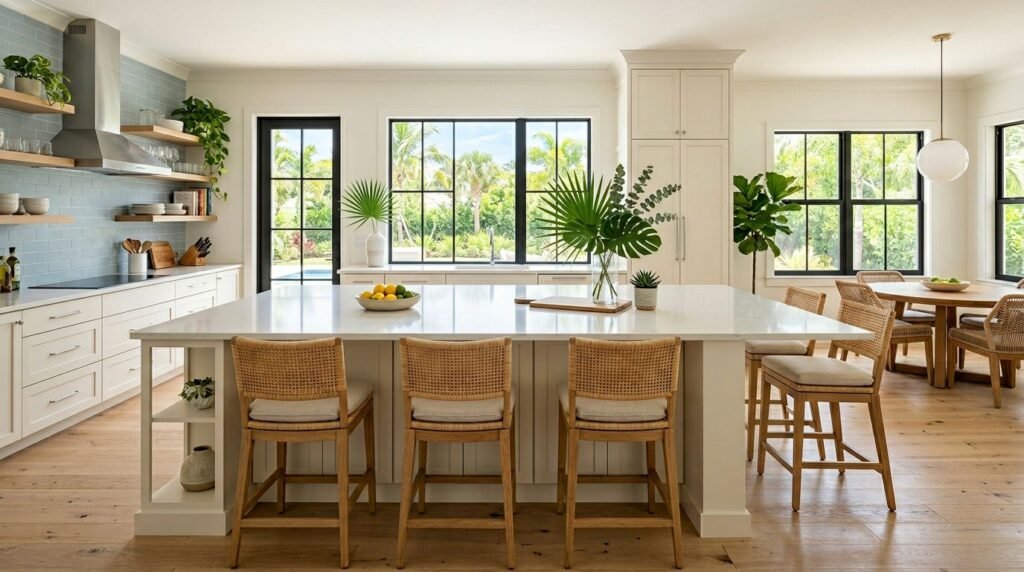
In Fort Myers, an island often becomes the busiest spot in the kitchen. It catches school bags, serving trays, coffee cups, and quick meals. So the best kitchen island cabinets need to do more than fill floor space. They should add storage, support easy traffic flow, and hold up in coastal Florida conditions.
That matters even more in homes with open-concept layouts. Humidity, airflow, entertaining, and daily maintenance all shape what works. If you’re planning a remodel, the ideas below can help you choose an island that looks polished and lives well.
Start with how your island will actually be used
First, decide what role the island plays in your kitchen. Some homeowners need a prep station with deep drawers. Others want a social hub with seating on two sides. In many Fort Myers homes, the right answer is a mix of both.
A good island should support movement, not slow it down. Because many local kitchens open into dining areas, great rooms, or lanais, traffic matters as much as storage. Leave enough clearance around the island so people can pass through without bumping chairs or open doors. In most remodels, that means planning for breathing room on every side.
If you cook often, drawers usually beat lower shelves. Pots, pans, lids, and mixing bowls are easier to grab from wide drawers than from deep base cabinets. Add a pull-out trash cabinet near the prep zone, and cleanup gets faster. For homeowners who entertain, shallow cabinets on the back side can store platters, table linens, or small serving pieces without adding too much bulk.
A quick comparison can help narrow the options:
| Island cabinet idea | Best for | Why it works |
|---|---|---|
| Deep drawer stacks | Heavy cookware and prep tools | Easier access, less bending |
| Back-side shallow cabinets | Entertaining and open layouts | Adds storage without crowding walkways |
| Open end shelves | Smaller kitchens | Keeps the island lighter and more airy |
| Toe-kick drawers | Tight remodels | Uses hidden space well |
If you want to compare layouts in real rooms, browse the Fort Myers cabinet portfolio gallery before finalizing island size. Seeing completed projects often makes scale easier to judge.
Pick materials and finishes that suit coastal Florida living
Fort Myers kitchens deal with heat, humidity, and constant use. That doesn’t mean every island needs to look heavy-duty. It does mean your material choices should be practical from day one.
For cabinet boxes, durable construction matters. Plywood often handles moisture better than low-grade particleboard, which can swell over time. Drawer hardware also counts. Full-extension drawers and soft-close guides hold up better in a kitchen that gets used all day.
Finish is just as important. Painted island cabinets look clean and bright, but the best paint choices are easy to wipe down and less likely to show every fingerprint. Warm whites, soft greiges, sandy tones, and muted blue-greens fit coastal Florida homes without feeling theme-driven. If you want contrast, a darker island base can ground the room while perimeter cabinets stay light.
Wood-look finishes also work well here, especially when you want a little warmth. White oak tones, light walnut looks, and textured neutral laminates pair nicely with bright counters and open spaces. Meanwhile, simple door styles make maintenance easier. Too many grooves and trim details can trap dust, grease, and grit.
In Fort Myers, a great island should feel breezy, not bulky.
That idea should guide your finish choices too. Satin and low-sheen surfaces usually look softer than high gloss, and they hide day-to-day wear better. Good cabinet design also considers the island from every angle, since this piece sits in plain view.
If you want help balancing style, durability, and upkeep, working with a team known for trusted cabinetry design in Fort Myers can make those choices clearer.
Add details that make kitchen island cabinets feel custom
The smartest island cabinets don’t just add storage. They shape how the whole kitchen feels. A large island can anchor the room like a well-placed sofa anchors a living area. Still, if it’s too solid or too deep, it can block sightlines and make the kitchen feel tight.
That’s why cabinet details matter. Decorative end panels, furniture-style feet, or a slightly recessed toe kick can soften the look. In an open-concept kitchen, those touches help the island read more like a piece of furniture and less like a box dropped in the middle of the room.
Two-tone color schemes also work well in Fort Myers remodels. A painted island under a lighter perimeter keeps the room open while adding character. If you want something subtle, use the same color on all cabinets but switch the island door style. For example, slab fronts on the island can look clean and modern, while shaker doors on the perimeter bring a little texture.
Storage should match how you live. If kids do homework at the island, add a drawer for paper and chargers. If you host often, include cabinets sized for serving trays and larger platters. Some homeowners like open shelving for cookbooks or baskets, but closed storage usually looks calmer and needs less upkeep.
Airflow matters too. In homes with ceiling fans, wide openings, and views toward the pool or lanai, bulky island ends can feel visually heavy. Open end shelves or slimmer cabinet runs can help the room breathe.
Before you lock in widths, seating, and cabinet mix, it’s smart to schedule a Fort Myers cabinet consultation. Small adjustments on paper often save headaches later.
A well-planned island should work as hard as it looks good. When storage, maintenance, airflow, and layout all line up, kitchen island cabinets become the heart of the remodel, not just the center of the room. For Fort Myers homeowners, that balance is the sweet spot, practical for daily life, polished for entertaining, and built for the way coastal homes really function.
