
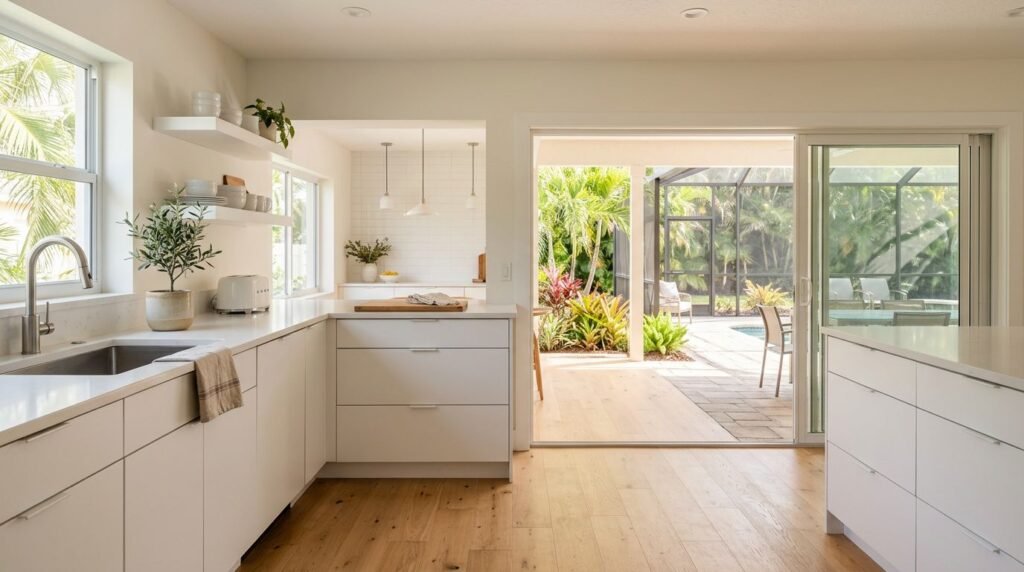
Doorways can shape a kitchen more than most cabinet colors do. One opening that looks harmless on paper can block a base cabinet, clip a fridge handle, or tighten a walkway once the doors are installed.
In Fort Myers, many kitchens have more than one traffic path. A garage entry, a pantry door, and a lanai opening can all compete for the same floor space. Good cabinet design starts with those paths, then works outward.
Planning kitchen doorway cabinets gets easier when you measure the swing, trim, and clearances before you pick sizes. Once the layout is mapped, the rest of the choices get much simpler.
Measure the doorway zone before you pick cabinet sizes
Start with the doorway itself. Measure the opening width, then measure the full swing path with the door open. A door that sits flat against a wall can still cause trouble if a cabinet end panel lands inside its arc.
Trim matters too. Thick casing, decorative stop pieces, and wider baseboards all steal inches. Measure from the outside edge of the trim, not the drywall, because the cabinet has to clear the finished opening, not the rough one.
A comfortable main walkway is usually about 36 inches. In a busy kitchen, 42 inches or more feels better, especially if two people cook at once or kids cut through the room. If a doorway sits beside a work aisle, treat that aisle like a traffic lane, not leftover space.
Knobs and pulls deserve a check as well. A shallow cabinet might clear a doorway, but a long handle can still bump the edge of a casing or a wall.
Measure the space with the door open, not just shut.
That one habit catches a lot of mistakes before they turn into costly changes.
Base cabinets that leave room to pass
Base cabinets near a doorway need to do two jobs. They hold storage, and they keep the passage open. If they sit too close to the swing, the room feels crowded before the first box is unpacked.
The safest move is often to hold the cabinet run back a little and use a filler strip or end panel. A 3-inch filler can be easier to live with than a cabinet that bangs into the door every day. In tighter Fort Myers kitchens, a 15-inch or 18-inch cabinet can protect the walkway better than forcing in a standard 24-inch piece.
A quick comparison helps when two layout choices compete for the same space.
| Common doorway conflict | Better cabinet move | Why it helps |
|---|---|---|
| Door hits the base run | Shift the run back or add filler | Keeps the swing clear |
| Passage feels tight | Use a narrower cabinet | Protects traffic flow |
| Corner meets trim awkwardly | Add a blind corner or angled filler | Smooths the turn |
| Cabinet door opens into the path | Change hinge side or reverse the door | Reduces collisions |
Corner transitions matter just as much. Where a cabinet run turns near a doorway, avoid a hard stop against trim. A blind corner cabinet, a small diagonal filler, or an end panel can make the edge feel finished instead of cramped.
If the doorway sits next to a sink or prep zone, leave enough space for someone to stand and move. A pretty cabinet line means little if it turns every trip into a side-step.
Upper cabinets and tall units near trim
Upper cabinets create a different set of problems. They don’t usually block feet, but they can crowd the doorway visually and physically, especially when trim or crown molding projects into the room.
Keep the bottom of upper cabinets high enough that people don’t brush their shoulders on the corner as they pass. If a doorway opens beside a cabinet wall, check the cabinet door swing and the trim depth at the same time. A door that opens cleanly on paper can still hit a handle, a casing edge, or a crown detail.
Door style matters too. In a tight opening, inset fronts sit differently than full overlay or partial overlay doors. The profile changes how much the cabinet face projects near the passage, so cabinet overlay options are worth comparing before you lock in the design.
Tall pantry cabinets need extra care near doorways. They can create a visual wall that makes a small kitchen feel narrower, and the door swing on a pantry may crowd the entry path. If a pantry sits close to an opening, pull it back with filler or move it to a less traveled wall.
Scribe panels help when walls or trim are uneven. They give the cabinet line a cleaner fit and keep the gap from looking accidental.
When trim is thick, ask for a site measure after the room is fully finished. That way, the cabinet plan matches the real space, not the drawing.
Island placement, appliances, and traffic flow
Islands are where doorway mistakes show up fast. A kitchen can look roomy on the plan, then feel pinched once an island sits between a doorway and the main work zone. In Fort Myers homes, that matters even more when the kitchen connects to a lanai, a breakfast nook, or a garage entry.
Leave enough room around an island for the doorways that feed into the kitchen. If the island sits too close to a path, people start walking sideways. If it sits too close to a refrigerator or dishwasher, the open appliance door can stop traffic cold.
A doorway, an island, and an appliance should not fight for the same stretch of floor. Dishwasher doors need clear drop space. Refrigerator doors need room to open without striking a path. Range and oven doors need space for hot trays and safe movement.
A narrow island can be the better choice when a doorway sits close to the cooking zone. So can a shallower cabinet on the back side of the island. Those changes keep the room usable without giving up storage where it matters.
When to reverse a door or use a narrower cabinet
Sometimes the cleanest fix is small. A door reversal or a slimmer cabinet can solve a problem that would otherwise affect the whole layout.
- Reverse the door swing when the door hits a cabinet or appliance handle.
- Choose a narrower cabinet when a standard width would cut the main path below comfortable clearances.
- Move a pantry door when the entry is too busy to share space with a tall cabinet.
- Swap in a smaller base cabinet when the run sits beside a doorway used every day.
Those changes often cost less than rebuilding a whole section of the kitchen. They also make the room feel easier to move through, which matters every single day.
Test the layout before you order
Before you order anything, test the layout on the floor. Painter’s tape works well for marking cabinet runs, island depth, and doorway swing. Cardboard cutouts help too, especially if you want to see how much room a base cabinet or pantry will actually take.
Walk the path with a grocery bag, a laundry basket, or a serving tray. If the route feels awkward now, it will feel awkward after install. Doors should open without a shoulder twist, and the edge of a cabinet should not become something you notice every time you pass.
A good way to spot smart cabinet design is to look at finished projects. A cabinet design portfolio shows how real kitchens handle trim, corners, and tight entries without wasting storage. That kind of reference makes it easier to see which sizes and shapes fit your own space.
At this stage, bring in the cabinet maker or designer for a final check. A last review can catch a trim issue, a hinge conflict, or a filler that needs to grow an inch. Small corrections are much easier before install day than after.
Conclusion
Doorways set the rules in a kitchen, even when they are easy to ignore at first. If you plan around the swing, trim, and traffic flow, kitchen doorway cabinets can look clean and still feel easy to live with.
The strongest layouts leave room for people first, then fit the storage around that path. That means choosing the right cabinet widths, using fillers where needed, and giving appliances space to open without blocking the room.
In a Fort Myers remodel, the best cabinet plan is the one that lets the kitchen move as well as it looks. Once the doorways are mapped, the rest of the design has room to breathe.