
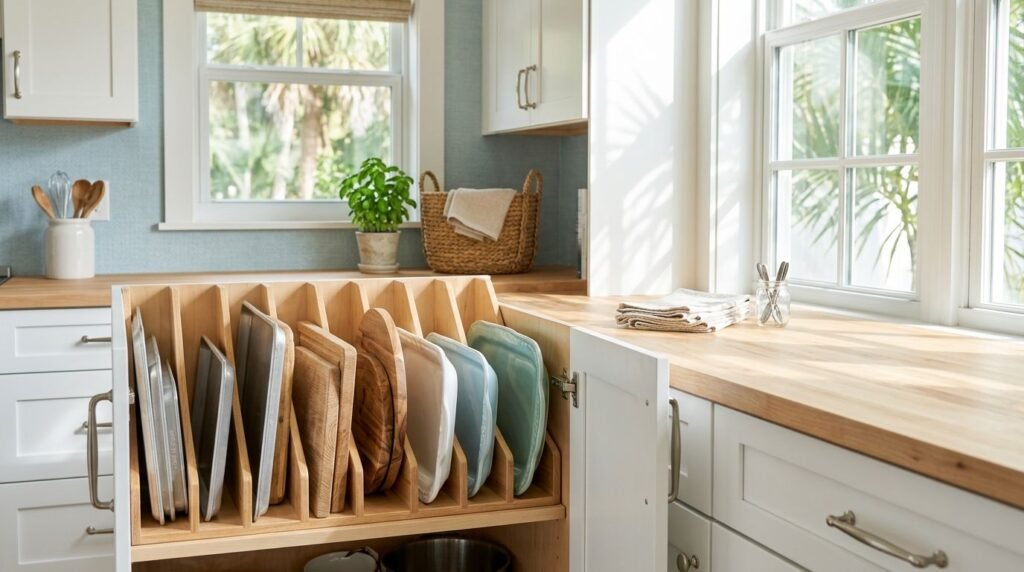
Kitchen clutter builds fast. Baking sheets lean against each other, cutting boards slide around, and serving platters end up stacked in awkward piles. Tray divider cabinets solve that problem with simple vertical storage that keeps flat items easy to grab.
That matters even more in Fort Myers homes, where kitchen layouts often need to do more with less. Good cabinet design can make a compact kitchen feel calmer, cleaner, and easier to use, while also fitting the look you want, whether that style leans coastal, contemporary, or transitional.
Why tray divider cabinets make sense in Fort Myers homes
Fort Myers kitchens deal with more than everyday cooking. They also handle beach-house entertaining, holiday baking, and casual dinners that turn into full tables of dishes. When flat kitchen items live in one deep cabinet, they can waste space and create noise every time you reach for one.
Tray divider cabinets keep each piece in its own slot. That makes it easier to store baking sheets, muffin pans, cutting boards, cooling racks, and platters without stacking them. You can pull out one item without shifting the rest. That small change saves time every week.
Humidity is another reason to plan this storage well. Florida air can make wooden boards swell or warp if they sit in tight, damp spots. Vertical dividers improve airflow around each item, which helps keep everything in better shape. They also make cleanup easier after a day by the water, when damp towels, trays, and serving pieces seem to multiply.
For many Fort Myers kitchens, the best storage is the kind you barely notice. It works in the background. It keeps the room looking neat. It also gives you faster access when you’re cooking, setting out snacks, or getting ready for guests.
Best places to put tray dividers in the kitchen
The right location changes how useful the cabinet feels. Some spots work better for daily cooking, while others are better for serving pieces or backup items. A good plan starts with how you use the kitchen now.
Here’s a simple comparison of common locations.
| Placement | Best for | Why it works |
|---|---|---|
| Next to the oven | Baking sheets, pizza pans, cooling racks | Quick access while cooking |
| Near the prep zone | Cutting boards, sheet trays, carving boards | Easy reach during meal prep |
| Tall pantry cabinet | Serving trays, platters, extra boards | Holds larger items with less clutter |
The cabinet beside the oven is often the most practical choice. It keeps sheet pans and cooling racks close to the heat source, which feels natural when you cook often. A narrow base cabinet near the prep area also works well for cutting boards and smaller trays.
Tall pantry-style cabinets help when you own a mix of oversized platters and seasonal serving pieces. They give you more height, so you can store larger items upright instead of forcing them into a stacked cabinet. That setup is useful in homes that host guests often, since platters and trays tend to come out in groups.
For a tighter kitchen, don’t ignore the space above a fridge or next to a built-in wall oven. Those areas can hold slim dividers without taking away usable counter space. In a smaller Fort Myers kitchen, that kind of planning matters.
The best takeaway is simple. Put the divider where you reach for the item most often, not where there is empty wall space.
Divider sizes that make daily use easier
Divider cabinets work best when the slots match the items you own. If the spacing is too wide, trays wobble. If it’s too tight, large pans catch on the sides. The right fit feels almost invisible because everything slides in and out cleanly.
For standard baking sheets, medium-width slots usually work well. They give each sheet enough room without wasting cabinet space. Wider slots are better for thick cutting boards, oversized serving trays, and heavy platters. Narrow slots are fine for cooling racks or thin pans that you use often.
Height matters too. A low divider can be perfect for cookie sheets, but tall platters need more clearance. If you entertain often, ask for at least one section with extra height. That gives you a place for holiday trays, large cutting boards, and serving pieces that do not fit normal cabinets.
A few small details can improve use even more:
- Rounded edges reduce wear on wood, metal, and melamine items.
- Fixed spacers keep trays from leaning too far.
- Open bottoms make it easier to sweep out crumbs.
- Smooth finishes help items slide without catching.
A divider cabinet works best when you can see every item at a glance and pull one piece out with one hand.
That last point matters in busy kitchens. If you have to remove three items to reach one, the storage is too crowded. Good spacing turns the cabinet into a tool, not a puzzle.
Materials and finishes that hold up in Florida humidity
Fort Myers kitchens need materials that can handle moisture, temperature swings, and everyday cleaning. That does not mean the cabinet has to look plain. It means the finish should stay stable and attractive over time.
Plywood boxes with quality edge banding are often a smart choice for this climate. They hold up well and feel solid. Painted finishes can work too, as long as the coating is durable and the cabinet is built well. For tray dividers, the divider panels themselves should feel sturdy, since thin panels can flex when you slide in heavier platters.
If the cabinet sits near a sink or dishwasher, moisture resistance matters even more. Water splashes and steam can slowly damage lower-quality materials. In those spots, a sealed interior and a tough finish are worth the extra thought. You want a cabinet that looks good in year one and still feels tight in year five.
Style matters just as much. Coastal kitchens often use light painted cabinets, warm whites, soft grays, and brushed metal hardware. Contemporary spaces may lean toward clean slab fronts and simple lines. Transitional kitchens usually blend both, with shaker-style doors and classic proportions. Tray divider cabinets fit all three styles because the feature stays hidden until you open the door.
For homeowners comparing hardware details too, cabinet knobs and pulls for Florida kitchens can affect how easy tall divider cabinets feel in daily use. Long pulls often pair well with larger pantry or tray doors because they give you a secure grip.
Tray divider ideas that match the rest of the kitchen
The best divider cabinet is useful, but it should also feel like part of the room. Good cabinet design ties storage into the rest of the kitchen, so the feature feels planned instead of added later.
A coastal kitchen usually looks best with bright finishes and simple trim. Tray dividers can hide behind a shaker door that matches nearby base cabinets. Inside, a pale finish keeps the cabinet bright and easy to inspect. That helps when you store lighter cutting boards or white serving trays.
Contemporary kitchens often benefit from a taller, cleaner look. A full-height divider cabinet can sit beside an oven wall or pantry bank and keep the front line smooth. Since the storage is vertical, it supports the tidy look many homeowners want. No stack of pans peeking out. No crowded shelf. Just one neat opening with a clear purpose.
Transitional kitchens give you the most room to mix function and style. A tray divider cabinet can sit beside drawers, spice pull-outs, or a deep prep cabinet. That combination feels balanced and practical. It also makes the kitchen easier to use because the items you need most stay grouped by task.
If you want the cabinet to disappear into the design, match the door style and finish to the rest of the kitchen. If you want it to stand out, use a taller door or a subtle glass accent nearby. Either way, the storage should support the room, not fight with it.
How to plan the right cabinet design for your home
Start with the items you actually own. Count your baking sheets, oversized cutting boards, serving trays, and platters. Then measure the tallest piece. That simple step tells you how tall the divider section needs to be.
Next, think about your cooking pattern. If you bake often, place the divider near the oven. If you prep meals on one side of the sink, keep cutting boards close to that area. If you host often, reserve a larger slot for trays and serving pieces that come out on weekends and holidays.
Also think about who uses the kitchen most. A cabinet that feels fine to one person may be awkward for someone shorter or taller. Wide pull handles, smooth-opening doors, and accessible placement make the storage easier for everyone in the house. Small details matter when the cabinet gets used every day.
Finally, look at the full kitchen layout. Tray divider cabinets work best when they connect with the rest of the storage plan. They should sit near drawers, prep zones, or pantry space so the room feels organized, not random.
Conclusion
Tray divider cabinets solve a simple problem, but they do it well. They keep flat kitchen items upright, visible, and easier to reach, which matters in busy Fort Myers homes.
The best setup depends on your daily habits, your cabinet design, and the way your kitchen handles humidity and guest traffic. When the slot size, cabinet location, and finish all work together, the storage feels natural and lasts longer.