 Skip to content
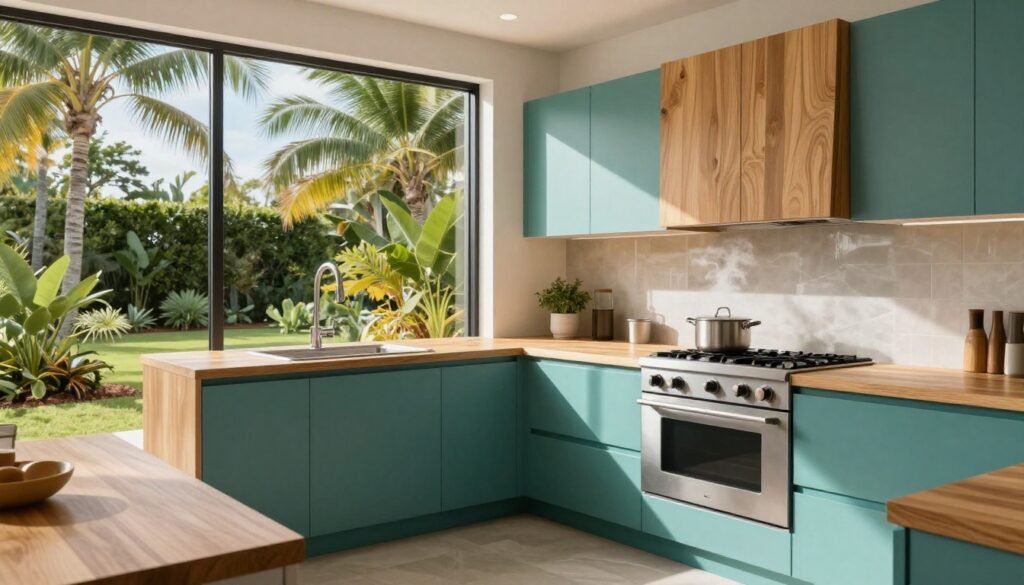
Fort Myers kitchens don’t just look busy, they feel busy. Between salty air, long cooling seasons, and daily steam from cooking, your cabinets take a steady hit. If you’ve ever seen a door swell, a finish bubble, or a drawer start sticking, you already know the climate plays a role.
The good news is you can absolutely choose humidity resistant cabinets that look great and hold up for years. It starts with picking the right box material, then matching it with smart finishes and a few climate-friendly details.
Why Fort Myers humidity and heat punish the wrong cabinets
Humidity doesn’t usually “ruin” cabinets overnight. Instead, it works like a slow drip. Moist air pushes into tiny gaps at seams, around sink bases, and along exposed edges. Heat speeds up the process by expanding materials during the day, then letting them contract when the house cools. Over time, that movement stresses joints, loosens fasteners, and can warp lighter materials.
A second issue in Southwest Florida is localized moisture. The air might be humid, but the real trouble spots are more intense:
- Under-sink cabinets (splashes, leaks, damp cleaning supplies)
- Dishwasher-side panels (hot steam when the door opens)
- Trash pull-outs (humidity plus condensation from cold items)
- Cabinets near exterior doors (warm outdoor air rushes in)
If a cabinet material fails in Fort Myers, it usually starts at the edges, not the middle.
That’s why the most important “material” detail is often the least exciting one: edge protection. Even a strong cabinet box can struggle if raw edges are exposed or if thin edge banding peels. When you’re comparing options, look for tight seams, durable banding, and clean sealing around sink bases and toe kicks.
Your cabinet design also matters here. Deep drawers reduce door-swing wear, while well-planned filler strips and scribes keep humidity from sneaking into gaps around walls. If you want guidance that fits local conditions, start with a team that focuses on long-term durability, not just showroom looks, like the approach described on heat-resistant cabinet materials Southwest Florida.
Cabinet box materials that handle humidity best (and what to avoid)
In most homes, the cabinet “box” does the heavy lifting. Doors and drawer fronts get attention, but the box takes the stress from weight, plumbing, and daily use. In humid climates, you want a box that stays stable and resists swelling when moisture shows up.
Here’s a quick comparison of common cabinet box materials for Fort Myers homes:
| Material | Humidity performance | Best use in Fort Myers | Watch-outs |
|---|---|---|---|
| Plywood (cabinet-grade) | Strong and stable when well-made | Full kitchens, sink bases, laundry rooms | Quality varies, edges still need sealing |
| HDF (high-density fiberboard) | Dense and consistent, can be stable | Painted components, some cabinet parts | Swelling risk if water reaches raw edges |
| Furniture board / particleboard | Can be okay in dry zones | Budget-friendly uppers away from moisture | More prone to swelling, especially at edges |
| Solid wood (for box parts) | Moves with humidity | Limited use, framed details | Can warp if not engineered well |
Plywood is the most common “safe bet” for cabinet boxes in heat and humidity because it tends to hold its shape under normal kitchen moisture. That said, not all plywood is equal. Thicker panels, consistent layers, and clean joinery matter. A well-built plywood box with protected edges usually outlasts a cheaper box made with better marketing.
HDF can work well in the right role. It’s dense, smooth, and paints nicely, which is why it often shows up in painted door centers or certain cabinet components. Still, if raw HDF edges get exposed to a slow leak, they can swell. In other words, HDF isn’t automatically “bad,” but it’s less forgiving around sinks and dishwashers.
Furniture board and particleboard are where Fort Myers homeowners should be extra careful. These materials can perform acceptably in controlled conditions, but they’re more likely to puff up if water sneaks in. If you’re considering them for budget reasons, reserve them for low-risk areas (like uppers away from the sink) and insist on strong edge banding.
One more point people miss: hardware anchoring. Softer boards can strip screws over time, especially on heavy drawers. If you love deep pot-and-pan drawers, pair them with a box material that holds fasteners well.
Door and finish choices that stay stable in sticky seasons
Once the cabinet box is right, the next decision is the “face” of the kitchen: doors, drawer fronts, and finishes. In a humid climate, you’re not just choosing a color, you’re choosing how well the surface blocks moisture and handles heat.
Thermofoil and laminate: low-fuss surfaces for humid kitchens
Thermofoil (a vinyl film over an engineered core) and laminates can be a practical fit for Fort Myers because they create a consistent, wipeable barrier. Day to day, they shrug off splashes, cooking residue, and damp hands.
The big caution is heat exposure. Thermofoil can have trouble if it’s installed too close to high heat sources or if airflow is poor. Good kitchen planning helps here, for example proper spacing around ovens and using a quality range hood to reduce trapped heat and steam.
Painted finishes: beautiful, but prep and product quality matter
Painted cabinet doors can look clean and bright, which is popular in coastal Florida homes. They can also perform well in humidity when the finishing process is strong. The key is complete coverage on edges and profiles, because moisture finds weak points fast.
If you love painted doors, ask about:
- How edges and routed profiles are sealed
- Whether the finish is designed for kitchens (not just furniture)
- How touch-ups are handled for dings and chips
Stained wood: warm style with a little more movement
Stained wood doors bring natural character, but wood responds to seasonal humidity changes. That doesn’t mean you can’t use it, it just means you should expect minor shifts. A stable door construction (like engineered cores or well-joined frames) helps reduce problems like warping.
In Fort Myers, the best finishes don’t just look good, they act like a raincoat for your cabinets.
No matter what door style you choose, prioritize good ventilation and moisture control. Use your range hood, crack a window during heavy cooking, and don’t ignore small leaks. In humid climates, tiny issues don’t stay tiny.
Conclusion: build for the climate, not just the showroom
The best cabinet materials for Fort Myers heat and humidity start with a stable cabinet box, strong edge protection, and a finish that seals well. For many homes, that points toward quality plywood construction paired with durable door materials and careful detailing around wet zones.
If you’re investing in humidity resistant cabinets, choose options that match how you cook, clean, and live. Your future self will thank you the next time summer humidity hits and everything still opens smoothly.
