 Skip to content
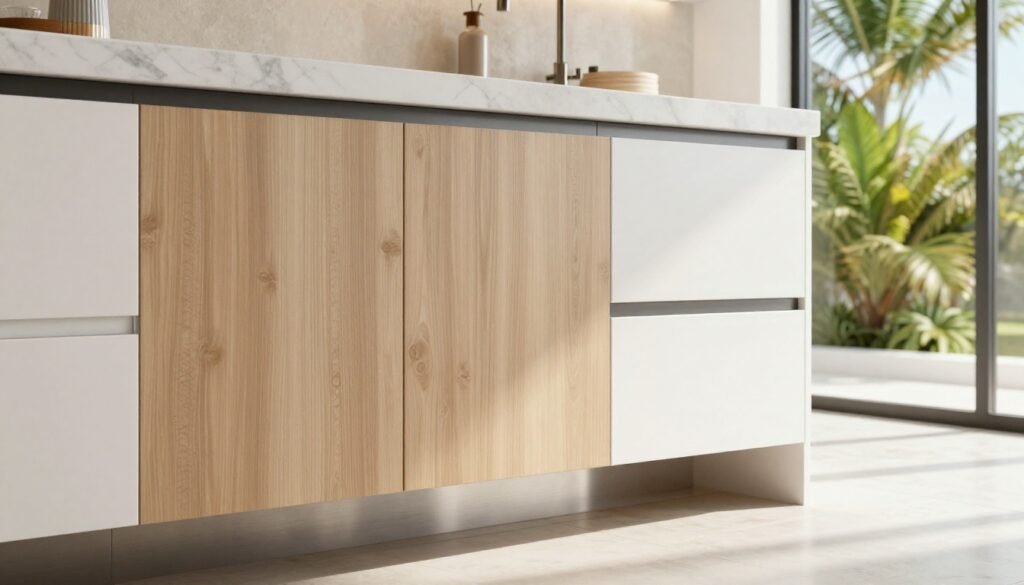
If you’re remodeling in Fort Myers or anywhere in Lee County, you’re probably thinking about doors, drawers, and finishes. Yet the cabinet toe kick quietly takes the daily hits, from wet shoes to mop water to pet bowls. It’s the “bumper” at the bottom of your cabinets, and it matters more in a humid, sandy, coastal climate.
The good news is that toe-kicks aren’t one-size-fits-all. You can choose materials that wipe clean fast, styles that match your cabinet design, and details that make the kitchen safer and easier to live in.
If you want to see how these choices look in real homes, browse the Fort Myers kitchen cabinet portfolio for style ideas you can copy.
Why toe-kicks matter more in Fort Myers kitchens
A toe-kick is the recessed area under base cabinets that gives your feet room while you work. Without it, you’d stand awkwardly back, like trying to wash dishes while wearing ski boots. Comfort is the obvious benefit, but in Southwest Florida, durability is the bigger story.
Humidity, frequent floor cleaning, and wind-blown grit all collect at cabinet bases. Add kids racing in from the pool, or a condo that gets mopped daily, and that bottom edge becomes the first failure point. Swollen MDF, peeling veneer, and soft corners usually start down low.
Toe-kicks also affect how your kitchen looks. A darker kick can “ground” a light cabinet. A matching panel makes cabinetry feel built-in. Even lighting and vent grilles often end up in this zone, so planning early prevents awkward add-ons later.
A smart toe-kick choice is less about looks on day one, and more about how the base holds up after 1,000 wipe-downs.
Moisture-resistant toe-kick materials (and what they’re best at)
The material you choose decides how forgiving your toe-kick will be when life gets messy. Here are the most common options for Fort Myers kitchens.
Finished matching toe-kick panels (wood, veneer, or laminate)
This is the classic look: a panel that matches the cabinet finish. It’s clean, simple, and works in almost any style. However, it’s only as water-tough as the core and edge sealing.
If the panel is furniture board or MDF inside, small leaks and repeated mopping can cause swelling at the bottom edge. On the other hand, a well-sealed panel with a durable finish can perform well in a low-risk area (especially if you’re quick about spills).
Best for: dry zones, lighter cleaning routines, homeowners who want a seamless look.
PVC or vinyl toe-kick (waterproof “set it and forget it”)
PVC-based toe-kicks are popular in coastal homes for a reason. They don’t absorb water, they wipe clean easily, and they shrug off most mop mishaps. If you have pets, this is often the least stressful choice because food and water bowls tend to splash near cabinet bases.
The tradeoff is appearance. Some PVC options look slightly different than your cabinet finish, especially in bright light. Still, many homeowners prefer a tiny visual compromise over a swollen base.
Best for: families, pets, rentals, condos, and homes that get frequent mopping.
Metal toe-kick (stainless or coated aluminum)
Metal toe-kicks are tough. They resist water and handle scuffs from shoes and vacuums. Stainless can look sharp in modern kitchens, while coated aluminum blends better with other finishes.
Keep in mind that salt air and harsh cleaners can dull certain coatings over time. Choose a finish meant for interior use, and clean with mild soap, not abrasives.
Best for: modern kitchens, heavy wear, and homeowners who want maximum scuff resistance.
Tile or stone toe-kick (durable, but plan the details)
Tile toe-kicks can work beautifully with tile floors, especially in condos. They’re very water-resistant and easy to mop. The weak point is grout. Grout needs sealing and occasional upkeep, and toe-kicks get kicked.
If you love the idea, ask for tighter grout joints and durable trim edges so corners don’t chip.
Best for: tile-forward designs, high-mop areas, and kitchens where the floor and base should feel continuous.
Cabinet toe-kick styles: recessed, flush, vented, and more
Most kitchens use a recessed toe-kick because it’s comfortable. Still, you have options, and each one changes both function and cleaning.
Recessed (standard) toe-kick: This is the default for a reason. It’s comfortable at the sink and range, and it hides minor floor variations. Cleaning is straightforward, although crumbs can get tucked into the recess.
Flush toe-kick: Yes, toe-kicks can be flush, but think it through. Flush looks sleek and furniture-like, and it prevents the “shadow line” under cabinets. The downside is toe space. If the run includes your sink, you may feel it in your lower back because you’ll stand farther away.
Furniture base (applied trim base): Great for islands or statement areas. It adds a built-in feel, but it can create extra nooks to clean. In Fort Myers, choose materials that won’t react to moisture, especially near exterior doors.
Vented toe-kicks: Vented toe-kicks are allowed when you need them, but they’re not decorative extras. You’ll see them when a design includes a toe-kick heater, an HVAC supply or return at the base, or equipment that requires airflow. The key is coordination. The grille size, location, and access for cleaning should be decided before cabinets get installed, not after.
If you’re planning a full layout, it helps to work with a team that thinks through construction details, not just finishes. Learn more about the approach on the About TEC Cabinetry Plus in Fort Myers page.
Typical toe-kick price ranges (budget to premium)
Costs vary with material, finish matching, cutouts for vents, and whether the toe-kick is site-built. This quick table gives realistic planning ranges for many Fort Myers remodels.
| Tier | Typical range (installed) | Common toe-kick choices | Best fit |
|---|---|---|---|
| Budget | $8 to $20 per linear foot | basic matching panel, simple laminate, stock PVC | rentals, quick refresh |
| Mid-range | $20 to $45 per linear foot | upgraded PVC, better finish match, metal kick plate sections | most family kitchens |
| Premium | $45 to $100+ per linear foot | custom flush details, specialty metal, tile/stone, lighting, complex venting | condos, high-end custom work |
The biggest cost drivers are custom finish matching, complex corners and returns, and extra trades (tile work, electrical for lighting, or HVAC modifications for venting).
Clear recommendations by use case in Lee County
Different households need different “insurance policies” at the cabinet base. Use these as practical starting points.
- Families and pets: Pick PVC or a durable metal toe-kick near feeding areas and the sink run. If you want a matching look, use a waterproof option for the most exposed zones and match elsewhere.
- Aging-in-place: Stick with a comfortable recessed toe-kick in work zones, especially at the sink and cooktop. Also aim for smooth, easy-clean surfaces so maintenance stays simple.
- Coastal homes and condos: Choose materials that don’t swell and that handle frequent mopping, like PVC, metal, or tile with sealed grout. Also ask for sealed bottom edges and careful caulking at the floor line.
FAQ: toe-kick dimensions, flush options, venting, and water protection
What’s the standard toe-kick height and depth?
Many base cabinets use about 3.5 to 4 inches high and roughly 3 inches deep. Still, your final size depends on cabinet box height, flooring, and comfort. Taller homeowners sometimes prefer a slightly deeper recess.
Can toe-kicks be flush with cabinet doors?
They can. Flush toe-kicks look clean, but they reduce foot space. For most kitchens, flush works best on an island or feature area, not across every sink run.
Are vented toe-kicks allowed, and when are they needed?
Vented toe-kicks are used when airflow must pass through the cabinet base, such as toe-kick heaters or certain HVAC supply or return locations. Because requirements vary by layout and equipment, confirm the plan with your HVAC contractor before cabinet install.
How do you protect toe-kicks from water damage?
Start with water-tough materials (PVC, metal, or well-sealed panels). Next, seal exposed edges, especially cut ends and corners. Finally, keep a tight caulk line where it meets the floor, and wipe up standing water quickly.
Final thoughts: choose a toe-kick like you choose flooring
Toe-kicks sit where real life happens, so it pays to plan them with the same care as floors and countertops. In Fort Myers kitchens, moisture resistance and easy cleaning often matter more than a perfect finish match. Pick the look you love, then protect it with the right material and sealing details.
When you’re ready to map out options for your layout, you can schedule a Fort Myers cabinet consultation and get advice that fits your home, your habits, and your budget.
