 Skip to content
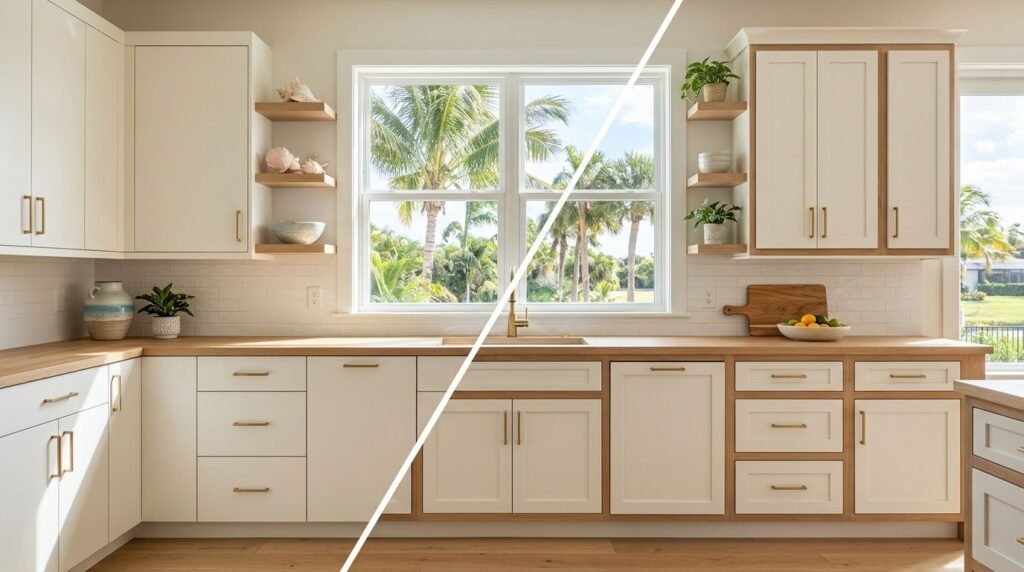
If you’re planning a Fort Myers kitchen remodel, cabinet doors can feel like a small detail. Then you see two quotes, one says full overlay cabinets, the other says partial overlay, and the pricing and look don’t match.
Here’s the bottom line: overlay isn’t just style. It affects how much cabinet frame you see, how “tight” the lines look, what hinges you can use, and how forgiving the install feels over time.
Below, you’ll get a clear comparison, local Southwest Florida considerations (humidity, salt air, rentals, resale), and a short checklist to bring to your cabinet installer.
What “overlay” means (and why it changes the whole look)
Overlay describes how far the door and drawer front sit over the cabinet face frame. Picture the face frame like a photo frame. With one option, the door covers most of the frame. With the other, the frame stays visible around each door.
Full overlay covers almost all the face frame. You see more door and less frame. The gaps (reveals) between doors are usually smaller and more uniform, which reads clean and modern.
Partial overlay leaves a wider band of face frame showing. That frame becomes part of the visual pattern, so the kitchen can feel more traditional, more detailed, and sometimes a bit busier.
A few practical points that homeowners don’t hear enough:
- Door reveal and alignment: Full overlay depends on consistent, tight reveals. That means careful measuring, good hinge adjustment, and steady install conditions. Partial overlay shows more frame, so small alignment issues often blend in better.
- Frame visibility: Partial overlay highlights the cabinet frame. If you like the look of stiles and rails, it can be a feature, not a compromise.
- Hinge and hardware compatibility: Overlay affects which concealed hinges fit and how far doors can open without rubbing. Your installer should confirm hinge type early, especially if you want wide pull-out trays.
- Cleaning habits: Full overlay often has fewer “ledges” on the face frame to catch grime. Partial overlay leaves more frame exposed, so you may wipe more surface area, even though it’s easy to reach.
Good cabinet design starts here, because overlay choice sets the visual grid for the whole room.
Full overlay cabinets in Fort Myers kitchens: sleek lines, fewer distractions
Homeowners often pick full overlay cabinets because they want the cabinetry to look like a continuous surface. In an open-concept home, that calmer look can keep the kitchen from competing with the living area.
Full overlay also pairs well with simple door styles, modern hardware, and clean backsplash layouts. If you’re considering slab or Shaker doors, full overlay usually supports that “built-in” feel.
Function matters too:
- Access and clearance: Because the doors cover more of the opening, hinges and door swing need to be planned well. When done right, you get wide, comfortable access to drawers and roll-outs.
- Adjustability: Most full overlay setups use concealed hinges with multiple adjustment points. That’s helpful in Fort Myers, where seasonal humidity can nudge doors out of perfect alignment.
- Maintenance: Tight reveals look great, but they also show issues faster. A door that shifts slightly can stand out, especially in bright Florida daylight.
So what typically drives cost?
Full overlay can require more precision in door sizing and install labor. You may also need additional fillers, panels, or finished ends to keep the “all-door” look consistent at the edges and around appliances. Hardware choices matter too. Larger doors can mean more hinges per door, depending on door height and weight.
If you want to see how full overlay reads in real kitchens (not just samples), browsing a kitchen cabinet gallery helps you spot the reveal size and overall rhythm.
Partial overlay cabinets: classic framing and a more forgiving install
Partial overlay cabinets work well when you like visible structure. The frame becomes a design element, almost like trim work on built-ins. In many homes, that detail feels warm and familiar, especially with raised-panel or traditional Shaker doors.
They also come with some practical advantages:
- Tolerance for movement: With larger reveals and more visible frame, minor seasonal shifts can be less noticeable. That can be reassuring in Southwest Florida’s humidity swings.
- Hardware flexibility: Partial overlay can still use concealed hinges, but the overlay dimension is different. Your installer should verify the exact overlay spec so doors don’t bind.
- Budget control: Partial overlay is often priced lower because the tolerances can be less demanding. In addition, you may use slightly smaller doors and drawer fronts for the same cabinet box.
Still, partial overlay isn’t “easier” in every way. The visible face frame means the finish on the frame matters more, since you’ll see more of it every day. Also, if you want a very modern kitchen, the extra frame lines can fight the look.
This is where experience helps. A team that does cabinet design daily can show you how reveal size, door style, and hardware finish work together. If you’re weighing style versus long-term practicality, talking with cabinetry experts Fort Myers can keep the decision grounded in your layout and budget.
A Fort Myers decision guide: humidity, salt air, rentals, and resale
Fort Myers kitchens live a different life than kitchens up north. Humidity, coastal salt, and seasonal occupancy all affect how cabinets look and function after a few years.
Start with these local realities:
Salt air doesn’t just touch outdoor spaces. It rides in on shoes, windows, and HVAC cycles. As a result, hinges and pulls need finishes that resist corrosion, and they need regular wipe-downs. Humidity can also cause subtle expansion in wood components, which makes adjustable hinges and solid installation practices more important.
Seasonal rentals add another layer. When different people use the kitchen every week, you want doors that stay aligned and hardware that feels solid. Full overlay can look higher-end for resale, yet partial overlay can hide small scuffs and alignment changes better, depending on door color and sheen.
Here’s a quick side-by-side to make the choice clearer:
| Feature | Full overlay | Partial overlay | Best fit when you want… |
|---|---|---|---|
| Face frame visibility | Minimal | Noticeable | A modern vs classic framed look |
| Reveal size (gaps) | Smaller, more uniform | Larger, more visible | A “tight” look vs a forgiving look |
| Install tolerance | Less forgiving | More forgiving | Crisp lines vs flexibility |
| Cleaning feel | Fewer frame ledges | More frame surface to wipe | Less detail vs more exposed trim |
| Typical price drivers | Precision, panels, extra hinges | Often lower labor tolerance | High-end look vs value focus |
If your kitchen gets strong daylight, tight reveals will show faster. Ask to see a full door run, not just a sample door.
Quick checklist: questions to ask your cabinet installer
Bring these to your consultation so there are no surprises later:
- What reveal size are you planning, and will it be consistent across the whole run?
- Which hinge type and overlay spec will you use for my doors and drawers?
- How will you handle fillers and end panels so the overlay looks intentional near walls and appliances?
- What hardware finishes hold up best with humidity and salt air in my neighborhood?
- How do you adjust doors after install, and is a follow-up adjustment included?
- Will my pull-outs and organizers clear the door swing, especially near corners?
Conclusion
Choosing between full overlay and partial overlay isn’t about right or wrong. It’s about the look you want, the tolerance you need, and how your Fort Myers home is used year-round. When you match overlay to layout, hardware, and climate, your cabinet design feels intentional and stays that way.
