 Skip to content
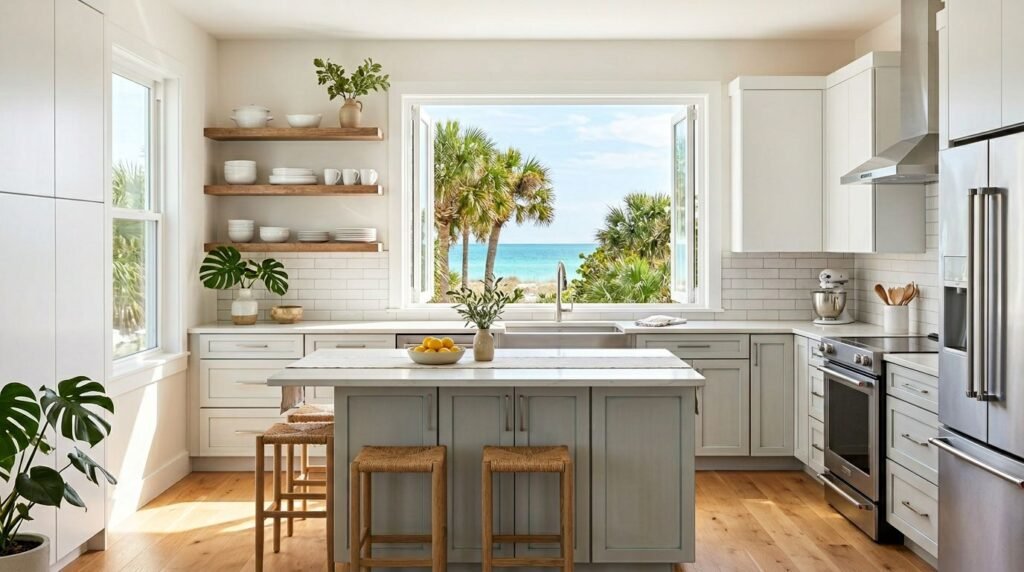
A Florida coastal kitchen has a job beyond looking good. It has to handle sticky humidity, salty air, sandy feet, and the kind of bright sun that shows every smudge. That’s why coastal cabinet door styles aren’t just about “beachy” colors. The door profile, material, and finish matter as much as the shade.
If you’re remodeling in Southwest Florida, start by choosing a door style that matches your home’s clean, modern lines. Then lock in the build details that keep cabinets easy to wipe down and hard to warp. The goal is simple: a kitchen that feels light and current, but holds up like it should.
What modern Florida coastal kitchens need from cabinet doors
Coastal kitchens live in a different environment than inland homes. Moisture moves in and out of a house all day, especially near the Gulf. Salt can travel indoors, even when you don’t live right on the water. Add cooking heat, and cabinet doors take a steady beating.
Here’s what matters most when you pick door styles for a modern coastal look:
Cleanable profiles beat “dust-catchers.” Deep grooves, heavy bead details, and ornate edges collect grime. In a busy household, that turns into extra scrubbing. A simpler profile stays crisp with basic wipe-downs.
Stable cores protect the finish. Humidity stresses wood, mainly at joints and seams. A stable door construction helps the finish stay smooth, so you don’t see hairline cracks over time.
A good finish is your first line of defense. Durable topcoats resist moisture and make greasy fingerprints easier to remove. That matters more than most homeowners expect.
Light plays tricks. Florida sun makes shadow lines sharper. A door with subtle definition reads “high-end” without feeling fussy.
This is where good cabinet design pays off. A local team that understands Florida conditions can guide you toward door styles and finishes that fit your space and your maintenance tolerance. If you want a sense of how a Southwest Florida cabinetry team approaches real homes, see About TEC Cabinetry Plus.
If you love a detailed door style, keep it to a dry zone like a pantry wall, and use simpler doors near the range and sink.
Door profiles that match modern coastal architecture
Modern coastal homes lean airy and uncluttered. Think soft whites, warm wood tones, and simple geometry. The cabinet doors should support that mood, not compete with it.
Shaker doors (and the “slim Shaker” upgrade)
Shaker is popular in Florida for a reason. The frame adds just enough definition to feel finished, yet it stays timeless. For modern homes, ask for a slimmer rail and stile (often called slim Shaker). It reads cleaner and pairs well with wide drawers.
Tradeoff: Shaker has more edges than a slab door, so it takes a little longer to wipe. Still, it hides minor dings better than perfectly flat fronts.
Slab or flat-panel doors
Slab doors look sharp in contemporary condos and new builds. With minimal seams, they’re also easy to clean, which is a win in coastal kitchens where fine grit can show up fast.
Tradeoff: Slabs show reflections and fingerprints more. If you have kids, consider a matte finish and longer pulls to reduce handprints.
Beadboard-style or V-groove doors (use with restraint)
A hint of vertical line can feel coastal without going theme-y. V-groove and beadboard-inspired doors work best as an accent, for example on an island base or a beverage station.
Tradeoff: Grooves collect dust and cooking residue. If you choose this style, keep the groove shallow and pick a finish that wipes easily.
Glass-front doors for “lightness”
Glass uppers can make a smaller kitchen feel open. In modern coastal homes, clear glass looks crisp, while reeded or textured glass softens the view of the contents.
Tradeoff: You’ll need to keep the inside tidy, and glass adds cleaning time.
A quick way to narrow your options is to compare cleaning effort and visual impact side by side:
| Door style | Best for | Cleaning effort | Coastal note |
|---|---|---|---|
| Slim Shaker | Modern coastal, transitional | Medium | Great balance of detail and simplicity |
| Slab | Contemporary, condos | Low | Choose matte finishes to hide prints |
| V-groove / bead detail | Accent areas | Medium to high | Keep grooves shallow for easy wipe-down |
| Glass-front | Uppers, display zones | High | Consider textured glass to hide clutter |
Build details that keep doors looking new (materials, overlay, and finishes)
Once you pick a profile, durability comes down to what the door is made of, how it’s hung, and how it’s finished.
MDF vs hardwood for painted doors
For many Florida homes, MDF painted doors are a practical choice. MDF stays flat, and it paints smoothly. That matters in humid conditions because movement can telegraph through paint at joints.
Hardwood doors can work well too, but the door construction matters. With painted hardwood, seasonal movement can show at rail joints over time. If you prefer hardwood, ask about construction methods and finish warranties.
Simple rule: If you want a clean painted look, MDF often delivers a smoother long-term surface. If you want stain, go hardwood or veneer.
Painted vs stained in coastal homes
Paint gives you that bright coastal palette and it hides grain variation. It can chip if you bang it hard, but touch-ups are usually manageable.
Stain shows natural wood character and hides small scuffs better. On the other hand, sun can shift wood tone over time, and some species show more movement in humidity.
Inset vs overlay (and why many coastal remodels choose overlay)
Inset doors sit inside the face frame with a tight reveal. They look tailored, but they require more precision, and tiny seasonal shifts can affect the gaps.
Full overlay doors cover more of the frame. That creates a cleaner, more modern look, and it’s forgiving. Overlay also gives you a bit more interior access, which helps in tight kitchens.
For Florida humidity, full overlay plus quality soft-close hinges is often the low-stress choice, both for alignment and everyday use.
Small-space condo tips that feel high-end
In condos and compact kitchens, door choices can make the room feel bigger:
- Choose slab or slim Shaker doors to reduce visual clutter.
- Use drawers wherever you can, they’re easier than base cabinets for storage.
- Keep uppers simple, then add interest with hardware, lighting, or a standout backsplash.
- If you add glass, limit it to one run so it feels intentional.
To see how different door profiles read in real spaces, browse a Fort Myers cabinet portfolio and note what looks best in bright natural light.
Coastal cabinet door ordering checklist (save this before you buy)
Use this quick checklist to avoid common regrets:
- Confirm whether you want slab, Shaker, or slim Shaker as your main door style.
- Decide where you can handle extra cleaning (glass fronts, grooves, accents).
- Choose full overlay vs inset based on your patience for tight reveals.
- Pick a door material that matches the finish: MDF for many painted looks, hardwood for stain.
- Ask what topcoat system protects the finish from moisture and stains.
- Request a matte or low-sheen option if fingerprints drive you crazy.
- Select corrosion-resistant hardware and soft-close hinges.
- Plan ventilation near the dishwasher and cooking zone to reduce moisture buildup.
- Use longer pulls to reduce direct hand contact on painted doors.
- Keep a small touch-up plan (paint pen or matching sample) for future chips.
The right coastal cabinet door styles should feel effortless every day. When your door profile, construction, and finish all match Florida conditions, your kitchen stays bright, modern, and durable for the long haul.
