 Skip to content
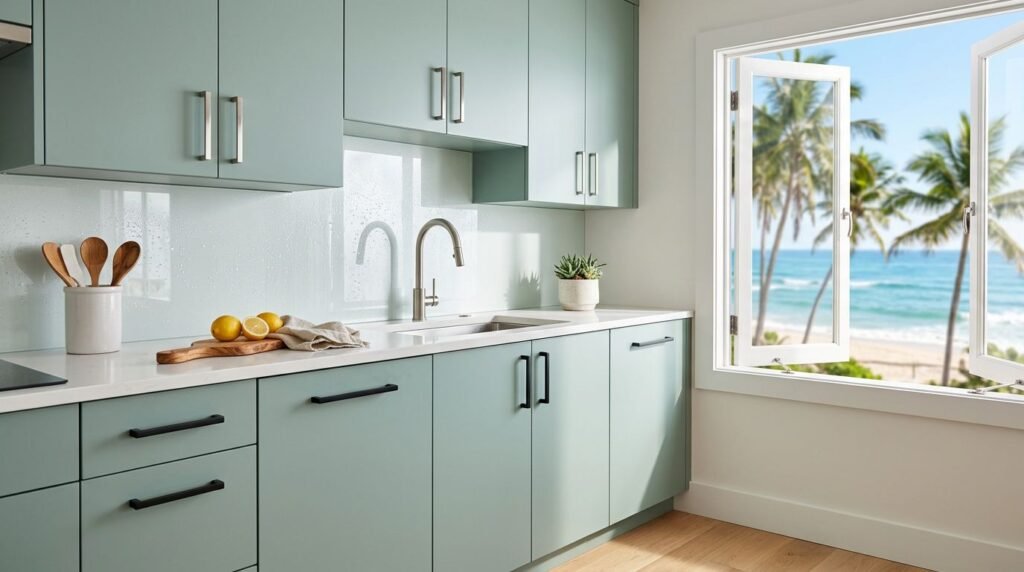
If you live in Fort Myers, your kitchen doesn’t just battle fingerprints. It fights salt in the air, high humidity, and that constant cycle of air-conditioning and condensation. Over time, those conditions can turn pretty hardware into pitted, cloudy, or peeling hardware.
The good news is you don’t have to guess. The best cabinet hardware finishes for coastal Southwest Florida share a few traits: they resist corrosion, they’re easy to clean, and they don’t show wear in the spots you touch most.
Below is a practical guide to finishes, base metals, and coatings that hold up in real kitchens, not showroom lighting.
Why coastal Southwest Florida is hard on cabinet hardware
Salt spray is the headline problem, but it’s rarely the only one. Even if you’re not beachfront, sea air can travel inland and settle as a thin film. That film attracts moisture, and moisture invites corrosion. Think of salt as a magnet for water, it keeps metal damp longer than you’d expect.
Humidity adds another layer. In summer, your home’s air holds a lot of water. Then your AC kicks on, cools surfaces, and you can get light condensation on colder items, especially near exterior walls. Hardware near a sink, dishwasher, or ice maker sees this day after day.
Cleaning habits matter too. Many homeowners use degreasers, bleach sprays, or abrasive pads in high-use kitchens. Those products can dull clear coats, stain “living” finishes, or break down weaker plating. Even “gentle” cleaners can leave residue that slowly eats at a finish if it sits in crevices.
One more coastal issue gets overlooked: mixed metals. If a pull is one metal, but the mounting screw is another, corrosion can speed up at the contact points, especially when salt and moisture are present.
A coastal finish fails in the details first, around screw heads, tight corners, and the spots your hand touches daily.
This is why finish color alone isn’t enough. You’re choosing a whole system: base metal, plating or coating, and the top layer that protects it.
Cabinet hardware finishes that make sense for Fort Myers kitchens
“Best” depends on your style and your cabinet design, but coastal durability follows patterns. In general, look for finishes that hide minor wear, avoid reactive surfaces, and use strong protective coatings.
Satin nickel and brushed nickel (easy living, low drama)
Satin and brushed nickel stay popular in Florida for a reason. They blend with stainless appliances, they don’t show water spots as easily as polished finishes, and light scratches tend to disappear into the texture.
For coastal homes, the win is how these finishes age. A good satin nickel finish can look the same year after year, even in a busy family kitchen. Still, quality varies, so ask what the hardware is made of and what process is used for the finish. “Nickel look” on low-grade base metal can spot or pit sooner near the sink and dishwasher.
Brushed stainless look and true stainless (clean look, coastal friendly)
A brushed stainless look works with nearly any cabinet door style, from Shaker to slab. It also pairs well with quartz, tile, and light coastal woods.
When possible, choose hardware made from stainless steel rather than a stainless “color” over another metal. Stainless tends to resist rust better in humid, salty environments, especially when the finish is brushed. It also handles frequent wiping without turning blotchy. That said, stainless can still show tea-staining or surface discoloration in harsh conditions, so cleaning habits still matter.
Matte black and other powder-coated looks (great style, check the coating)
Matte black hardware looks sharp on white or light wood cabinets, and it can add contrast without feeling heavy. In coastal kitchens, matte finishes also hide fingerprints well.
The key is the coating type and thickness. A strong powder coat or a high-quality baked finish can hold up nicely. A thin, lower-quality coating can chip at edges, then moisture gets underneath and the damage spreads. If you love black hardware, prioritize reputable construction, smooth edges (less likely to chip), and a solid warranty.
If you remember one thing, remember this: the base metal and coating quality matter more than the finish color.
Quick comparison of popular finishes for coastal homes
Use this table as a shortcut when you’re deciding between looks that feel similar in photos.
| Finish (common look) | Best base metal to ask for | Protective layer to look for | What it does well | Watch-outs in coastal kitchens |
|---|---|---|---|---|
| Satin nickel / brushed nickel | Brass or stainless | Quality plating with a clear topcoat | Hides wear, fits most styles | Cheap versions can pit near sink areas |
| Brushed stainless / stainless look | Stainless steel | Brushed surface, optional clear coat | Resists rust better, wipes clean | Can show discoloration if salt residue sits |
| Brushed chrome | Brass | Quality plating | Very hard surface, classic clean look | Water spots can show, polished areas highlight smudges |
| Matte black | Zinc alloy, brass, or stainless | Powder coat or baked enamel | Modern contrast, hides fingerprints | Chips reveal base metal, avoid harsh scrub pads |
| Warm brass (not “living”) | Brass | PVD-style coating or durable clear coat | Warmth without constant patina changes | “Unlacquered” versions spot and darken fast |
| Oil-rubbed bronze look | Brass | Durable topcoat | Complements warm woods, hides some smudges | Can wear through on touch points over time |
Takeaway: in Fort Myers homes, textured finishes (satin, brushed, matte) usually age more gracefully than mirror-polished looks, especially with frequent cleaning.
A practical way to choose hardware that won’t pit or peel
Before you buy a cart full of pulls, decide what “durable” means in your kitchen. Is it a busy rental? A second home that sits closed up? A cooking-heavy household with lots of wipe-downs? Those answers affect what you should pick.
Here’s a short checklist you can use in a showroom or while comparing spec sheets:
- Finish: Choose satin, brushed, or matte if you want fewer visible spots and scratches.
- Base metal: Ask what it’s made from (brass and stainless tend to outperform low-grade zinc in harsh areas).
- Coating or plating: Look for details like multi-step plating, powder coat, or protective topcoats, not just a color name.
- Touch points: Use more durable options near the sink, dishwasher, trash pull-out, and fridge area.
- Fasteners: Confirm screws match the corrosion resistance of the hardware (stainless screws help in humid zones).
- Cleaning compatibility: Plan to use mild soap and water, then dry. Skip bleach sprays and abrasive pads on finished metal.
- Warranty: Read what it actually covers (finish defects, corrosion, normal wear), and how long coverage lasts.
Also, buy a sample first if you can. Put it near the sink for two weeks. Clean it like you normally do. That little test tells you more than any product photo.
Conclusion
In Fort Myers coastal homes, the best cabinet hardware finishes are the ones that stay calm under pressure: salt in the air, daily humidity, and constant cleaning. Start with a finish that hides wear, then confirm the base metal, coating, and warranty match real coastal life. When your hardware choice fits your cabinet design and your climate, it won’t just look good on day one, it’ll keep looking good years later.
