 Skip to content

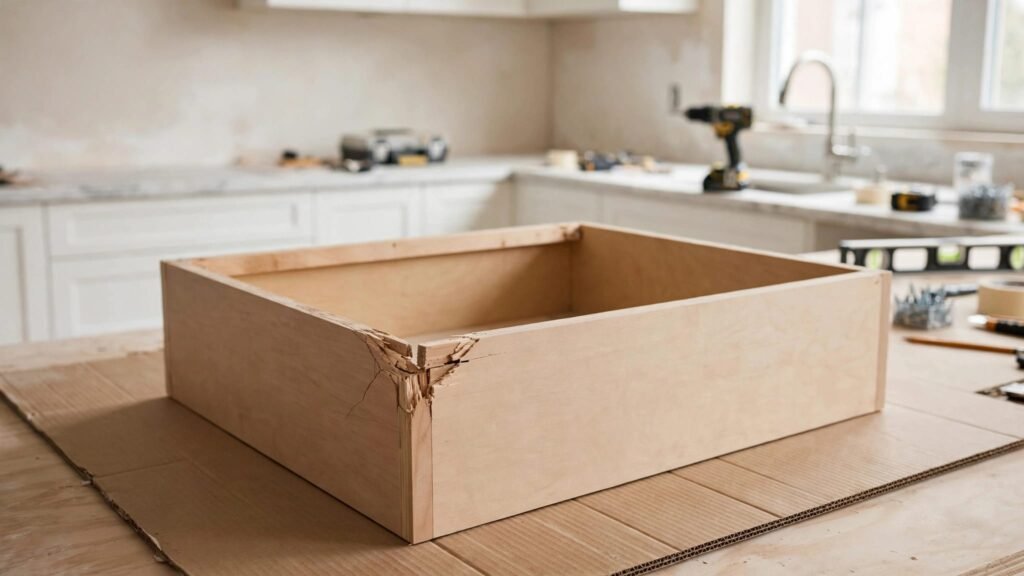
The worst time to find a cracked cabinet box is when the installer is ready to lift it into place. A damaged cabinet replacement starts with a pause: document the problem, contact the seller, and leave the unit unaltered until you receive instructions.
A scratched door might be replaced without stopping the kitchen project. A swollen sink base could affect the countertop schedule. What happens next depends on the damaged part, so start by making it safe and preserving the evidence.
Stop installation and keep the cabinet safe
Tell the installer which unit has a problem before anyone fastens, trims, or assembles it. A cracked joint can worsen when the box is lifted, while installation may make it harder to determine when the damage occurred. Don’t sand a scratch, glue a split, or cut away a damaged edge while you wait for the seller’s response.
Move the unit only if it blocks access or risks falling. For a heavy base or tall cabinet, ask another adult or the delivery crew to help. Lift the box by its solid sides rather than its door, drawer, or face frame. Keep children and pets away from broken glass, exposed fasteners, or sharp laminate.
If the carton is wet or crushed, photograph it before moving it. Then place the cabinet in a dry, stable spot where it won’t block an exit. Keep its label and packaging together; the seller may need both to identify the unit and arrange a return.
Document the damage before altering the unit
A clear record gives the seller enough information to identify the part and assess what happened. Start with the cabinet in the condition you found it.
Photograph the cabinet and its packaging
Take a wide photo showing the entire unit, then close-ups of each damaged area. Include the carton, shipping label, and any crushed corner or water stain. Photograph both the inside and outside of a damaged cabinet box. A crack near a joint or mounting strip can matter more than a visible dent on a finished side.
If you notice damp cardboard, swollen edges, bubbling finish, or a musty smell, record those signs too. Moisture deserves close attention in Southwest Florida, particularly around sink bases and bathroom vanities. The cabinet delivery inspection checklist covers other places where shipping damage can hide.
Match the unit to your order
Find the order number, packing list, and cabinet label. Record the item or model number, dimensions, finish, door swing, and location on the approved layout. For example, “left of sink” helps distinguish one base cabinet from another with the same finish.
Count any loose shelves, doors, drawer fronts, fillers, and hardware that belong with it. If the delivery crew is still present, note visible damage on the delivery paperwork before signing. If they’ve left, send the photos and details promptly. A signed delivery receipt isn’t a reason to delay reporting a problem you discovered while unpacking.
How to request a damaged cabinet replacement
Contact the business that sold you the cabinets first, unless your order paperwork directs claims elsewhere. Your dealer or cabinet designer may have the order details needed to contact the manufacturer. If you bought directly from a manufacturer, follow its published claim instructions.
Send one complete report
Explain when you received the cabinet, when you found the damage, and whether anyone has installed or modified it. Attach the photos, item label, order number, and a brief description of the affected part. Say whether the damage involves a door, drawer front, finished panel, or cabinet box.
Ask the seller to confirm receipt and tell you what happens next. They may need more photographs, an inspection, or the original packaging. Don’t discard anything until they tell you in writing that it’s no longer needed.
Confirm exactly what will be sent
A damaged cabinet replacement should match the approved order, not merely look similar in a photo. Ask whether the solution is a complete unit or a component such as a new door or end panel. Confirm the model, size, finish, door style, door swing, and any modifications.
Also ask who will place the order, where the new piece will be delivered, and whether the damaged item must be returned. Get an estimated ship date and ask when the seller expects to have a firmer delivery date. Reorders can affect scheduling, but no general cabinet lead time guarantees when a particular part will arrive.
Check coverage and the claim procedure
A damaged delivery, a manufacturing defect, and installation damage may follow different claim procedures. Rather than guessing which applies, give the seller the facts and ask who will handle the claim.
Read the order terms alongside the warranty
Find your invoice, purchase agreement, delivery terms, and manufacturer warranty. Check what they say about reporting damage, inspections, replacement parts, and returns. Ask whether shipping, removal, installation labor, and a return visit are included. Don’t assume a replacement component makes the associated labor free.
For a practical set of coverage questions, review how cabinet warranty claims work. Keep the seller’s replies with your photos and order paperwork, especially if you receive instructions to repair or dispose of the damaged unit.
Agree on the next step before making changes
Ask for written approval before a contractor fills, sands, drills, or installs the affected cabinet. That includes a seemingly minor touch-up. If an inspection is required, find out whether it will be done from photos or in person and who will arrange it.
A short written confirmation should name the part, the approved remedy, and any return instructions. It should also identify who will contact you when the replacement is ready. That record helps your installer plan without relying on a phone conversation they didn’t hear.
Decide whether repair or replacement makes sense
Replacement is usually the stronger choice when damage affects the box’s structure, fit, or ability to stay dry. A small blemish on a removable, non-structural piece may be repairable if the seller approves the method and you accept the finished appearance.
The affected part gives you a useful starting point:
| Condition before installation | Reasonable next step |
|---|---|
| Minor scuff on a separate trim piece | Ask whether a finish repair or new trim is appropriate. |
| Scratched door or mismatched drawer front | Request the correct component before altering the original. |
| Split joint, warped box, or swollen panel | Request an assessment for replacement of the affected unit. |
| Damp sink base or bathroom vanity | Resolve the moisture concern before considering installation. |
A repair should leave the cabinet looking as intended and functioning properly. Painted finishes, wood grain, and exposed end panels can be difficult to blend, especially in prominent light. Ask to see an approved repair proposal before agreeing to it.
A small mark on a replaceable door is different from a split in the cabinet box that will carry the countertop.
Don’t let an installer hide a cracked corner behind a filler or use adjacent cabinets to hold a weak box in place. If the proposed fix changes the approved cabinet design or visible finish, discuss it with your designer before work continues.
Store the damaged unit while you wait
Keep the cabinet in a dry, shaded indoor room when possible. Place it on a level, protected surface, off damp concrete and away from leaks, open windows, and direct sun. Avoid a hot garage or lanai if you have conditioned indoor space. Follow the manufacturer’s instructions for the unit’s orientation and storage.
Leave protective packaging in place where it doesn’t trap moisture. If the carton is damp, tell the seller and ask how to protect the cabinet while preserving evidence for the claim. Don’t wrap a wet unit tightly in plastic.
Set doors and panels on padded, stable surfaces so their edges won’t bear the weight. Keep hardware bags and loose parts labeled and together. If another crew needs the room, agree on a new storage spot first; repeated handling creates another chance for damage.
Keep installation moving where it’s safe
A replacement request doesn’t always mean the entire kitchen or bathroom project must stop. The installer needs to know which component is affected before deciding what work can continue.
Separate a damaged door from a damaged box
If only a removable door is damaged, the installer can often set and secure the sound cabinet box while leaving that door off. Ask the seller first if the claim requires the original assembly to remain untouched. Protect the opening and label the loose hardware for the return visit.
A damaged base-cabinet box is different. It may interrupt the cabinet run that supports the countertop. As the cabinet installation and damage reporting guide notes, countertop templating may need to wait for the correct box to be installed.
Reset dependent appointments
Tell the installer, countertop fabricator, plumber, and any other affected trade which cabinet is delayed. Ask what they can finish now and what requires the replacement. Don’t approve a template based on a missing or incorrectly sized cabinet simply to keep an appointment.
Check the cabinet shipping delays and reorders guide when reviewing the revised sequence. Get updated dates from the people doing the work, including any return visit to install a replacement door or panel.
Inspect the replacement before installation
Treat the new delivery as a fresh inspection, even if the box looks intact. A correctly shipped replacement can still have the wrong finish or dimensions.
Check its identity and condition
Compare the carton and unit labels with the approved order and the claim confirmation. Check width, height, depth, door swing, finish, visible side, and any special modification. A filler or finished end panel can be essential to how the cabinet fits the run.
Then examine the face frame, corners, joints, doors, drawers, and interior. Open and close moving parts gently if the manufacturer permits it before installation. Look for scratches in natural and room light, along with crushed packaging or moisture marks. Photograph a new concern before the installer changes the unit.
Release the cabinet for installation
Let the installer confirm that the replacement fits the plan and can be installed according to the manufacturer’s instructions. If the cabinet has been stored in different conditions, follow the applicable acclimation guidance before mounting it. Don’t install it against a damp wall or floor.
Once installed, check alignment, door and drawer operation, and the finished surfaces before countertop work or plumbing covers nearby areas. Keep the replacement paperwork with the original order so you can identify the correct part later.
Key takeaways
- Photograph the damage, carton, and item label before anyone repairs or installs the affected unit.
- Contact the seller promptly and get written instructions for replacement, repair, or return.
- A damaged door may allow other installation work to continue; a damaged box may delay countertop templating.
- Protect the damaged unit while you wait, then inspect the replacement against the approved order.
FAQ
Should I refuse delivery if a cabinet carton is damaged?
Don’t assume a damaged carton means the cabinet inside is unusable. Photograph the packaging, note visible damage on the delivery record, and contact the seller for instructions. If you can inspect the contents safely, document what you find. Follow the seller’s directions before refusing or returning an item.
Can an installer repair the cabinet before the seller responds?
Wait for approval. Even a small repair can change the evidence the seller needs to assess the claim. Send photos first, then ask whether the proposed repair affects replacement eligibility, the warranty, or the final appearance.
What if the replacement arrives after installation has started?
Ask the installer which work can proceed without the missing part and which appointments must move. A replacement door may be fitted during a return visit. A cabinet box that determines the countertop footprint needs to be in place before the fabricator makes the final template.
Conclusion
A cracked cabinet at install time is frustrating, but the first decision shouldn’t be whether you can hide it. Preserve its condition, report it with clear photos, and agree on the remedy before work changes the unit.
Once the correct replacement arrives, check it as carefully as the original delivery. That final inspection helps the finished kitchen or bathroom match the plan you approved.
