
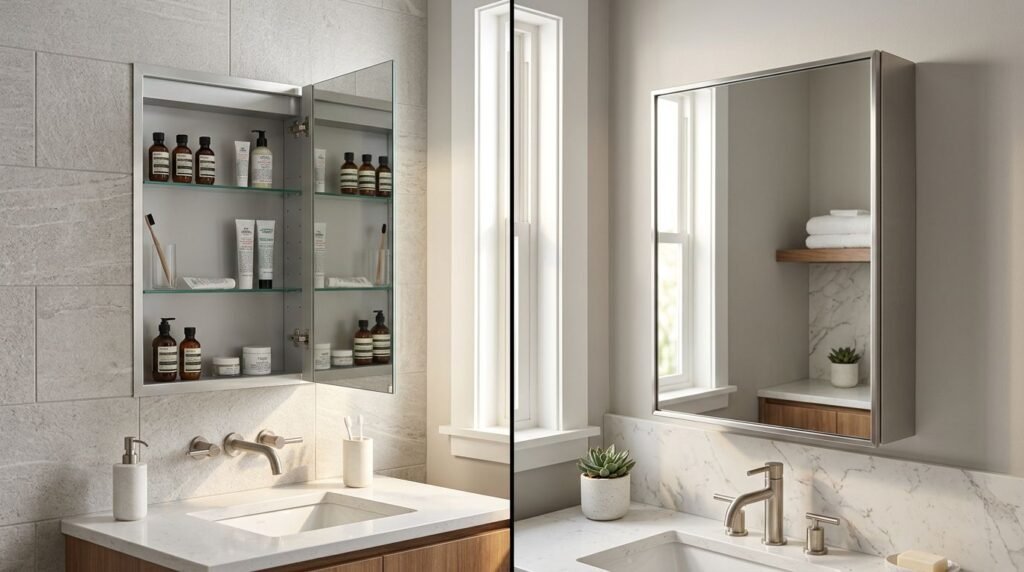
A mirror can make a bathroom feel finished, but the cabinet behind it determines how useful that wall becomes. When you’re comparing recessed vs surface mount medicine cabinets, the right choice depends on your wall structure, available depth, storage needs, and the look you want.
A recessed cabinet sits inside the wall for a built-in appearance. A surface-mount model attaches directly to the wall and projects into the room. Both can offer adjustable shelves, mirrored doors, lighting, and moisture-resistant construction, but they create very different installation requirements.
Before choosing a style, compare how each option affects clearance, storage, labor, and your overall bathroom cabinet design.
Recessed vs surface mount medicine cabinets: The basic difference
The main difference is where the cabinet sits. A recessed medicine cabinet occupies part of the wall cavity, so the front usually sits close to the drywall. A surface-mount cabinet remains fully outside the wall and attaches to studs or other approved support.
That difference affects both appearance and installation. Recessed models often look integrated with the vanity wall, while surface-mounted cabinets make a more visible statement. Neither option is automatically better. The best fit depends on what your bathroom can support.
How recessed medicine cabinets work
A recessed cabinet requires an opening in the wall. The installer must check for plumbing, electrical wiring, insulation, studs, and other obstructions before cutting. The cabinet then fits between wall framing or into a prepared opening.
This style works well when you want a clean, built-in appearance. It can also preserve more walking space because the cabinet does not project as far into the room. That matters in a narrow guest bath or a compact powder room where every inch affects movement.
Recessed installation has limits, though. The wall must have enough usable depth, and the cabinet must fit the available framing. Moving a stud, rerouting wiring, or adjusting plumbing can increase labor and extend the remodel schedule.
How surface-mount medicine cabinets work
A surface-mount cabinet attaches to the finished wall. Because the installer doesn’t need to open the wall cavity, this option usually creates less disruption during a renovation. The cabinet can work on masonry walls, shallow walls, and locations with pipes or wiring behind the drywall.
The tradeoff is projection. A surface-mounted unit sits farther into the room, so door swing, head clearance, and traffic patterns deserve attention. In a tight bathroom, even a modest projection can make the space feel crowded.
Still, the visible depth can add character. A framed cabinet may coordinate with traditional cabinetry, while a frameless design can support a cleaner modern bathroom. Some models also allow side mirrors, which can make the cabinet feel more finished from different viewing angles.
Comparing the two cabinet styles at a glance
The table below shows how the two installation methods differ in common remodeling situations.
| Feature | Recessed cabinet | Surface-mount cabinet |
|---|---|---|
| Wall work | Requires a wall opening | Attaches to the finished wall |
| Visual effect | Built-in and low-profile | More prominent and architectural |
| Room clearance | Preserves more space | Projects into the bathroom |
| Installation | Requires cavity and obstruction checks | Usually simpler and less invasive |
| Wall flexibility | Limited by studs, wiring, and plumbing | Works in more wall conditions |
| Remodel disruption | May involve drywall repair and framing | Often involves less wall repair |
| Storage depth | Fits the cabinet cavity | Can provide full exterior depth |
| Best fit | Clean, integrated bathroom designs | Quick updates or challenging walls |
The practical takeaway is simple: recessed models prioritize a built-in profile, while surface-mounted models offer easier placement. Your wall conditions should guide the decision before style enters the discussion.
Choose the installation style based on your wall
A beautiful cabinet won’t work well if the wall cannot support it without expensive changes. Have the installation area inspected before ordering, especially if you plan to move plumbing, add lighting, or change the vanity.
Existing bathroom walls
Surface mounting often makes sense in an existing bathroom with finished tile, unknown framing, or crowded utilities. The installer can avoid opening a large section of the wall, which helps protect tile and reduces repair work.
Recessing can still work during a remodel, but the contractor needs access to the wall cavity. A small inspection opening can reveal whether the space is clear. In some cases, the cabinet location must shift slightly to avoid a drain line or electrical cable.
Older homes deserve extra attention. Wall thickness may vary, framing may not follow modern dimensions, and previous renovations may have concealed repairs. A careful inspection prevents an attractive cabinet from becoming an installation problem.
New construction or a full gut remodel
A recessed cabinet becomes easier to plan when the bathroom is already open. With drywall removed, the contractor can place framing, wiring, blocking, and plumbing around the cabinet location.
This timing also allows the cabinet to coordinate with the vanity, sconces, tile layout, and wall trim. Centering everything before the walls close creates a more intentional result. If your remodel includes a new vanity, review Fort Myers bathroom vanities early so the mirror and storage dimensions work together.
Surface mounting remains a valid choice in a full remodel. It can provide more flexibility if you want a deeper cabinet, adjustable placement, or a design feature that stands slightly proud of the wall.
Clearance around sinks and doors
Measure the space around the cabinet, not only the wall opening. The cabinet should align comfortably with the sink and vanity, while its doors need enough room to open without striking a wall, light fixture, faucet, or nearby cabinet.
A wide medicine cabinet above a small vanity can look unbalanced. A narrow cabinet above a large double vanity may leave the wall feeling unfinished. The mirror width should relate to the vanity without extending into awkward positions near sconces or corners.
Check the user’s standing position, too. The lower edge should allow convenient access without forcing you to bend over the sink. The mirror height must also suit the people who use the bathroom most often.
A recessed cabinet saves wall projection, but it doesn’t solve poor placement. Centering, height, and door clearance still determine how comfortable it feels every morning.
Consider storage, moisture, and bathroom style
Medicine cabinets vary in more than installation method. Interior shelf spacing, door configuration, lighting, electrical features, and materials affect how useful the cabinet becomes.
Recessed units often provide a tidy appearance, but their storage depth depends on the wall cavity and the product design. Surface-mounted cabinets may offer more interior room because the entire cabinet sits outside the wall. That extra space can hold taller bottles, grooming tools, or backup supplies.
Think about what you store daily. A shallow interior may suit medication, skincare, and toothbrushes. A deeper cabinet may work better for larger containers, but it can also make small items harder to see. Adjustable glass shelves help you change the layout as your routine changes.
In a humid bathroom, material selection matters. Fort Myers and other Southwest Florida homes face persistent moisture, steam, and salt air. Look for rust-resistant metal, sealed finishes, corrosion-resistant hardware, and construction designed for bathroom conditions. These details matter more than a decorative frame if the cabinet will face daily humidity.
For local projects, humidity-proof medicine cabinets can help you compare features suited to coastal bathroom conditions.
Style should support the rest of the room. A recessed frameless cabinet pairs well with flat-panel doors and large-format tile. A framed surface-mount cabinet can complement traditional vanity doors, crown molding, or warmer hardware. Matching the mirror frame, faucet finish, sconces, and cabinet color keeps the wall from looking assembled piece by piece.
Plan installation, electrical features, and cost
Installation cost depends on the cabinet, wall condition, finish materials, and electrical work. A surface-mount cabinet usually requires less demolition, but it still needs secure attachment. The installer should locate framing or add appropriate blocking so the cabinet remains stable.
Recessed installation often costs more when the wall requires cutting, framing changes, drywall repair, tile work, or utility relocation. A full remodel may reduce the difference because the wall is already open. In a finished bathroom, however, labor can become a larger part of the project.
Lighting and electrical features also affect planning. A cabinet with an integrated light, outlet, or defogging function may require wiring and a switch location. Electrical work in a bathroom must follow local code, so use a qualified professional for new circuits, outlets, and connections.
Before ordering, confirm these details:
- Measure the wall area, vanity width, ceiling height, and nearby obstructions.
- Identify studs, plumbing lines, electrical cables, and wall depth.
- Confirm the cabinet’s rough opening dimensions for a recessed model.
- Check door swing and side clearance for the chosen hinge layout.
- Verify the product’s moisture rating and installation requirements.
- Coordinate lighting, outlets, tile, and trim with the cabinet location.
Storage planning should happen alongside the vanity decision. If hair tools, towels, and cleaning products need a home, review bathroom vanity drawer layouts before assigning every storage task to the medicine cabinet. The mirror cabinet works best when it handles daily essentials, while the vanity stores bulkier items.
Which option suits your bathroom remodel?
Choose a recessed medicine cabinet when you want a low-profile, built-in appearance and your wall can accommodate the opening. This approach suits full renovations, wider walls, and designs where the mirror should blend into the tile or cabinetry.
Choose a surface-mounted cabinet when you need a faster installation, have limited wall depth, or want more flexibility with placement. It also works well when finished tile makes wall demolition undesirable.
Your household’s routine matters as much as the room’s dimensions. A shared primary bathroom may benefit from two mirrored cabinets or a wider cabinet over a double vanity. A small guest bath may need only a compact unit with a simple interior. For help comparing the surrounding layout, see these single vs double vanity cabinets before finalizing the mirror width.
Good cabinet design connects storage, proportions, materials, and daily use. The medicine cabinet should look intentional from across the room and remain easy to use at the sink.
Conclusion
The choice between recessed and surface-mounted storage comes down to wall conditions, available clearance, installation effort, and the style of your remodel. Recessed cabinets offer a clean built-in profile, while surface-mounted cabinets provide flexible placement and easier installation.
Start by inspecting the wall, measuring the vanity area, and listing what you need to store. Once those practical details are clear, the right cabinet style becomes much easier to identify, and your bathroom mirror can do more than reflect the finished room.