
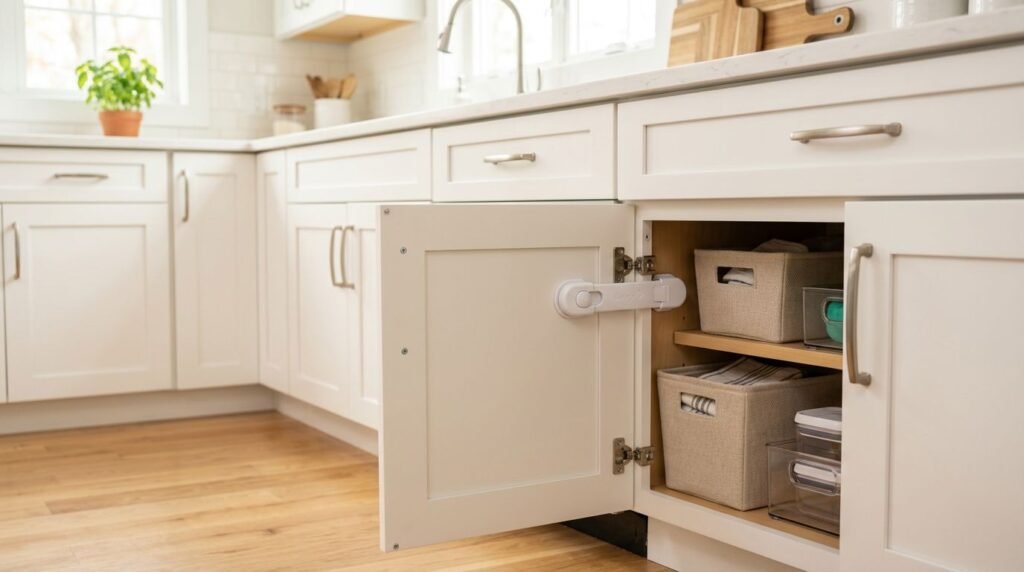
One curious toddler can turn a quiet kitchen into a room full of open drawers, sharp tools, and spilled cleaners. Kitchen cabinet safety latches add a physical pause between a child and a tempting cabinet.
That pause helps, but latches are only one part of a broader childproofing plan. Store hazardous items out of reach or in locked cabinets, then choose cabinet hardware that fits your doors, drawers, daily routines, and new kitchen layout.
Why Kitchen Cabinet Safety Latches Matter
Young children explore by opening, pulling, and tasting. A standard cabinet knob may be easy for small hands to operate, even when the cabinet seems secure to an adult. Low base cabinets, sink cabinets, pantry doors, and bathroom vanities often sit within easy reach.
A properly fitted latch keeps the door or drawer closed until an adult releases it. That extra step can help limit access to cleaning products, medications, knives, small appliances, dishwasher detergent, batteries, and other household hazards.
Cabinet latches don’t make the entire room safe. A child may still climb onto a chair, reach a countertop, or pull on an appliance cord. Supervision remains important, especially when cooking, washing dishes, or handling hot food.
A latch delays access, but safe storage decides what a child can reach if a door opens.
Use locks for cabinets that hold dangerous items. You can reserve unlocked lower storage for safer belongings such as plastic containers, dish towels, pots, and age-appropriate snacks. This arrangement reduces frustration because children can explore certain items without gaining access to hazardous supplies.
The same thinking applies to bathroom cabinetry. Toiletries, cosmetics, razors, medicines, and cleaning products need secure storage. A childproof latch on a vanity can protect access, but it shouldn’t replace moving medications and chemicals to a locked or elevated location.
Types of Kitchen Cabinet Safety Latches
The best latch depends on the door style, cabinet construction, and how often adults use the storage. Compare the main options before ordering hardware or finalizing your cabinetry.
Magnetic cabinet locks
Magnetic locks install inside the cabinet, so they preserve a clean exterior. A matching magnetic key releases the catch through the door. Many models attach with adhesive, while others use screws for a more permanent installation.
These locks work well for homeowners who want child safety without visible hardware. Keep the key in a high location that adults can reach but children cannot. Magnetic locks may need careful alignment, particularly on doors with uneven overlays or thick decorative fronts.
Spring-loaded catches
Spring-loaded catches use a mechanical arm or catch that holds the door closed. Adults release the latch by pressing or pulling a hidden part of the mechanism.
This style can suit new cabinets because an installer can position it during the fitting process. Screw-mounted versions are less dependent on adhesive, which may matter in busy kitchens or humid rooms. However, installation requires accurate placement and a suitable mounting surface.
Sliding locks and strap latches
Sliding locks fit over two cabinet knobs or handles and block both from moving apart. They are easy to see and can work well on paired doors with compatible hardware.
Strap-style latches connect two points across a door, drawer, or cabinet corner. They can help with unusual layouts, including cabinets with wide pulls or doors that don’t provide enough interior space for a concealed catch. Check the latch’s reach and release method before buying.
Drawer-specific locks
Drawers need hardware designed for their movement. A door latch may not stop a drawer from sliding open, especially when the drawer is heavy or carries pots and pans.
Look for locks made for drawers and pullouts. Pay close attention to the trash cabinet, recycling pullout, knife drawer, and lower drawers near the cooking area. A child may pull on a drawer for support, so secure attachment matters as much as the locking action.
How to Choose Kitchen Cabinet Safety Latches
Begin with the storage that needs protection. A cabinet beneath the sink usually deserves a stronger safety plan than a cabinet holding mixing bowls. List the locations that will contain chemicals, sharp objects, medicines, alcohol, small tools, or anything that could cause harm.
Next, inspect the cabinet style. Face-frame and frameless cabinets have different interior mounting areas. Inset doors, full-overlay doors, and partial-overlay doors also create different gaps and closing paths. The latch must fit inside the cabinet without striking shelves, hinges, or drawer boxes.
Door and drawer dimensions matter as well. Before ordering new cabinetry, review this kitchen cabinet sizes guide to understand how cabinet depth, height, and storage placement affect access. A tall pantry cabinet may keep some items higher, while a deep base cabinet can still place heavy or hazardous objects within a child’s reach.
Consider how adults will use the kitchen every day. Magnetic locks keep the exterior tidy but require a key. Sliding locks are quick to remove but remain visible. Mechanical catches may feel natural after practice, yet they need a firm installation.
Adhesive hardware can be useful when you don’t want to drill into a finished cabinet. Follow the product’s cleaning and curing instructions, because grease, dust, moisture, and heat can affect adhesion. Screw-mounted latches usually offer a stronger attachment, but they need accurate drilling and may not suit every cabinet material or finish.
Ask for a sample or test the hardware before installing it throughout the room. Open the door with one hand, operate the lock repeatedly, and check that the cabinet closes fully. An adult should be able to use the latch without excessive force.
Plan Safety Into Your Cabinet Design
Child safety belongs in your cabinet design discussion before the cabinet order is finalized. A designer can help place everyday storage where adults can reach it while keeping hazardous supplies in secure locations.
Create a simple storage plan during the design consultation:
- Place pots, pans, plastic containers, and dish towels in lower cabinets that don’t need a child lock.
- Reserve a locked cabinet for cleaners, dishwasher detergent, and sharp kitchen tools.
- Keep medicines, vitamins, matches, and batteries in locked storage outside a child’s reach.
- Use upper cabinets for items that adults need often but children shouldn’t handle.
A well-planned layout can reduce the number of latches you need. For example, moving cleaning products into one dedicated, locked cabinet is easier to manage than placing them across several base cabinets.
Cabinet construction also affects hardware installation. When comparing RTA and assembled cabinets, ask how the cabinet boxes, doors, and drawer systems will accommodate your selected latch. Confirm whether the installer will fit the hardware, whether the doors need adjustment first, and how the latch placement will affect shelves or pullouts.
Discuss safety in bathroom vanity planning, too. A vanity with deep drawers may hold grooming tools and medicines at child height. Select secure storage before the room is installed, rather than trying to work around crowded drawers later.
Install, Test, and Maintain the Hardware
Follow the latch manufacturer’s instructions for placement and installation. Clean adhesive surfaces with the recommended product, let them dry fully, and allow the stated curing time before testing the lock. For screw-mounted hardware, use the correct bit and avoid drilling into hinges, plumbing, electrical wiring, or thin cabinet edges.
After installation, test every protected opening in sequence:
- Close the door or drawer and confirm that the latch engages completely.
- Pull with normal adult pressure to check that the opening stays closed.
- Release the latch, open the cabinet, and close it again several times.
- Inspect the hardware after use and reposition or replace it if it loosens.
Test the cabinets at different times of day. A latch that feels simple during a quiet afternoon may become frustrating when you’re preparing breakfast. Adults and older children should know how to operate it without leaving the key or release tool where a toddler can find it.
Check latches periodically, especially after cabinet doors are adjusted or cleaned. Look for loose screws, stretched straps, cracked plastic, peeling adhesive, and catches that no longer align. Heavy drawers and frequently used doors receive more wear, so inspect them more often.
Adhesive latches deserve extra attention in kitchens exposed to steam, heat, and humidity. Southwest Florida homes may also experience warm, humid conditions for much of the year. Careful surface preparation and a secure mounting method can help, but replace any hardware that no longer holds firmly.
Cabinet locks are only one layer of protection. Keep knives, cleaning chemicals, medicines, alcohol, and dishwasher pods in locked cabinets or well out of reach. Add outlet covers where needed, keep appliance cords away from edges, secure freestanding furniture, and use the appropriate safety hardware for ovens, stoves, refrigerators, and toilets.
Don’t rely on cabinet latches to control cooking hazards. Turn pot handles inward, use the rear burners when possible, and keep hot pans away from counter edges. A complete childproofing plan considers the whole room, not only the cabinet doors.
Conclusion
Kitchen cabinet safety latches can reduce a child’s access to dangerous storage, but the right solution depends on the cabinet type, door style, installation method, and items inside. Plan lockable zones before ordering new cabinetry, then use lower storage for safer household items.
Choose hardware that adults can operate easily, test every door and drawer, and inspect the latches as the kitchen changes. With secure storage and consistent supervision, cabinet safety becomes part of a practical, attractive home rather than an afterthought.