
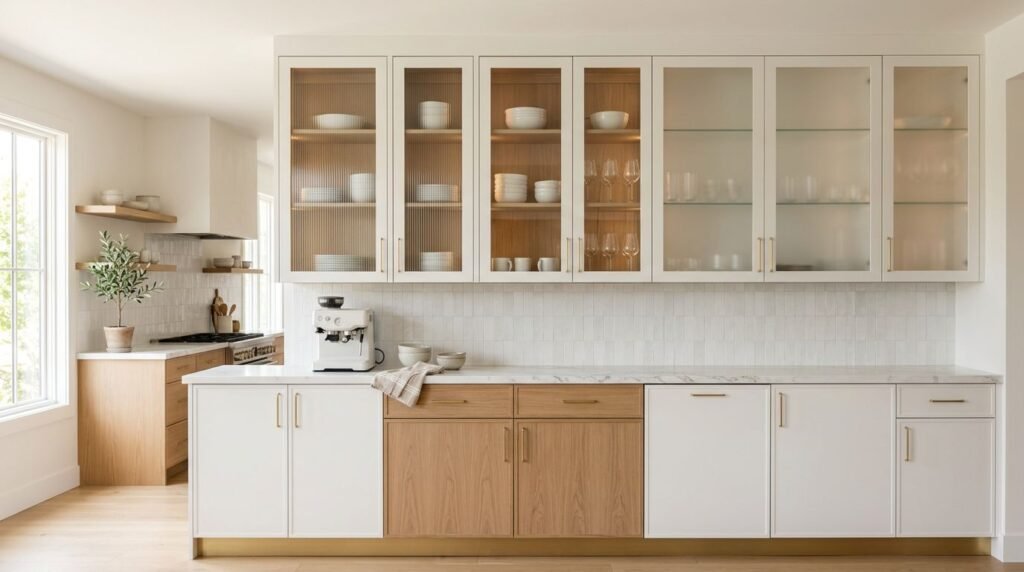
Glass can make a kitchen feel brighter, but the wrong pane can turn everyday storage into a display case you constantly manage. Choosing glass cabinet doors starts with one practical question: how much of the cabinet contents do you want to see?
Clear glass shows your dishes in full. Reeded, seeded, and frosted options soften the view and hide minor clutter. The right choice depends on your storage habits, cabinet location, kitchen style, and willingness to clean the glass regularly.
Decide what you want your cabinet doors to do
Glass-front doors work best when they have a clear purpose. They can break up a long run of solid cabinetry, highlight attractive dishware, or help a compact kitchen feel less enclosed. They also allow interior lighting to contribute to the room’s overall brightness.
Before choosing a pattern, look at what will sit behind the doors. If you plan to display matching dinnerware, serving bowls, or glassware, clear glass can create a neat, open appearance. However, if shelves hold food containers, small appliances, or mismatched items, an obscured pane will give you a more forgiving view.
Placement matters, too. Glass is often most effective on a few upper doors rather than every cabinet in the room. A single display section beside the range, sink, or refrigerator can create a focal point without making the entire kitchen feel busy.
The cabinet interior deserves attention. Adjustable shelves, finished cabinet sides, and a consistent arrangement will remain visible through transparent glass. If the inside of the cabinet has unfinished surfaces or exposed items, choose a textured or frosted option instead. TEC Cabinetry Plus offers more ideas for using glass-front kitchen cabinets in open, light-filled kitchens.
Compare glass cabinet doors by glass type
Each glass style creates a different balance between visibility, texture, and maintenance. Use this table as a quick starting point before reviewing samples.
| Glass type | Visibility | Best fit | Cleaning and upkeep |
|---|---|---|---|
| Clear glass | High | Display cabinets and formal dishware | Shows fingerprints, dust, and shelf clutter |
| Frosted glass | Low to medium | Modern kitchens and busy households | Hides contents better, but still shows smudges |
| Reeded or fluted glass | Low to medium | Contemporary, transitional, and coastal kitchens | Texture disguises clutter, though grooves need care |
| Seeded glass | Medium | Cottage, traditional, and relaxed coastal styles | Pattern hides some marks and contents |
| Tinted glass | Medium | Dramatic or contemporary accent areas | Darker tones can reduce the sense of openness |
Clear glass for an open display
Clear glass gives you the most visibility. It works well when the cabinet holds items you use often because you can identify everything without opening the door. Clear panes also suit slim rails and simple cabinet frames, where the goal is an uncluttered appearance.
The tradeoff is easy to see. Every shelf edge, fingerprint, and stack of uneven plates remains part of the view. Choose clear glass when you’re comfortable keeping the display orderly, or reserve it for cabinets with your best-looking pieces.
Frosted, reeded, and seeded glass for softer views
Frosted glass obscures the contents while allowing light to pass through. It has a smooth, understated look that pairs well with slab doors, flat-panel cabinetry, and contemporary hardware. It can also reduce the pressure to arrange every item perfectly.
Reeded or fluted glass has raised vertical lines that distort the view. The texture adds detail without creating a strong decorative pattern, so it fits modern, transitional, and coastal kitchens. Because the grooves catch dust and grease, place it away from the busiest prep areas when possible.
Seeded glass contains small bubbles or variations within the pane. This gives the door a handcrafted appearance that works with traditional, cottage, and relaxed coastal cabinet styles. The pattern softens the view, although it won’t conceal large shapes as fully as frosted or heavily textured glass.
A textured pane can hide a crowded shelf, but it won’t hide fingerprints on the door frame or handle.
Tinted glass adds color and contrast, but darker tones can make an upper cabinet feel heavier. Use it as an accent when you want a stronger design statement, rather than covering every glass door with the same dark finish.
Choose glass by cabinet location
The best glass type for a display cabinet may be inconvenient beside a sink or cooking area. Consider how each door will be touched, cleaned, and viewed during a normal day.
Upper cabinets and display zones
Upper cabinets are natural locations for glass because they are easier to use as displays. Clear glass can show serving pieces, while seeded or reeded glass adds interest above a peninsula or coffee station. If the cabinet is across from a window, a lighter glass treatment can help daylight move through the room.
Interior lighting can improve the effect. LED strip or puck lighting may highlight the cabinet contents, but the fixture should fit the cabinet construction and wiring plan. Ask about lighting before the doors are ordered, because shelf spacing and cabinet interiors may need to accommodate it.
For a small kitchen, limit glass to one run or a compact group of doors. Too many visible shelves can make the room feel visually crowded, even when the cabinets themselves are attractive.
Cabinets near sinks, dishwashers, and ranges
Doors beside the sink and dishwasher face water spots, damp hands, and frequent use. Clear glass will show those marks quickly. Frosted or reeded glass can make the cabinet easier to live with, but the frame and handle still need regular wiping.
Cabinets near a range or cooktop may collect grease and cooking residue. Smooth clear or frosted glass is easier to wipe than deeply textured glass. If you prefer reeded glass in this area, ask how the grooves should be cleaned and whether the door frame has sealed edges.
The handle also affects maintenance. A pull that keeps fingers away from the glass can reduce smudging. Your cabinet door style, hardware finish, and glass treatment should work together rather than compete for attention.
Match the pane to your cabinet design
Glass should complement the cabinet door frame, not look like an unrelated insert. Shaker doors with clear glass create a familiar, balanced appearance. Reeded glass gives the same door a more current feel, especially with slim rails and simple hardware.
Slab doors have broad, uninterrupted surfaces. Frosted, tinted, or reeded glass can add texture without requiring decorative molding. Clear glass on a slab door creates a strong display effect, so the cabinet interior becomes part of the overall composition.
Traditional raised-panel doors usually pair well with seeded, clear, or decorative glass. Mullions, which divide the glass panel into smaller sections, can reinforce a classic look. However, too many divisions reduce visibility and add more edges to clean.
The finish around the glass matters as much as the pane. Light painted cabinets make textured glass feel airy, while stained wood can give clear or seeded glass a warmer appearance. In a Florida kitchen, white, pale gray, natural wood, and blue-green cabinet finishes often support a coastal style without making the room feel themed.
You can find more examples of coastal cabinet door styles before choosing a glass insert. Pay attention to the full door profile, not only the glass pattern. A style that looks appealing in a close-up sample may feel too detailed when repeated across several cabinets.
Plan for safety, cleaning, and installation
Ask what safety glass is available for your cabinet door size and location. Tempered glass receives heat treatment and breaks into smaller pieces if it fails. Laminated glass uses an inner layer that helps hold broken pieces together. Your cabinet professional can recommend the suitable construction based on the door design, opening size, and manufacturer requirements.
Glass thickness isn’t a decision to make by appearance alone. The door dimensions, frame material, hinge setup, and glass-retention method all affect the correct specification. A larger door may need different support than a small accent door.
Cleaning requirements also vary by pattern. Smooth panes usually need a soft cloth and mild cleaner. Avoid abrasive pads and harsh products that can damage the finish around the glass. Reeded and fluted surfaces need attention along the grooves, while seeded glass may require a little extra wiping around its textured areas.
Clean the frame and handle as well as the pane. Grease often collects where the glass meets the door rail, and moisture can remain around lower edges near a sink. In humid Southwest Florida homes, ask about the cabinet finish, edge construction, and care instructions for the entire door, not only the glass insert.
Your cabinet supplier should confirm whether the glass is installed at the factory or fitted during installation. Factory-installed panels can provide a consistent fit, while custom inserts may require a careful review of the existing door frame. Either way, confirm the door swing, hinge clearance, glass pattern direction, and final measurements before production.
Confirm these details before ordering
A sample can look different under a showroom’s bright lights than it does in your kitchen. Hold samples near your backsplash, flooring, countertop, and cabinet finish. View them during the day and under the room’s evening lighting.
Before approving the order, confirm:
- The exact glass type and whether the surface is smooth, patterned, frosted, or tinted.
- The level of visibility you want for shelves and stored items.
- The door frame, mullion layout, hinge side, and hardware placement.
- The recommended safety glass and panel thickness for the cabinet size.
- The cleaning instructions and whether interior lighting is part of the plan.
If you’re replacing existing doors, measure the openings through the cabinet professional rather than ordering panels based on a quick tape measurement. Small differences can affect alignment, hinge placement, and the gap between neighboring doors.
The most successful choices usually use glass with restraint. Select the pane that supports your storage habits, then repeat it in a focused area so the kitchen feels planned.
Conclusion
Choosing glass cabinet doors is a balance between display and daily practicality. Clear glass offers the most visibility, while frosted, reeded, seeded, and tinted options provide varying levels of privacy and texture.
Start with the cabinet location, then match the glass to your cabinet design, storage habits, cleaning routine, and lighting plan. When the glass looks good with the door frame and still works during a busy morning, it has earned its place in the kitchen.