 Skip to content
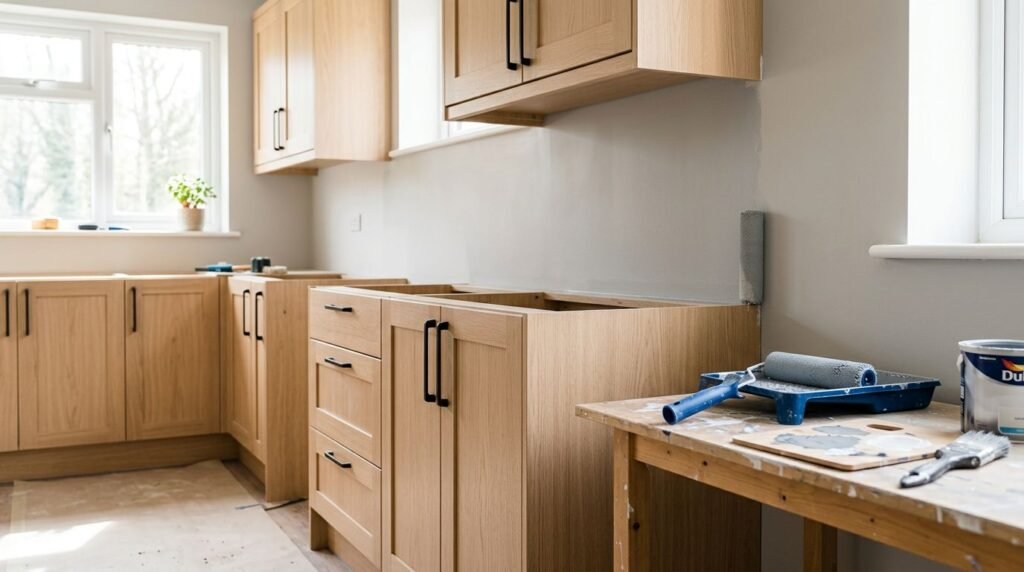
Paint timing sounds simple until new cabinets, drywall repairs, and trim lines all show up at once. In a cabinet remodel, the wrong order can leave you with scuffed paint, uneven edges, or extra touch-up work.
The best time to paint walls during a cabinet remodel depends on how much the layout changes and how much wall repair you need. A full kitchen replacement and a small vanity swap rarely follow the same schedule. The cleanest result usually comes from painting at one stage, then finishing with a small touch-up after installation.
Key Takeaways
- Paint before cabinet installation when the walls need repair, patching, or a full color change.
- Paint after installation when the cabinet footprint stays the same and you want the sharpest wall edge.
- Most remodels still need a final touch-up after the cabinets go in.
- Protect cabinet finishes before sanding, priming, or rolling paint.
- Tight bathroom layouts and full kitchen replacements usually favor painting first.
Paint Before or After Cabinet Installation?
The question comes up in almost every remodel. If the walls need repair, prime and paint first. If the wall surface is already in good shape and the cabinet footprint stays the same, painting after installation can give you a cleaner line where the cabinets meet the wall.
| Scenario | Paint Before | Paint After | Best Choice |
|---|---|---|---|
| Full kitchen replacement | Easier wall repair, priming, and coverage behind cabinets | Needs careful masking and touch-up around edges | Paint before, then touch up after |
| Bathroom vanity swap | Easier in a tight room with less room to work | Can give a crisp edge near the vanity | Paint before if the vanity size changes |
| Same footprint, minor color change | Optional if walls are already smooth | Good if you want a sharp final border | Paint after if prep is light |
| Major wall repair or new drywall | Strongly preferred | Adds more cleanup and masking | Paint before installation |
The pattern is clear. Paint early when the room is getting dusty or patched. Paint later when the walls are already clean and you want a sharper line at the cabinet edge. In most remodels, the job still ends with a small brush pass after the cabinets are set.
Full Kitchen Remodels Usually Need Paint First
A kitchen has more moving parts than most rooms. Cabinets, counters, backsplash tile, appliances, and trim all need room to breathe. That is why painting walls before cabinet installation works best for most full kitchen projects.
Old cabinets come out, the walls get patched, and the surface can be sanded without worrying about fresh cabinet faces. You can cover the full wall area in one go, which is much easier than cutting around new cabinet ends later. It also helps if the new layout changes the footprint, because filler strips, crown molding, and cabinet sides can cover some of the wall edge after installation.
If you are still sorting out layout details, a cabinet design consultation helps you lock in cabinet widths, filler spacing, and wall breaks before the first coat goes on. That matters more than people think, because a wall color line that looked fine on paper can land in an awkward spot once the boxes are installed.
The main downside of painting first is the final edge work. Even careful installers can leave small scuffs, and cabinet trim often hides only part of the wall edge. Expect to do some touch-up around side panels, crown, and places where caulk meets paint. That is normal, and it is easier than repainting behind a finished cabinet later.
A solid kitchen order is demolition, wall repair, primer, first coat, cabinet installation, and final touch-up. If countertops and backsplash are also part of the project, the touch-up usually happens after those trades finish too.
Bathroom Vanities Need a Little More Planning
Bathrooms are tighter, so every inch matters. Paint rollers, painter’s tape, and wet walls all become harder to manage when a vanity, toilet, and mirror share the same space. For that reason, painting before vanity installation is usually the smoother move.
That is especially true when the vanity size is changing. A deeper cabinet, a double-sink layout, or a floating vanity can shift where the paint line should stop. If you paint after the vanity is installed, you may spend more time cutting in around plumbing and cabinet sides than you would have spent painting the room first.
For smaller bath projects, bathroom vanity styles matter because the cabinet depth and footprint affect wall access. A 24-inch vanity and a 60-inch double vanity do not leave you the same working room, and they do not hide wall flaws in the same way.
Still, there are cases where painting after makes sense. If the vanity stays in the same place and the walls are already smooth, you can install the cabinet first and then paint for a crisp border. This works best when the room has minimal wall repair and the cabinet finish is fully protected.
Moisture also matters. Bathrooms need good ventilation, and fresh paint should cure before the room gets heavy use. If the remodel includes new mirrors, lighting, or backsplash tile, wait until those pieces are in place before the final touch-up. That way the paint line lands where the finished room actually ends.
Prep Work That Saves the Finish
The order matters, but prep matters more. A bad prep job will show up no matter when you paint.
Protecting cabinet finishes should start before any sanding or rolling begins. Even a small amount of dust can scratch a new painted or stained surface. Installers often use rosin paper, cardboard, or clean drop cloths on the floor, then cover cabinet faces with painter’s plastic or protective film.
Here are the basics that keep the job clean:
- Patch nail holes, dents, and drywall seams before paint goes on.
- Sand repaired spots smooth, then prime them.
- Mask cabinet boxes, hinges, pulls, and any exposed hardware.
- Keep dust off new cabinets with clean cloths and careful vacuuming.
- Remove doors and drawers when possible, then label them for easy reinstall.
Fresh cabinets pick up small chips fast, so protect the finish before the first sanding block comes out.
If the cabinets are already installed, use low-tack tape and avoid heavy masking tape on finished wood or painted surfaces. Pull the tape while the paint is still slightly soft, so the edge releases cleanly. If you wait too long, the paint can tear and leave a rough line.
Also, choose the wall color before the cabinets arrive if you can. That gives you time to test samples in natural light and check how the color sits next to the cabinet finish. The color can look warmer, cooler, darker, or lighter once it lands beside the new cabinets.
When Final Touch-Up Painting Is Usually Needed
Even a careful remodel usually needs one last paint pass. Cabinets shift a little during installation, caulk lines need time to dry, and installers may leave tiny scuffs where side panels meet drywall. That does not mean the project went wrong. It means the room is being finished properly.
If you painted before cabinet installation, expect touch-ups at cabinet ends, crown molding, filler strips, and anywhere a tool brushed the wall. If you painted after installation, expect touch-ups around tape lines, corners, and spots where the cabinet finish needed extra protection.
Matching sheen matters too. A touch-up on an eggshell wall should use the same sheen, or the patch may flash under light. Keep leftover paint from the original batch if you can, because even the same color can shift slightly between cans.
Final touch-up work also belongs after backsplash tile and countertop installation. Those trades can nick the wall or leave small gaps that need caulk and paint. If you paint too early and skip the touch-up, the room may look unfinished even when everything else is correct.
Most homeowners do best when they think of wall painting as a two-stage job. The first coat gives the room a clean base. The last coat makes the cabinet lines look intentional.
A Clean Finish Comes From the Right Order
When you plan a cabinet remodel, the timing of wall paint should follow the scope of the project. Full kitchen replacements and most bathroom vanity swaps are easier when the walls are painted before installation, then touched up after the cabinets, counters, and trim are in place.
If the layout stays the same and the walls are already in good shape, painting after installation can give you the sharpest edge. The right choice comes down to wall repair, room size, and how much the cabinet footprint changes.
The safest habit is simple, protect the cabinets, finish the walls in the right order, and plan on a small final touch-up. That is usually what turns a remodel from close enough into a room that looks finished.
