
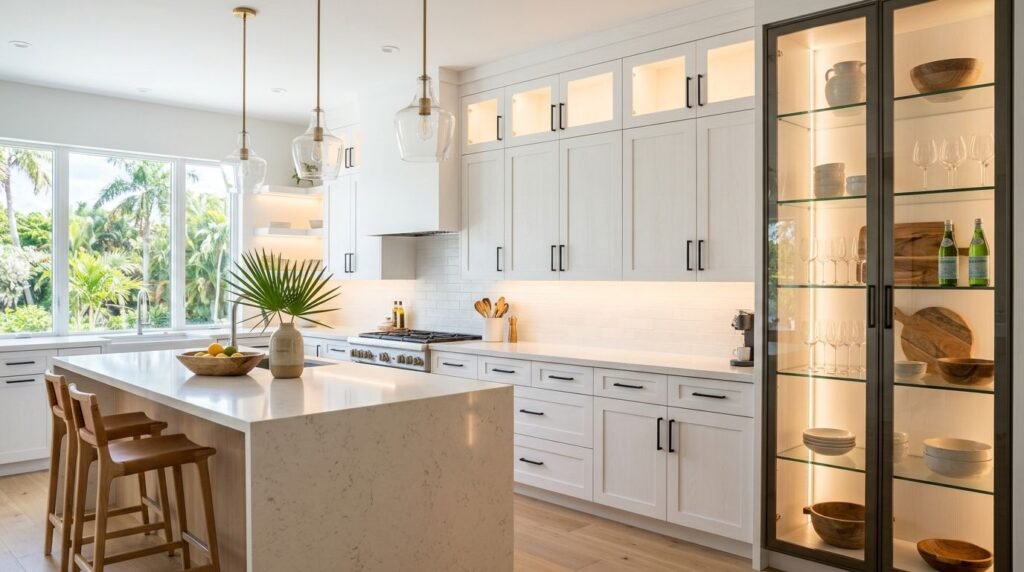
Bright Florida sunlight can make a kitchen look clean by day and flat after dark. In Fort Myers, cabinet lighting has to handle both moods with ease.
Good cabinet lighting ideas add visibility, soften shadows, and give the room a finished look. They also work with your cabinet design, so the lights feel built in instead of added later.
The best setups are simple. LED strips, the right color temperature, and smart placement do most of the work. Once those pieces fit, the kitchen feels more polished every time you open a door or switch on a scene.
Why interior cabinet lighting matters in bright Fort Myers kitchens
Fort Myers homes get strong daylight, but that doesn’t help when you’re looking for a mug at 7 p.m. or checking a pantry shelf at night. Interior cabinet lighting fills that gap. It makes deep storage easier to use, and it turns ordinary cabinets into part of the room’s design.
That matters even more in kitchens with glass fronts, tall pantry units, or dark corners. A little light inside a cabinet can make dishes, glassware, and serving pieces stand out without making the whole room brighter. It also helps smaller kitchens feel less boxed in.
If you are ordering new fronts, cabinet overlay options shape how much frame shows and how the light reads around each door. Full overlay, partial overlay, and inset styles all change the look, because each one handles edges and reveals in a different way. In other words, the cabinet style changes how polished the lighting feels.
Cabinet lighting works best when you notice the glow, not the fixture.
That’s the goal for most Fort Myers kitchens. The room should feel calm, open, and easy to use, whether you’re making coffee before sunrise or cleaning up after dinner.
LED cabinet lighting that works day after day
LEDs are the clear fit for most cabinet projects. They run cooler than older bulbs, fit into slim spaces, and give off steady light. That matters in enclosed cabinets, where heat and bulk can make other options awkward.
They also give you more control. You can use them under shelves, inside cabinets, or along toe-kicks without crowding the cabinet interior. For homeowners who want a clean look, that slim profile matters as much as the light itself.
A quick comparison of common options
| Lighting type | Best use | Look and feel |
|---|---|---|
| LED strip lights | Under upper cabinets, shelves, or toe-kicks | Even, modern, low-profile |
| Puck lights | Small display shelves or dark corners | Focused pools of light |
| Interior bar lights | Pantry cabinets and tall storage | Bright, direct visibility |
| Motion-sensor strips | Everyday-use cabinets | Convenient and hands-free |
Strip lights are the most flexible choice. They spread light evenly, so you don’t get harsh bright spots. Puck lights work well when you want to highlight one shelf or one set of items. Interior bars are useful in tall pantry cabinets, where you need more direct light.
Motion-sensor strips bring extra ease to busy kitchens. Open the door, and the light comes on. Close it, and it turns off. That small detail feels simple, but it saves you from fumbling for a switch when your hands are full.
If your kitchen has warm wood or painted cabinets, the finish will change how the light reads. A lighter cabinet reflects more of the glow, while a deeper finish needs a stronger light source to feel balanced. If you are comparing finishes, painted vs stained cabinets can help you picture how each one changes the room.
Color temperature, dimmers, and motion sensors
The same light can feel cozy, crisp, or harsh depending on its color temperature. For most Fort Myers kitchens, warm white usually works best. A range around 2700K to 3000K feels soft and welcoming, especially in the evening.
If you want a sharper task light, 3500K can work well in prep areas. It still looks clean, but it brings a little more clarity to shelves, labels, and dishware. Anything too cool can feel out of place in a kitchen with warm finishes.
Dimmers make cabinet lighting far more useful. During meal prep, you can turn the light up. Later, you can lower it for a softer glow during dinner or cleanup. That flexibility matters in open kitchens, where bright lighting at night can feel too strong.
Motion sensors add convenience in deep cabinets and pantries. They are especially useful for:
- Tall pantry cabinets, where a switch is hard to reach
- Glass-front cabinets, where you want instant light for display
- Base cabinets used for snacks, baking supplies, or small appliances
- Nighttime kitchen use, when bright overhead lights feel too intense
Keeping the same temperature throughout nearby cabinets also helps. Mixed lighting can make one section look yellow and another look blue. A consistent tone feels more intentional and easier on the eyes.
Placement choices that make the lighting feel built in
Placement changes everything. The best cabinet lighting ideas look good because the source stays hidden and the light lands where you need it. If the fixture is visible, the effect often feels busy. If it’s tucked away well, the cabinet looks custom.
Inside upper cabinets, place lights toward the front or along the side so the beam reaches the shelf. That reduces the shadow that often gathers at the back. For glass doors, top placement can make dishes glow without spilling too much light into the room.
Under-cabinet lighting should sit where it lights the countertop, not your eyes. A hidden channel or recessed strip creates a cleaner result than an exposed bar. Toe-kick lighting works well when you want a softer night-light effect or a subtle line of light along the floor.
Cabinet edges matter too. Wide face frames, narrow reveals, and door overlays all change how visible the fixture will be. If the cabinet design has a deep lip or a strong frame, the lighting may need a different position to avoid glare. That is one reason planning the lights with the cabinet layout is so important.
For a polished finish, think in layers. Use one type of light for task work, another for display, and a softer one for mood. That mix gives the kitchen depth without making it feel overdone.
Matching cabinet lighting to cabinet design and finish
Cabinet design shapes how light moves through the room. A flat, modern door can reflect light in a clean way. Raised panels and darker woods create more shadow, so they need more careful placement.
Glass inserts and open shelving give you a chance to show off dishes or decor. Interior lighting brings those features forward, especially in kitchens with a coastal feel. A warm glow can make white dishes look brighter and wood accents feel richer.
Finish choice matters just as much. Light painted cabinets bounce more light around the room, which can make a kitchen feel airy. Dark stains absorb more light, so the fixtures need to work a little harder. If you want to compare those looks before you decide, comparing cabinet finish styles for your kitchen is a smart place to start.
Small details make a difference here. A light inside a pantry should help you see labels fast. A light inside a display cabinet should make the contents stand out without glare. A toe-kick light should guide the eye gently, not compete with the rest of the room.
When cabinet lighting matches the style of the cabinets, the whole kitchen feels planned. That is the difference between a light you notice and a room you enjoy.
Conclusion
Interior cabinet lighting does more than brighten storage. It helps a Fort Myers kitchen feel easier to use, calmer at night, and more finished in daylight.
LED strips, warm color temperatures, dimmers, and motion sensors give you a strong base. After that, placement and cabinet design decide whether the result feels clean or cluttered.
The best kitchen lighting ideas are the ones that fit the way you live. When the glow lands in the right place, the cabinets look intentional every time you open the door.