
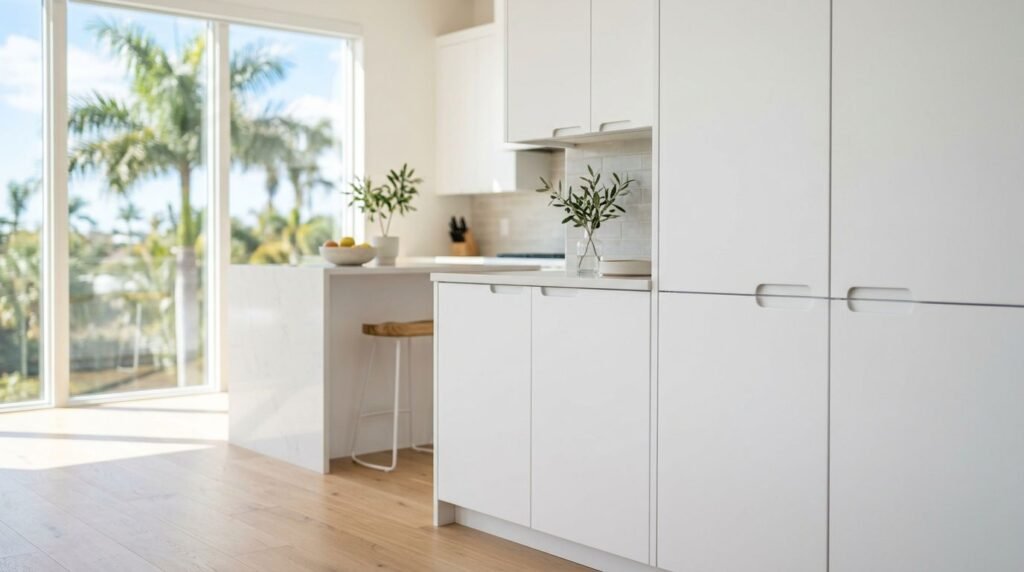
Fort Myers kitchens deal with bright light, steady heat, and plenty of everyday use. That makes integrated cabinet handles a smart choice when you want a clean look that still works hard.
They keep cabinet fronts neat, reduce visual clutter, and make wiping down doors easier. In a modern kitchen, that matters as much as color or layout.
The trick is choosing the right profile. A handle that looks sleek in a photo can feel awkward if it catches fingers, traps crumbs, or fights the cabinet finish. The right choice should fit your cabinet design, your habits, and the local climate.
Why integrated handles work so well in Fort Myers kitchens
Modern kitchens in Southwest Florida often feel open, bright, and relaxed. Integrated handles suit that style because they let the door surfaces stay calm and continuous. Instead of breaking up the cabinetry with lots of visible hardware, the handle line becomes part of the front itself.
That clean look also helps in daily life. Fewer protruding pieces mean fewer spots to bump, snag, or dust around. When you cook often, that matters. So does cleaning, because smooth lines are easier to wipe after a busy day or a humid afternoon.
Humidity is another reason they make sense here. Moisture does not just affect wood and paint, it also affects how hardware ages. Simple recessed shapes and well-sealed edges usually hold up better than fussy details that collect grime.
A kitchen can look minimal and still work beautifully. The grip just has to feel natural.
If you are still deciding how visible you want your hardware to be, choosing between cabinet knobs and pulls can help when you mix hidden and exposed details in one kitchen.
Integrated cabinet handle styles that fit a clean-lined look
The strongest modern kitchens usually use one of a few handle profiles. Each one changes the feel of the room, so it helps to compare them side by side.
| Handle style | Best use | Look and feel | Watch for |
|---|---|---|---|
| J-pull edge | Doors and drawers with flat fronts | Clean, slim, and easy to read | Needs enough finger space to feel comfortable |
| Recessed finger pull | Drawers, pantries, and base cabinets | Slightly deeper grip, still subtle | Can collect crumbs if the recess is too tight |
| Aluminum channel pull | Wide drawers and tall door fronts | Strong grip and crisp lines | Needs finish coordination with appliances and faucet hardware |
| Shadow-line reveal | Ultra-modern cabinets | Nearly invisible and very refined | Depends on precise cabinet design and fabrication |
| Touch-latch with hidden support | Upper cabinets or low-use fronts | Almost no visible hardware | Can show fingerprints and needs accurate alignment |
J-pulls are one of the easiest choices for a modern kitchen. They feel familiar, and they keep the door edge visually light. Recessed finger pulls work well when you want a bit more grip without adding surface hardware. Channel pulls often make the most sense on wide drawers, where you want a strong handhold.
Shadow-line reveals look the most minimal, but they ask a lot from the cabinet build. Every line has to be exact. That is where good cabinet design matters most, because a tiny misread in spacing can change the whole feel of the room.
Finish choices that hold up to humidity and daily use
A handle style only works if the finish fits the space. Fort Myers homes deal with moisture, sunlight, and plenty of fingerprints, so the surface should be chosen with care.
Matte finishes usually hide smudges better than glossy ones. Brushed metal also tends to feel calmer than highly reflective hardware. If you want a quiet, modern look, that softer surface can help the cabinets feel more grounded.
Material matters just as much. Aluminum channel pulls, stainless steel accents, and powder-coated pieces all bring different strengths. Metal hardware usually handles humidity better than cheaper finishes that wear fast. On painted or laminated cabinets, the recessed edge should be sealed well so moisture does not creep into exposed seams.
A few pairings work especially well in modern kitchens:
- Matte black on white or soft gray cabinets: This gives a sharp outline without feeling loud.
- Brushed stainless on walnut or oak fronts: The mix feels clean and balanced.
- Warm bronze on cream or sand tones: This adds depth without making the room feel heavy.
- Tonally matched painted channels: This creates a quiet, built-in look that disappears into the front.
The safest choice is the one that matches the rest of the room. Faucet finish, appliance trim, lighting, and cabinet color should all feel related. When those details line up, the kitchen feels finished instead of pieced together.
Where each handle style works best
Different kitchen zones need different kinds of grip. That is why many modern kitchens use more than one integrated profile.
Drawers usually work best with channel pulls or deeper recessed grips. You pull drawers all day, so comfort matters. Tall pantry doors also benefit from a clear handhold, especially when the cabinet is full and heavy. A narrow, shallow recess can look neat, but it may feel weak in daily use.
Upper cabinets are a little different. If the doors are light and used less often, J-pulls or touch-latch fronts can keep the upper run visually quiet. In a kitchen where the uppers sit at eye level, that subtle treatment can make the wall feel more open.
Kitchen islands often need the most thought. Since islands are seen from more than one side, the handle style should look good from every angle. A consistent profile across the island and perimeter cabinets usually feels more deliberate. Mixing too many shapes can make the kitchen feel busy.
If your layout includes a mix of storage types, think about the job each zone does. Heavy drawers need more grip. Light doors can stay cleaner and simpler. Appliance garages, trash pullouts, and pantry fronts may need a little more depth than the rest. That balance keeps the room easy to use without giving up the modern look.
Common mistakes that weaken the design
A few small choices can make integrated hardware feel awkward fast.
- Too little finger clearance: The recess may look sleek, but it won’t feel good if you have to pinch it.
- Weak edge sealing: In a humid climate, exposed or poorly sealed edges can wear down faster.
- Mixing finishes without a plan: Different metals can work together, but they need a clear reason.
- Choosing style before layout: A great-looking profile can fail if the drawer depth or door swing does not suit it.
- Overusing ultra-minimal fronts: A handleless look is sharp, but every cabinet does not need to behave the same way.
The best kitchens feel balanced. They use a limited set of profiles, repeat them with purpose, and keep the touch points comfortable. That is the part many homeowners notice after the design is installed. The room looks calm, and the cabinets still work the way they should.
Conclusion
Integrated handles give modern Fort Myers kitchens a clean, polished look that also makes daily life easier. They reduce clutter, wipe down well, and fit the flat-front cabinet styles many homeowners want.
The right choice depends on more than style alone. Humidity resistance, finger comfort, finish coordination, and cabinet use all shape what works best.
When the handle line feels natural and the cabinet design stays consistent, the whole kitchen feels more intentional. That is the real payoff, a room that looks sharp and works without extra effort.