
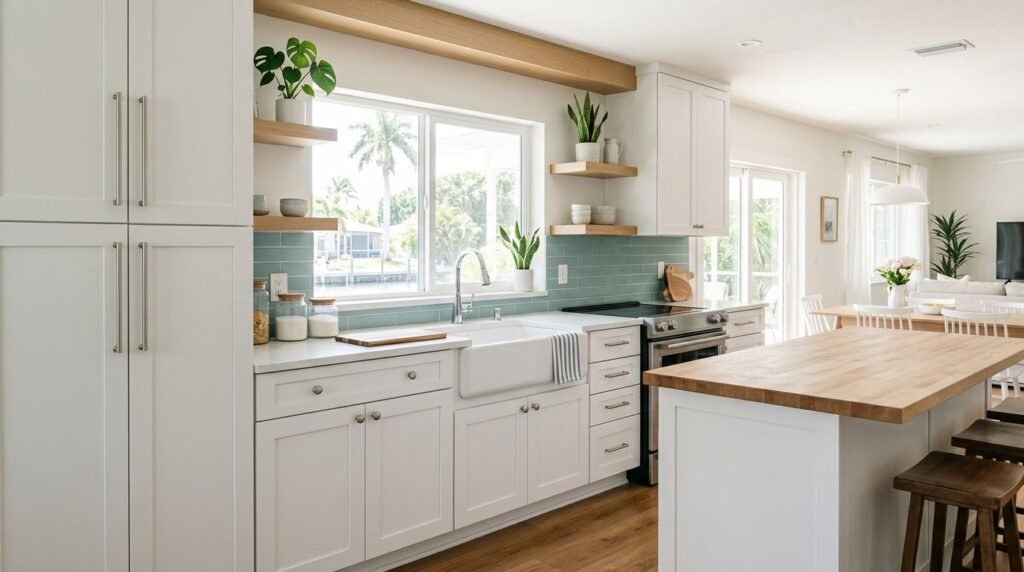
A cabinet pull can look perfect on the showroom wall and still feel off in your kitchen. In Fort Myers homes, that mismatch shows up fast, because bright light, coastal colors, and open layouts make every detail more visible.
The right cabinet pull sizes do more than fit the hand. They support the room’s scale, match the cabinet design, and stand up to humid Florida weather. If you choose well, the hardware feels calm and natural instead of crowded or flimsy.
Start With Cabinet Scale, Not a Number
Pull size should follow the cabinet front, not the other way around. A slim drawer needs a different look than a wide base drawer or a tall pantry door. That sounds obvious, but many people shop by style first and size second.
A good pull usually feels proportional to the surface it sits on. On smaller fronts, a long bar can look heavy. On large fronts, a short pull can disappear. Think of the pull as part of the cabinet face, not an afterthought.
Most cabinet hardware is measured by center-to-center spacing, which is the distance between the screw holes. That matters more than total length when you’re matching old holes or comparing products. A 3-inch pull, a 5-inch pull, and an 8-inch pull all have different hole spacing, even if their outside length looks close.
If your project also includes new doors or a layout change, a cabinet refacing versus replacement guide can help you sort out how far the remodel needs to go.
A simple rule helps with visual balance. For many drawers, the pull should be about one-third to two-thirds of the drawer width. That does not mean you need a math test in the showroom. It means the hardware should feel like it belongs there.
If a pull looks right but feels cramped in your hand, size up. Comfort usually wins over strict symmetry.
Cabinet Pull Sizes That Work for Drawers
Drawers are where size matters most, because you see the hardware at eye level and use it every day. Small prep drawers, standard utensil drawers, and wide storage drawers all want different pull lengths.
Here is a quick guide for common drawer sizes.
| Drawer type | Typical pull size | Best use |
|---|---|---|
| Small drawer | 3″ to 3.75″ center-to-center | Spice drawers, shallow top drawers |
| Standard drawer | 5″ to 6.25″ center-to-center | Everyday kitchen drawers |
| Wide drawer | 7.5″ to 12″ center-to-center | Pots, pans, heavy storage |
| Extra-wide drawer | 12″ to 18″ center-to-center or two pulls | Large drawer banks, statement fronts |
Smaller drawers usually look best with compact pulls. They keep the front clean and leave room for fingers. On standard drawers, a 5-inch or 6.25-inch pull is a safe, balanced choice for many kitchens.
Wide drawers need more presence. A long pull helps the front feel intentional instead of sparse. On very wide drawers, two pulls can also work well, especially when the drawer is deep or heavy. That setup gives you better grip and can look more polished on a broad cabinet run.
A 30-inch drawer, for example, often works well with an 8-inch to 12-inch pull. A 36-inch drawer may call for something longer. The exact choice depends on the drawer face, the surrounding cabinets, and whether you want the hardware to blend in or stand out.
Cabinet design matters here too. Flat, modern fronts can handle a longer, cleaner line. Shaker drawers often look good with a pull that echoes the frame shape without overwhelming it.
Pulls for Base Cabinets, Wall Cabinets, and Pantry Doors
Doors need a slightly different approach than drawers. You are pulling from an edge, not from the center, so the hardware has to feel easy to grab and easy to see.
Base cabinet doors often look best with pulls in the 3-inch to 5-inch range. Smaller doors can take a short bar or a knob-and-pull mix. Larger base doors usually look better with a longer pull, because it gives the front more balance.
Wall cabinets are usually lighter visually, so many homeowners choose the same pull size they used on the lower cabinets. Still, shorter pulls can keep the upper run from feeling busy. If the wall cabinets are close together, a compact pull can clean up the whole line.
Pantry doors deserve more attention. Because they are tall, a short pull can seem undersized. A 5-inch to 8-inch pull often feels more natural on a pantry, especially when mounted vertically. Vertical placement helps the eye follow the door’s height and gives the door a clean, simple look.
If the pantry is extra tall, consider a longer vertical pull or a pair of matching pulls if the door is wide. That keeps the hardware from feeling lost on a large surface.
A good rule is to keep the style consistent, then adjust size by function. The kitchen looks calmer when your pulls share the same shape and finish, even if the sizes shift from one cabinet to the next.
Appliance Pulls Need a Different Rule
Appliance pulls work harder than standard cabinet pulls. They need enough length for a secure grip, and they need to match the weight and scale of the appliance front.
Panel-ready refrigerators, tall freezer units, and heavy dishwashers often call for larger pulls, usually in the 12-inch to 18-inch range. Some designs go even longer. The main goal is simple: the pull should feel strong in the hand and look appropriate beside the appliance.
A small pull on a tall refrigerator panel looks awkward fast. It makes the door seem taller and heavier than it is. A larger pull does the opposite. It gives the panel a clear handle and helps the appliance blend into the kitchen.
When you mix appliance pulls with standard cabinet hardware, keep the family resemblance obvious. The shape, finish, and profile should relate to each other. You do not need identical lengths, but you do want the same visual language across the room.
For built-in trash pull-outs, pantry towers, or heavy utility drawers, choose hardware with more grip than you think you need. Those pieces get used often, and the pull should make the motion easy.
Fort Myers Style Choices That Hold Up in Humid Air
Fort Myers kitchens often lean coastal, bright, and relaxed. White shaker cabinets, soft blue accents, sandy tones, and light quartz all pair well with simple hardware. Because the room already feels airy, the pull size should support that look, not crowd it.
Long, slim bars often work well in coastal-inspired spaces. They keep the lines clean and fit the modern-casual feel many homeowners want. Brushed nickel and stainless steel are popular because they blend with bright finishes and handle daily use with less fuss.
Humidity changes the hardware conversation too. Florida air, salt, and sunscreen residue can wear on cheap finishes. Solid metal pulls with quality plating hold up better than bargain hardware that chips or pits. If your kitchen gets a lot of natural light or sits close to open doors and windows, finish quality matters even more.
A few finishes tend to work well in Fort Myers kitchens:
- Brushed nickel for a soft, versatile look
- Stainless steel for easy pairing with appliances
- Polished chrome for bright, reflective kitchens
- Matte black for contrast on light cabinets, when the finish is durable
- Champagne bronze or satin brass for warmth in coastal spaces
The finish should match the mood of the room. Bright cabinets often pair well with lighter, smoother hardware. Darker pulls can add contrast, but they need enough length to avoid looking pinched on white or pale doors.
Measure, Mock Up, and Test Before You Order
Hardware looks different on a screen than it does on a cabinet. Because of that, a quick test can save you from buying the wrong size.
- Measure the cabinet front and note the usable space around the pull.
- Check the hole spacing if you are replacing existing hardware.
- Mark the pull location with painter’s tape and step back.
- Open the door or drawer a few times and check finger clearance.
- Hold a sample pull, if possible, and see how it feels in your hand.
That last step matters more than many people expect. A pull can look perfect and still feel too small, too sharp, or too flat. The best choice opens smoothly and feels easy every day.
If you are reusing old holes, matching center-to-center spacing is the easiest path. If you want a larger pull, make sure the new placement makes sense on the cabinet front and does not crowd the edges. A few extra minutes with tape and a ruler can prevent patch work later.
Conclusion
Choosing cabinet pull sizes comes down to balance, comfort, and how the kitchen feels when you walk in. The right pull should match the size of the drawer or door, fit the hand, and work with the rest of the cabinet design.
In Fort Myers kitchens, that choice also has to hold up in bright light and humid air. A well-sized pull with a durable finish keeps the room looking sharp long after installation.
When the hardware feels natural and the proportions make sense, the whole kitchen settles into place.