
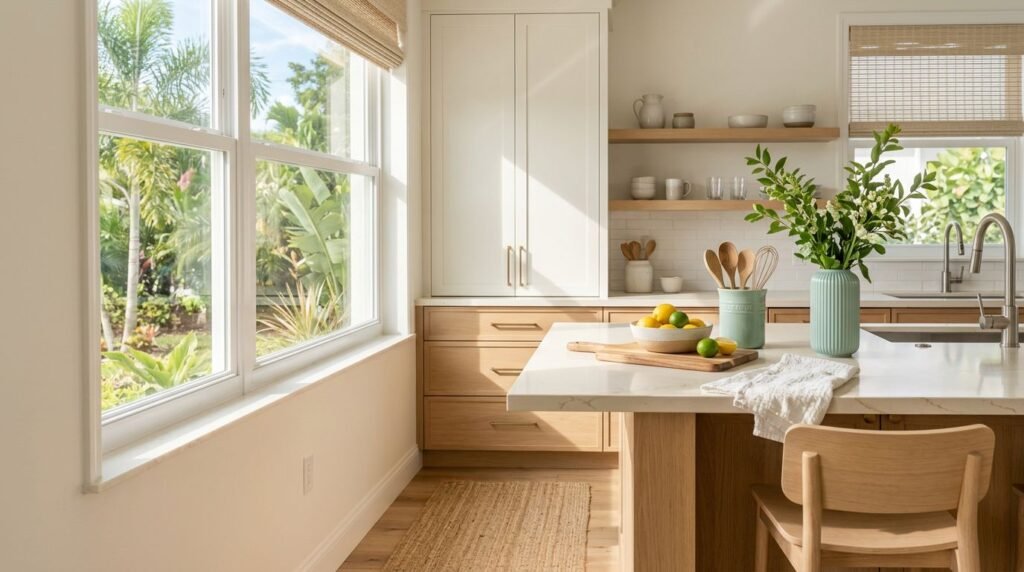
The right cabinet and countertop pairing can make a kitchen feel calm, bright, and pulled together. The wrong match can make good materials look awkward, even when both are high quality.
In Fort Myers, that choice gets even more important. Strong daylight, warm interiors, and coastal style all affect how kitchen cabinets and quartz countertops look once they’re installed.
The best results come from reading undertones first, then testing samples in real light. After that, you can shape the room around the look you want.
Start with the undertone, not the surface color
A cabinet finish can look simple at first glance, but the undertone is what drives the final look. Warm whites lean creamy or beige. Cool whites lean crisp or blue-gray. Woods can read golden, honeyed, gray-brown, or even slightly red.
Quartz works the same way. Some slabs have soft cream movement. Others feel clean and bright. A few lean cool and glassy. If the undertones clash, the room feels off, even if each piece looks fine on its own.
That’s why cabinet design should begin with the whole palette, not one item. If your floors are warm, a cool white cabinet with icy quartz may feel sharp. If your walls and trim are already soft and warm, a cold gray countertop can pull attention in the wrong direction.
A simple rule helps here. Match warm with warm, cool with cool, or create a clear contrast on purpose. Mixed tones can work, but they need a reason.
Cabinet and quartz pairings that work in Southwest Florida
Some combinations stay popular because they look balanced in real homes. Others work because they suit the light and style of coastal Florida interiors.
Here’s a quick way to compare common pairings:
| Cabinet color or finish | Quartz choice | Look you get | Best for |
|---|---|---|---|
| White cabinets | Warm quartz with soft cream or beige movement | Soft, welcoming, and bright | Coastal kitchens, family spaces, homes with warm floors |
| Natural wood cabinets | Creamy quartz with light veining | Easy, natural, and relaxed | Open kitchens, transitional homes, beach-inspired interiors |
| Navy cabinets | Bright white quartz | Sharp contrast with a tailored look | Islands, accent runs, more formal kitchens |
| Gray cabinets | Clean white quartz | Fresh and current without feeling heavy | Smaller kitchens, modern layouts, light-filled rooms |
| Tone-on-tone white or cream cabinets | Subtle quartz with low contrast | Calm, layered, and quiet | Minimal spaces, smaller homes, layered coastal looks |
White cabinets with warm quartz are a strong choice if you want a kitchen that feels soft instead of stark. The warmth keeps the room from looking flat, and the quartz adds texture without taking over.
Natural wood with creamy quartz feels easy to live with. That pairing works well when you want warmth and character, but still want the room to feel open. It’s a smart fit for homes that lean toward relaxed coastal style.
Navy or gray cabinets with bright white quartz create more punch. The contrast gives the kitchen a clean edge. It also helps an island stand out if you want that center piece to feel distinct.
Tone-on-tone looks are quieter. They work when you want the cabinets and countertop to blend instead of compete. In that case, the texture of the quartz matters more than bold movement.
If you want the room to feel larger, use fewer strong contrasts. If you want drama, raise the contrast and keep the rest of the palette simple.
View samples in Fort Myers light before you decide
A sample that looks perfect in a showroom can change fast at home. Fort Myers light is bright, and that brightness can shift color more than many people expect.
Take cabinet samples, quartz chips, and any flooring or backsplash pieces home together. Put them near the window, on the island, and under your task lighting. Then check them in the morning, at midday, and in the evening.
The goal is to see how the surfaces behave, not just how they look in isolation. A quartz top with gray veining may feel crisp in the showroom but slightly beige at home. A white cabinet can read warm in afternoon sun and cooler after sunset.
Look for these details when you test samples:
- The cabinet and quartz should agree on warmth or coolness.
- Veining should connect with the cabinet finish, not fight it.
- The countertop should still look good beside your wall color.
- The finish should hold up under both natural and artificial light.
If a sample surprises you at home, trust that reaction. The kitchen needs to work in your house, not in a display room. A few hours of testing now can save you years of annoyance later.
Choose finishes that suit coastal Florida interiors
Style matters, but finish choice matters just as much. In coastal Florida homes, the best kitchens often feel light, breezy, and polished without being shiny.
Matte or satin cabinet finishes usually fit that look better than high gloss. They soften strong light and hide fingerprints more easily. That matters in a busy kitchen, especially if you cook often or have kids nearby.
Quartz finish deserves equal attention. A polished slab gives you more reflection and a sharper look. A softer finish feels quieter and less formal. Either can work, but it should match the cabinet style and the room’s mood.
Shaker-style cabinets pair well with many quartz patterns because the frame adds structure. Slab cabinets can feel more modern and clean. If your home already has a coastal feel, simple doors and a quartz top with gentle movement can keep the room from feeling busy.
Hardware also changes the final result. Brushed nickel and soft brass both work well in Fort Myers homes. Black hardware adds contrast, while polished chrome feels brighter and more classic. Choose one that supports the cabinet and quartz pairing instead of competing with it.
If the kitchen connects to other rooms, think about that flow too. A nearby bath can echo the same cabinet tone or quartz family for a consistent feel. If you’re updating more than one space, bathroom vanity cabinet options can help you keep the materials connected without making every room look identical.
Bring the full kitchen together with cabinet design
A good match is about more than color. Layout, profile, and proportion all shape the final look.
Start with the scale of the room. In a smaller kitchen, a busy quartz pattern can feel loud. A quieter slab gives the eye a place to rest. In a larger kitchen, a stronger veined quartz can add movement without overwhelming the space.
Then think about where the countertop will do the most visual work. Islands often carry more contrast than perimeter cabinets. That gives you room to use a bolder quartz on the island and a calmer choice around the walls. The result feels layered, not random.
Backsplash choice matters too. If your quartz already has movement, a simple backsplash helps keep the room balanced. If your quartz is nearly solid, you can add a little texture through tile without overloading the space.
A few final checks help pull it all together:
- Repeat one tone at least twice in the room.
- Keep the cabinet profile in line with the home’s style.
- Make sure hardware, faucet, and lighting agree with the finish.
- Use contrast in one place, then let the rest of the room support it.
Strong cabinet design makes the room feel intentional. When the cabinets and quartz work together, the kitchen looks settled instead of assembled.
Conclusion
Matching cabinets and quartz in Fort Myers starts with undertones, then moves into light, finish, and style. White cabinets with warm quartz, natural wood with creamy quartz, and navy or gray cabinets with bright white quartz all work for different reasons.
The best choice is the one that looks right in your home, under your light, with your floors and backsplash beside it. When those pieces line up, the kitchen feels finished the moment you walk in.