
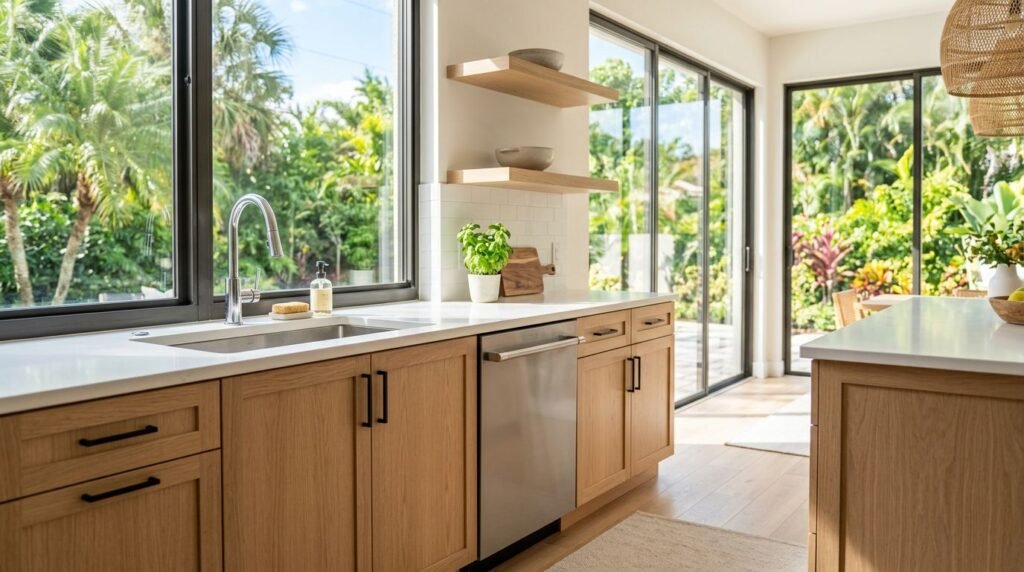
Fort Myers kitchens work hard. Towels move from sink to prep space to patio door, and they pile up fast.
A pull-out towel cabinet keeps towels close without taking over the counter. It also helps your kitchen stay cleaner when humidity hangs in the air and the room gets used all day. If you’re planning a remodel, the right storage choice should fit your routine, your cabinet design, and the way your home runs.
Why towel storage needs a different plan in Fort Myers kitchens
In Southwest Florida, towels pick up moisture fast. They get used after hand washing, dish cleanup, pool trips, and quick wipe-downs after cooking. When they sit on the counter, they make the room feel busier. When they sit in the wrong cabinet, they can smell stale.
A better setup keeps clean towels dry, used towels separated, and everything easy to grab. That matters near the sink, but it matters just as much near a prep island or back entry. A smart towel spot can keep traffic moving and cut down on the little messes that build up during the day.
Damp towels need a home that stays close to the sink and far from clutter.
Good storage also helps the kitchen feel calm. That matters in homes where the kitchen opens to the living room, lanai, or breakfast nook. If the towels are visible, the room can look messy even when it is clean.
Pull-out towel cabinet ideas that fit everyday use
The right layout depends on how you use the kitchen most. A quick comparison helps narrow the choice.
| Layout | Best fit | Main advantage |
|---|---|---|
| Slim pull-out by sink | Small kitchens | Fast access during cleanup |
| Deep drawer | Folded towels | Flat storage that stays neat |
| Door-mounted rack | Tight cabinet runs | Uses hidden space |
| Tall utility pull-out | Busy families | Holds more backup linens |
Each option solves a different storage problem. The goal is simple, keep towels where you use them most, without adding visual clutter.
Slim pull-out beside the sink
A narrow pull-out beside the sink is the simplest fix. It keeps dish towels and hand towels in reach without adding bulk. Because it sits close to the cleanup zone, you can grab a towel with one hand and keep working.
This layout works well in smaller Fort Myers kitchens where every inch matters. It also hides the towels neatly, so the room looks calmer between tasks. If the front matches your cabinet run, it feels built in rather than added later.
A slim pull-out works best when you want speed. It gives you a spot for the towel you use five times a day, not a place for overflow storage. That makes it one of the easiest upgrades to live with.
Deep drawer for folded towels
A deeper drawer is better when you keep a stack of clean towels nearby. Folded towels stay flat, so they don’t wrinkle or snag on hardware. Add a divider, and the drawer can hold dish towels, napkins, and backup hand towels without turning into a jumble.
This idea suits larger base cabinets near the prep area or island. It also works when you want a cleaner look than a hanging bar. Open the drawer, pick one towel, close it, and the counter stays clear.
It can also help separate everyday towels from guests’ towels or seasonal extras. That kind of order matters in a busy kitchen, especially when several people use the same space.
Door-mounted rack inside a base cabinet
An inside-the-door rack uses space that usually goes to waste. It can hold extra towels, cleaning cloths, or backup linens without taking up a full drawer. That makes it a good choice for kitchens that already feel tight.
This option works best when the cabinet door opens freely and doesn’t crowd plumbing or hinges. It also keeps towels out of sight, which helps if your kitchen opens to the living room or lanai.
A rack like this is best for lighter items. It works well for backup cloths and hand towels, but it should not become a catchall. The cleaner the setup, the easier it is to use.
Tall utility pull-out for busy households
A tall pull-out gives you more room for folded towels and overflow items. It works well in family kitchens, especially when the same cabinet also holds paper towels or cleaning supplies. Since the contents stack vertically, it’s easy to see what you have.
This layout is handy near a laundry room entrance or a back hall. It gives towels a proper home instead of stuffing them into random drawers. For homes that see a lot of guests, that extra order goes a long way.
A tall pull-out can also support a more polished cabinet design. It makes the storage feel planned, not patched together. That matters when the kitchen needs to look good and work hard.
Where placement makes the biggest difference
The best spot is usually one step away from the sink, dishwasher, or prep surface. If you have to cross the kitchen for every towel, the storage won’t get used as often. That is why location matters as much as the cabinet itself.
Think about how your kitchen works on busy days. If kids come in from the pool, a towel spot near the back entry may make more sense than one near the stove. If you use towels mostly during cooking, a cabinet near the cleanup zone will save time. In a kitchen with an island, a pull-out on the working side can keep the center clear while still feeling close.
Clearances matter too. A towel cabinet should open fully without blocking a walkway or bumping another door. If the front swings into traffic, it will become annoying fast. Good placement feels easy every day, not just on paper.
It also helps to think in zones. One cabinet can hold clean towels, while another keeps damp cloths or cleaning items away from food prep. That small split can make the kitchen easier to keep tidy.
Materials and cabinet design details that stand up to humidity
Humidity is part of life in Fort Myers, so the materials need to handle it. Sealed cabinet edges, durable finishes, and moisture-resistant boxes last longer than flimsy parts that swell or chip. The same goes for the hardware. A smooth slide and sturdy pull make the cabinet easier to use every day.
The inside matters too. A pull-out towel cabinet should be easy to wipe down if damp fabric leaves a mark. That is why simple interiors often work better than fussy liners or hard-to-clean inserts. Ventilation also helps. If towels go in a little damp, the cabinet should not trap that moisture.
The finish matters as well. Matte surfaces can hide fingerprints near busy sinks. Light interiors make it easier to see clean stacks. If you use a wire insert, choose a coating that is easy to wipe and holds up over time.
A few details are worth asking for in any cabinet design:
- Full-extension slides so you can reach the back without digging.
- Rust-resistant hardware near sinks and dishwashers.
- Easy-grip pulls that work with wet hands.
- Simple dividers or baskets to separate clean towels from used ones.
Small choices like these do more than make the cabinet look polished. They help the storage stay useful after the remodel is finished.
When a remodel gives you the most value
Some kitchens only need a new storage feature. Others need a bigger layout change. If the cabinet boxes are solid and the footprint already works, a towel pull-out can fit into a lighter refresh. If the space is damaged, too small, or poorly placed, replacement usually gives you more freedom.
That choice often comes down to the existing cabinet structure. When the boxes are in good shape, it may make sense to keep them and update the doors, finish, or selected storage pieces. When the layout needs new widths, a better location, or a stronger cabinet box, a full change gives you more room to work with.
A cabinet refacing versus replacement guide can help you compare the two paths if you’re trying to decide how far to go. When the goal is better towel storage, the right answer depends on the cabinet box, the layout, and the finish you want.
Good cabinet design does more than hide clutter. It solves the daily annoyances that slow you down. If the current kitchen makes towels pile up on counters, the remodel should fix that problem, not work around it.
A cleaner kitchen starts with better towel storage
A pull-out towel cabinet only works if it fits the way you cook, clean, and move through the room. The strongest ideas keep towels close to the action, use durable parts, and hold up in humid coastal air.
When those pieces come together, the kitchen feels easier to live in. Counters stay clearer, cleanup gets faster, and the room looks more intentional every day.