 Skip to content
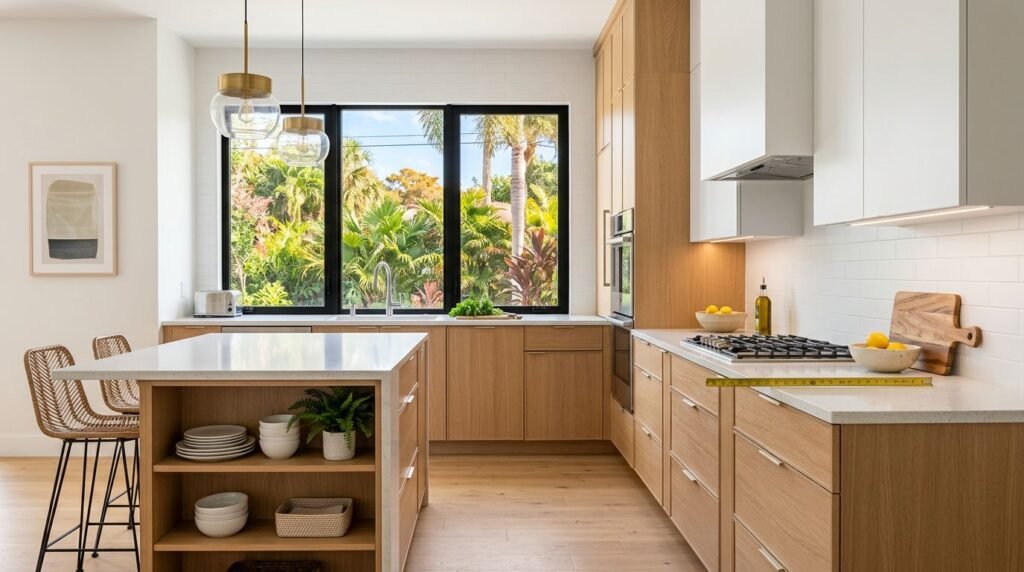
The wrong cabinet depth can make a kitchen feel cramped even when the layout looks open. In Fort Myers homes, that matters because kitchens often need to handle family meals, guests, and quick cleanup in one busy space. Good cabinet design starts with depth, because depth affects storage, reach, and how easily people move through the room.
A deeper cabinet is not always a better one. It can steal aisle space, block an appliance door, or make an island hard to use. The best fit depends on your room size, your appliances, and the way you cook every day. Start with the standard measurements, then adjust for the kitchen you have.
Standard cabinet depths that work in most kitchens
Most kitchen layouts rely on a few common cabinet depths. They give you a baseline before you decide whether custom sizes are worth the cost.
| Cabinet type | Common depth | Best use | Watch for |
|---|---|---|---|
| Wall cabinets | 12 to 15 inches, sometimes 18 inches | Dishes, glasses, pantry staples | Too much depth can crowd a small room |
| Base cabinets | 24 inches deep, about 25 to 26 inches finished with countertop | Pots, pans, sinks, drawers | Check appliance clearances and overhang |
| Tall pantry cabinets | 24 inches deep, with shallower options for tight spaces | Dry goods, small appliances, brooms | Deep units need enough aisle space |
| Island cabinets | 24-inch base boxes, often 30 to 36 inches finished with seating | Prep space, storage, stool seating | Leave room for knees and traffic |
These numbers are a practical starting point. A 24-inch base cabinet works well because it fits most appliances and countertop choices. Upper cabinets can be deeper, but every extra inch changes how close the room feels.
The right measurement is the one that keeps the kitchen useful every day.
Use the catalog number as a guide, then ask for the finished depth. That number tells you how the cabinet will feel once the countertop, doors, and hardware are in place.
How room size changes the right depth
A kitchen can look spacious on paper and still feel tight in real life. Depth matters most where two things happen at once, like opening the fridge while someone stands at the island.
Measure the clear walkway between cabinet runs, islands, and appliance doors. In many kitchens, about 42 inches works for a single cook, while 48 inches feels better when two people move around at once. If stools sit along an island, plan for even more room behind them.
Small galley kitchens usually do better with standard-depth boxes and narrower upper cabinets. That keeps the aisle open and the room easier to use. Larger kitchens have more room for deeper pantry towers, wider islands, or mixed depths that add storage without choking the path.
Layout also changes how depth feels. A long wall of full-depth cabinets can look heavy in a compact room. In an open plan, the same depth might feel balanced because the room has more visual space around it.
If your kitchen only works when cabinet doors stay closed, the depth needs another look.
Appliance fit, drawer reach, and countertop overhang
Appliance specs should shape the plan before cabinet orders go in. Dishwashers, ranges, and refrigerators all need space to open, vent, and sit flush with nearby fronts. A standard base cabinet depth usually works, but oversized handles or panel-ready appliances can change the line.
Countertops add another layer. A stone top can change the finished edge, and an island overhang needs room for knees if you want seating. If the island is too shallow, stools push the walkway too close to the work zone. If it is too deep, people may struggle to move around it.
Drawer reach matters too. Deep cabinets help when you store stock pots or mixing bowls, but a deep box with awkward interior storage wastes space. A drawer that slides out easily is better than a cabinet that hides half the contents in the back.
Think about the items you use most. Baking sheets, blender bases, coffee gear, and heavy cookware all need easy access. If you have to bend too far or unload half the shelf to reach one pan, the depth is working against you.
For some projects, cabinet depth changes the whole scope of the job. If that happens, compare the costs and the box condition first with this cabinet refacing versus replacement guide. Refacing keeps the original cabinet box size, so it only works when the depth already fits.
When custom cabinet depths make sense
Custom depths earn their keep when standard sizes force a bad tradeoff. In Fort Myers kitchens, that often happens when the room is long and narrow, or when the homeowner wants an island with seating.
Custom sizing can help in a few common situations:
- Narrow kitchens often need shallower upper cabinets or a cleaner base run to preserve aisle space.
- Islands with stools need depth planned around knees, not just cabinet boxes.
- Pantry walls and appliance garages sometimes work better with deeper or shallower boxes than the rest of the kitchen.
- Tall homeowners or anyone who wants easier reach may prefer a layout that keeps heavy items lower and closer.
Custom depths also make sense when the kitchen has a very clear job. A coffee station, a baking center, or a prep zone may need a different cabinet depth than the surrounding run. That kind of change can make the room easier to use every day.
Still, custom does not have to mean oversized. Sometimes the smarter move is a shallower cabinet that protects traffic flow. Other times, a deeper pantry tower in one part of the room gives you the storage you need without changing the whole layout.
The best cabinet design solves a real problem. It does not add depth just because there is empty wall space.
Common depth mistakes that make kitchens feel awkward
One common mistake is choosing depth for storage alone. A deep cabinet that blocks movement is a poor trade, especially in a smaller kitchen. The room may hold more, but it feels harder to live in.
Another problem is forgetting how doors and drawers open. A fridge, dishwasher, or oven can hit a cabinet front before the layout looks wrong on paper. That is why appliance fit matters as much as cabinet size.
Island seating creates its own set of issues. If stool space is tight, people bump into each other and prep work gets squeezed. A beautiful island can still feel wrong if the seating overhang is too small or the walkway behind it is too tight.
Many homeowners also make every cabinet the same depth. That can be simple, but it is not always smart. Mixed depths often work better because they give you storage where you need it and open space where you do not.
Good cabinet design balances reach, storage, and movement. When one of those parts gets ignored, the whole kitchen feels off.
Choosing the right depth for your kitchen
Cabinet depth changes the way a kitchen feels every day. When you start with standard measurements, then adjust for aisle space, appliance fit, and storage habits, you get a room that works without constant compromise. That matters in a compact galley kitchen and in a larger open plan.
Choose depth for the way you live, not for the biggest number on the spec sheet. If the right answer means custom boxes, that can be the smarter move. If the layout already fits, a simpler setup may give you the best result.
The best Fort Myers kitchens are easy to move through and easy to use. Cabinet depth is a big part of that.
