
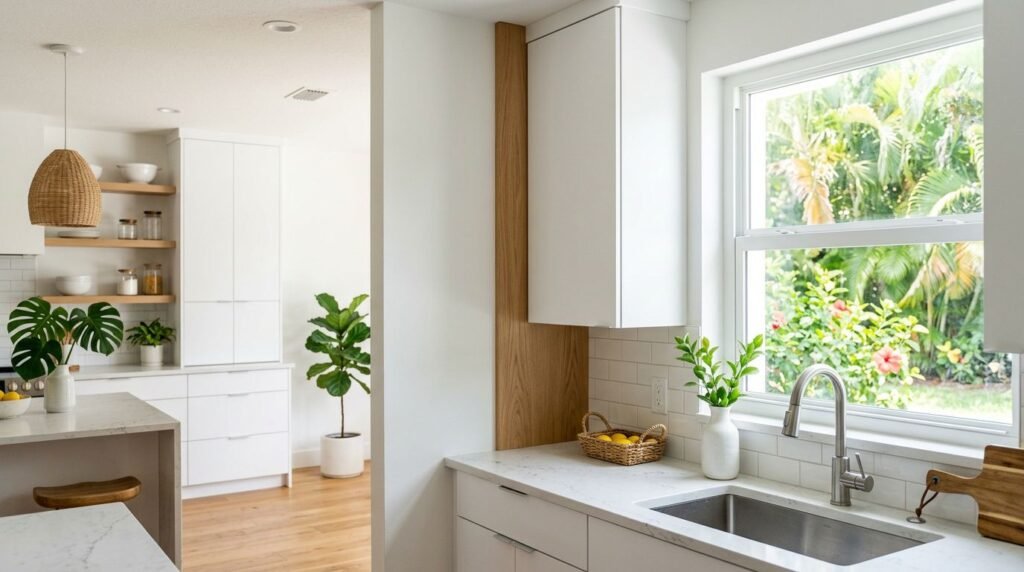
Tight kitchen spaces show every small mistake. A gap that seems harmless on a plan can look awkward once the cabinets are in place.
In many Fort Myers homes, the kitchen has uneven walls, narrow walkways, or appliance clearances that leave awkward gaps. The right filler does more than hide space, it keeps doors working, helps the room feel finished, and supports smarter cabinet design.
The trick is choosing the filler that fits the gap, the finish, and the way you use the room. Some spaces need a slim strip. Others need a finished panel or even hidden storage.
Why cabinet fillers matter in small Fort Myers kitchens
A cabinet filler is a narrow piece that closes the space where a full cabinet won’t fit. That sounds simple, but the job it does is bigger than most people expect.
Without a filler, cabinet doors can hit a wall, drawers can clash with pulls, and appliance fronts can sit too close to adjacent cabinetry. Small kitchens feel even smaller when those details fight each other. In a compact Fort Myers layout, that can happen near a fridge, beside a range, or at the end of a cabinet run.
Fillers also help the kitchen look calm. A finished edge reads as planned, while a random gap reads as leftover space. That difference matters when the room is short on square footage.
A thoughtful cabinet design approach helps decide when a filler is the right answer and when the layout should shift instead. That decision saves space and keeps the kitchen from feeling patched together.
Cabinet filler options that work best when every inch counts
The best cabinet filler options depend on the size of the gap and the look you want. Some are meant to disappear. Others can become part of the design.
Here’s a quick comparison of the most useful choices for smaller kitchens.
| Option | Best use | Main benefit | Watch-out |
|---|---|---|---|
| Scribed wood filler strip | Small gaps beside uneven walls | Custom fit and clean look | Needs careful measuring and cutting |
| Finished side panel | Exposed cabinet ends or appliance runs | Polished finish and better durability | Takes more space than a thin strip |
| Pull-out filler cabinet | Wider gaps near cooking or prep zones | Adds useful storage | Costs more and needs exact sizing |
| Angled corner filler | Tight corner transitions | Smooths awkward cabinet runs | Can reduce access if oversized |
| Appliance end panel | Beside a refrigerator or tall unit | Protects the cabinet run and hides gaps | Must match height and finish well |
For many tight Fort Myers kitchens, the best solution is a mix of these. A thin scribed strip may solve one wall gap, while a finished panel cleans up an exposed end. In a better planned layout, a narrow pull-out can turn dead space into storage.
Scribed filler strips handle uneven walls better than guesswork
Scribed fillers are one of the most dependable cabinet filler options for small kitchens. They are cut to match the real shape of the wall, which matters because walls are rarely perfect.
This is especially useful in older homes, condos, or remodels where floors settle and corners drift out of square. A straight strip can leave a visible wedge-shaped gap. A scribed strip follows the wall line and looks intentional.
The upside is clear. Scribed fillers give you a tighter fit, better sight lines, and a smoother transition between cabinets and walls. They also work well when you want the filler to disappear into the finish. A painted strip can blend in with painted cabinets, while a stained strip can match wood grain.
The tradeoff is skill. Scribing takes time, and rushed cuts can leave a sloppy edge. It also helps most when the gap is small to moderate. If the opening is too wide, a larger panel or a layout change may work better.
If the gap changes from top to bottom, a scribed filler usually beats a straight strip.
When the installer measures at multiple points, the result feels built for the room instead of forced into it.
Finished panels make exposed ends look deliberate
A finished panel does more than cover an open side. It gives the cabinet run a clean ending, which matters a lot in a small kitchen where every line is visible.
These panels are common at the end of a cabinet bank, beside a refrigerator, or where a run meets a wall at an angle. They also protect the cabinet box from bumps, splashes, and daily wear. That makes them useful in kitchens that get a lot of traffic.
In a compact layout, a finished panel can pull double duty. It closes the visual gap and helps the kitchen feel quieter. Instead of seeing a narrow, unfinished space, you see one solid edge that belongs there.
Finish choice matters here too. If the panel doesn’t match the door color or wood tone, the mismatch shows fast. That is why choosing between painted and stained finishes matters just as much for fillers as it does for cabinet doors. A painted panel can disappear in a modern white kitchen, while a stained panel may work better when the room leans warm and natural.
The downside is size. A panel takes more room than a slim strip, so it isn’t always the best answer in a very narrow kitchen. Still, when the gap is visible, the polished look is often worth it.
Pull-out fillers turn narrow gaps into storage
Some gaps are too wide to ignore, but too narrow for standard cabinets. That is where a pull-out filler can make sense.
These slim units fit between cabinets or beside appliances and slide out to hold items like spices, oils, baking sheets, cutting boards, or cleaning supplies. In a small kitchen, that extra storage can be more useful than it sounds. A few inches of space can become a home for trays or bottles that would otherwise crowd a main cabinet.
Pull-out fillers work best where quick access matters. Near the range, they can hold cooking oil and seasonings. Beside the sink, they can keep towels or dish items within reach. At the end of a run, they can store narrow tools without taking over the floor plan.
The limits are real, though. A pull-out needs enough width to move cleanly, and cheap hardware can wobble or bind. It also needs careful planning so it doesn’t block doors, trim, or appliance handles. If the gap is too narrow, the added hardware can create more trouble than storage.
That is why these fillers should be chosen for function first. If the space will be awkward to open or hard to clean, a fixed filler may be the smarter call.
Professional installation keeps fillers clean, straight, and useful
Good fillers depend on good measuring. In a tight kitchen, that means checking more than one spot before anything gets cut.
Installers should look at the top, middle, and bottom of the gap. They should also check door swing, drawer clearance, baseboard depth, and nearby appliance trim. A filler that looked fine in the showroom can fail once it meets a real wall or fridge.
The best installations leave the filler feeling like part of the cabinet, not a patch. That takes careful scribing, strong fastening, and the right finish work at the edges. It also helps to plan the filler at the same time as the cabinets, not after the layout is already fixed.
Professional help matters even more when the kitchen is small. One bad measurement can shrink a walkway or block a cabinet door. A well-planned filler, on the other hand, can make the room easier to use every day.
Conclusion
Small Fort Myers kitchens need fillers that solve problems without creating new ones. The best choice depends on the gap, the cabinet finish, and how much storage space you can spare.
Scribed strips are great for uneven walls. Finished panels make exposed ends look intentional. Pull-out fillers add storage when the gap is wide enough to use well. When those choices come from careful cabinet design, the kitchen looks cleaner and works better.
The right filler often feels invisible, and that is the point. In a tight kitchen, a small detail can make the whole room feel more open, balanced, and finished.