 Skip to content
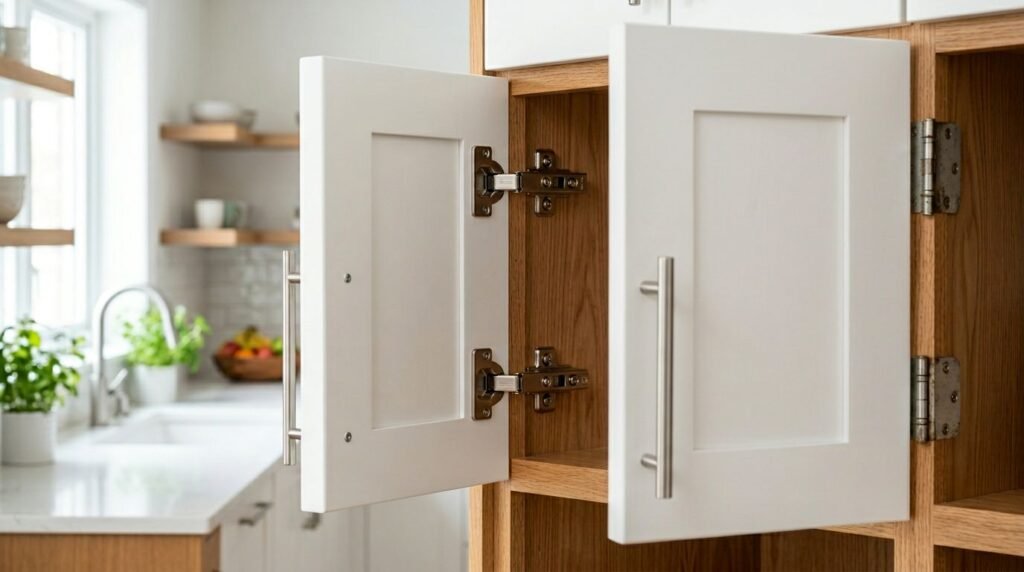
A cabinet door that slams can make a kitchen feel stressful. A door that closes with a gentle, controlled motion feels calmer, like shutting a car door instead of a screen door.
That’s the main difference between soft close hinges and standard hinges. Still, the “best” choice depends on your budget, your layout, and how your kitchen gets used every day. This guide breaks down how each hinge type works, what they cost in 2026, common problems, and how to decide without guesswork.
How soft-close hinges work (and what “standard” really means)
Soft-close hinges include a small damper that slows the door during the last inches of travel. Instead of bouncing shut, the hinge resists speed and guides the door into the frame. The result is less noise and less impact on your cabinet box over time.
Most soft-close models are also concealed European-style hinges (the cup sits in a drilled hole in the door). Many offer 3-way adjustability, which matters more than people think:
- Side-to-side: lines up door gaps so reveals look even
- Up-and-down: levels doors that look “stepped”
- In-and-out: sets how the door sits against the cabinet
Standard hinges can mean a few things. In many modern kitchens, “standard” still means a concealed hinge, just without the soft-close damper. In other homes, it could mean a visible hinge (surface-mount or semi-concealed). Standard hinges can be perfectly solid, they just won’t control the closing speed.
One quick reality check: soft-close only feels “premium” when doors are aligned well. A hinge upgrade won’t fix a cabinet door that’s already rubbing, sagging, or installed out of square.
Soft-close hinges vs standard hinges: a clear side-by-side
Here’s the practical comparison most homeowners care about day to day.
| Feature | Soft-close hinges | Standard hinges | Best fit |
|---|---|---|---|
| Closing feel | Controlled, quiet, reduced bounce | Can slam or bounce | Busy kitchens, open layouts |
| Noise | Low | Medium to loud | Homes with kids or light sleepers |
| Wear on cabinets | Less impact stress | More impact over time | Long-term durability goals |
| Adjustability | Often 3-way adjustments | Varies by model | Tight reveals, modern door lines |
| Installation | Similar, but needs correct alignment | Often simpler | Quick swaps or basic repairs |
| Maintenance | Damper can fail eventually | Fewer parts to wear out | High-heat, high-grease areas |
| User preference | Some dislike “slow” close | Feels immediate | Personal feel and habit |
The takeaway: soft-close is mostly about comfort and protection, while standard hinges focus on simplicity and cost.
Gotcha: if a soft-close door closes too slowly, it’s usually alignment, not “bad hinges.” Start with adjustments before replacing parts.
Common hinge problems you’ll notice (and simple fixes)
Most hinge issues look worse than they are. Try these before you shop.
- Slamming: Tighten loose mounting screws first. If you have soft-close, check that the damper is engaged (some hinges have an on and off switch).
- Slow close or “creeping” door: Reduce door friction by re-aligning. If the door rubs, the damper fights extra resistance.
- Door sag: Tighten screws in the hinge plate, then use up-and-down adjustment. For tall or heavy doors, add a third hinge.
- Squeaks: Clean built-up grease and dust. If the maker allows it, use a tiny amount of silicone spray, not cooking oil.
Well-known hinge brands homeowners often run into include Blum, Salice, Grass, and Hettich. On the budget end, you might see Everbilt or Liberty. Brand matters, but correct sizing and install matter more.
2026 hinge price ranges, and what makes your total go up
Hinges look small, but the total adds up fast because you need several per door. In 2026, typical retail pricing (before labor) often lands in these ranges:
| Tier (2026) | Standard hinge (each) | Soft-close hinge (each) | What you usually get |
|---|---|---|---|
| Budget | $2 to $5 | $4 to $9 | Basic fit, lighter damping, fewer finish options |
| Mid-range | $5 to $10 | $9 to $16 | Smoother action, better adjustments, steadier feel |
| Premium | $10 to $18 | $16 to $30+ | Stronger materials, consistent damping, brand systems |
A few factors change the real project cost:
- Number of doors and drawers: more openings equals more hardware.
- Hinge count per door: many doors use 2 hinges, while tall pantry doors often need 3 or 4.
- Door size and weight: thicker doors and solid wood fronts push you toward better hinges.
- Overlay style and cabinet type: face-frame vs frameless, full overlay vs inset, each needs the right hinge geometry.
- Soft-close mechanism quality: better damping costs more and feels more consistent.
If you’re already choosing new doors or planning a full cabinet design, it’s smart to decide hinge type early. Hardware affects clearances, reveals, and how the kitchen “feels” every time you use it. For a local perspective on options and fit, Our kitchen and bath design team can help you match hinge specs to door style and daily use.
Replace vs upgrade: when each makes sense
Replace hinges when you see rust, bent arms, stripped screw holes, cracked hinge cups, or doors that won’t stay aligned. Upgrade to soft-close when the kitchen is loud, doors get abused, or you want a higher-end feel without changing the whole cabinet.
Real-world choices: kids, rentals, luxury remodels, and budget flips
Soft-close isn’t “always.” It’s a tool, like choosing carpet vs tile. The right answer depends on the room’s job.
Families with kids: Soft-close is usually worth it. It reduces pinched fingers and takes the edge off rough handling. In addition, it helps when cabinets sit near a dining nook or homework spot.
Rentals: Standard hinges often win on simplicity and easy repairs. However, soft-close can reduce wear if tenants tend to slam doors. If you manage property, consider mid-range soft-close for the most-used doors only.
Luxury remodels: Soft-close is the expectation in many high-end kitchens now. Pair it with consistent door gaps and good lighting, and the whole space feels more finished.
Budget flips: Standard hinges keep costs predictable. If you want a quick upgrade buyers notice, put soft-close on the main run (sink and trash base) and use standard elsewhere.
If you want to see how small hardware choices support the overall look, check the Cabinet portfolio gallery for completed kitchen and vanity projects.
Simple decision checklist
Use this quick list and you’ll usually land on the right call:
- Choose soft-close if noise bothers you, kids use the kitchen, or you want a calmer feel.
- Choose standard if you need the lowest cost, fast replacements, or minimal moving parts.
- Go mid-range or better for tall doors, heavy fronts, or tight, modern reveals.
- Plan on 3 hinges for tall pantry doors or anything that already shows sag.
- If doors rub or drift, adjust first, then replace hardware if it won’t hold.
Conclusion
Soft-close hinges make cabinets feel quieter and more controlled, while standard hinges keep things simple and affordable. Your best choice comes down to how your kitchen gets used, how tight you want the reveals, and what you want to spend in 2026. If you’re unsure, start with your noisiest, most-used doors and decide from there. A small hardware change can make the whole kitchen feel more comfortable every day.
