 Skip to content
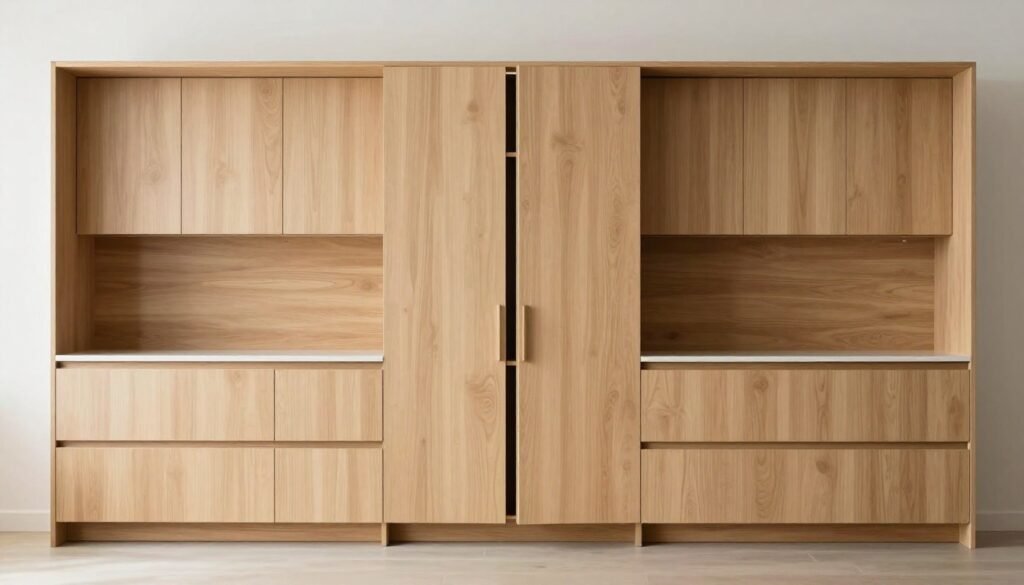
Picking cabinets feels like choosing a haircut for your house. Color gets the attention, but the shape changes everything. That’s why cabinet overlay options matter so much. Overlay decides how much of the cabinet frame you see, how “busy” the front looks, and even how picky installation needs to be.
If you’re shopping for a kitchen or bath, this choice comes up fast: full overlay, partial overlay (also called half overlay), or inset. Below, you’ll learn what each of the three cabinet overlay types looks like, what it costs you in space and budget, and which fits your cabinet design goals best.
What “overlay” means (and why it affects the whole look)
Overlay is simply how the door and drawer fronts sit on the cabinet box opening. On face-frame cabinets (common in many homes), there’s a frame on the front of the box. Overlay is how much the door covers that frame. On frameless (European-style) cabinets, you don’t have a face frame, so “overlay” is more about how the door covers the box edge, but the visual idea is similar.
Here’s the practical part: overlay changes the lines you see across the room.
- More overlay means fewer frame lines and a cleaner look.
- Less overlay means more frame showing and a more traditional grid.
Measurements vary by manufacturer, hinge type, and door style, but these ranges are common:
- Full overlay: often around 1-1/4 inch overlay per door on a face-frame cabinet.
- Partial overlay: often around 1/2 inch overlay per door, leaving more frame visible.
- Inset: door sits inside the opening, typically with an even reveal (gap) around it, often about 1/16 inch to 1/8 inch.
One more detail people miss: overlay affects the “reveal,” which is the visible gap between doors, drawers, and frames. Smaller reveals look crisp, but they also demand better alignment.
If you want your cabinets to look “high-end,” ask about overlay early, before you fall in love with a door style.
Full overlay cabinets: cleaner fronts and a more modern feel
Full overlay cabinets cover most of the face frame (or most of the cabinet edge on frameless boxes). From across the room, you see more door and less structure. That’s why full overlay often reads as modern, even with a classic shaker door.
Why homeowners like full overlay A full overlay layout can make a kitchen feel calmer. Fewer lines show, so your eye rests on the big choices, like color, countertop, and hardware. It’s also a popular pick for smaller kitchens because the fronts feel less “choppy.”
What to expect in day-to-day use Because the doors cover more, you usually get a bit more opening width than you would with inset, but the difference depends on the cabinet construction and hinges. In many kitchens, the bigger win is cleaning. With less frame exposed, there are fewer little ledges to catch grease and dust.
Design details to watch Full overlay looks best when the gaps stay even. That means careful installation and quality full overlay cabinet hinges. Soft-close hinges are common here, but hinge type always depends on the cabinet line.
Also, think about hardware. Long pulls can look great on full overlay because the door fronts create wide, uninterrupted surfaces. If you prefer knobs, you can still keep it crisp by sticking to consistent placement across doors and drawers.
Partial overlay cabinets: classic character and more forgiveness
Partial overlay (often called half overlay) leaves a visible frame around each door and drawer. That frame becomes part of the design, like the “grout lines” in a tile wall. The look can feel traditional, but it can also feel cozy and intentional in a farmhouse or transitional space.
Why partial overlay still makes sense First, it’s often more budget-friendly than full overlay or inset, depending on the brand and construction. Second, it can be more forgiving. Because you see more frame, tiny alignment issues don’t jump out as quickly. That can help in older homes where floors and walls aren’t perfectly level.
What it looks like up close On many face-frame cabinets, partial overlay might use around a 1/2 inch overlay per door (specs vary by manufacturer). The result is a stronger grid pattern. If you like definition, this is your style.
Where partial overlay fits best Partial overlay can work well in:
- A busy family kitchen where practicality matters.
- A rental or vacation home where you want value and durability.
- A traditional bathroom vanity where you want the cabinet to feel furniture-like.
One caution: if you hate visual lines, partial overlay may feel “busy,” especially with high-contrast colors or strong veining in countertops.
Inset cabinets: flush, tailored, and demanding (in a good way)
Inset doors sit inside the cabinet opening and close flush with the frame. When it’s done right, inset looks custom and furniture-like. Think of it like a well-fitted suit. The fit is the point.
Why inset stands out Inset cabinets create clean geometry. You see the frame as a deliberate border, and the door sits neatly within it. This works beautifully in classic kitchens, historic homes, and high-end transitional spaces.
The tradeoffs you should plan for Inset requires tighter tolerances. Wood doors can expand and contract with humidity. Because inset has consistent reveals (often around 1/16 inch to 1/8 inch, depending on the line), seasonal movement matters more than it does with overlay doors.
You may also give up a little access width at the opening compared to full overlay, since the door sits inside the frame. The difference is usually small, but it’s worth discussing if you’re trying to fit wide trays or interior organizers.
Love the inset look? Plan for precise install work and ask how the cabinet line handles door movement over time.
Full overlay vs partial overlay vs inset: quick comparison and decision checklist
Use this table as a fast way to compare the three styles (sizes and gaps vary by manufacturer).
| Feature | Full overlay | Partial overlay | Inset |
|---|---|---|---|
| Overall look | Clean, minimal frame lines | Visible frame grid | Flush, furniture-like |
| Typical face-frame overlay | About 1-1/4 inch | About 1/2 inch | None (door sits inside) |
| Reveals and alignment | More noticeable if uneven | More forgiving | Most noticeable if uneven |
| Cleaning | Easier, fewer ledges | More frame to wipe | Frame is exposed, but flat |
| Cost (typical) | Mid to high | Often lower | Often highest |
| Best fit | Modern, transitional, smaller rooms | Traditional, value-focused updates | Classic, custom-looking spaces |
Quick decision checklist (pick the best match)
- Choose full overlay if you want a cleaner front, fewer lines, and a modern feel.
- Choose partial overlay if you like a framed look, want value, and prefer a forgiving layout.
- Choose inset if you want a tailored, furniture-style look and don’t mind tighter tolerances.
- If your home has humidity swings, ask how the doors handle seasonal movement, especially with inset.
- If you’re changing layouts, decide overlay before hardware and organizers so sizes line up.
- If you hate seeing gaps, prioritize a cabinet line known for consistent reveals and strong hinge options.
Conclusion
Overlay sounds like a small detail, but it shapes the entire room’s first impression. Full overlay reads clean and current, partial overlay adds classic structure, and inset delivers a fitted, custom look. Once you know the visual you want, the right choice usually becomes obvious. Aim for the option that supports your daily life, not just your mood board, and your cabinet overlay options will feel right for years.
