
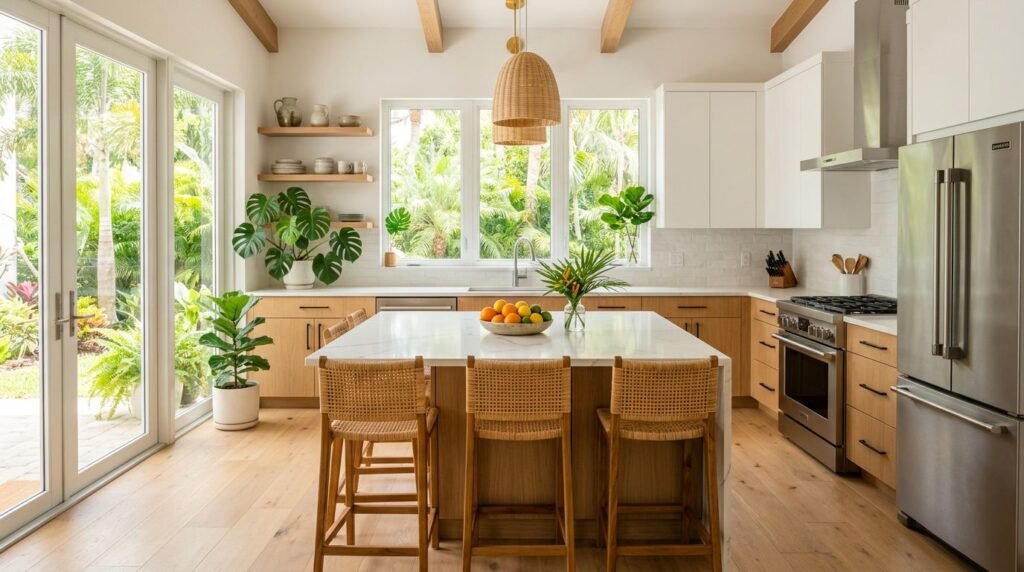
If your kitchen feels busy even when you’re cooking something simple, the problem often isn’t the appliances, it’s the kitchen cabinet layout around them. Doors bump, drawers fight for space, and the trash can ends up across the room right when your hands are messy.
Good layout planning fixes that. It shortens steps, creates safe clearances, and puts storage where you actually use it. For Fort Myers homes, it also needs to fit real life, weekend guests, open floor plans, and the way heat and humidity make you want quick access to drinks, ice, and outdoor-serving pieces.
Below is a practical way to plan cabinets for better workflow, plus numbers you can measure and a simple framework for choosing the best layout for your kitchen size.
Build the layout around your workflow zones (not a catalog page)
A functional kitchen works like a well-run service line. Each task has a station, and you don’t cross traffic just to finish one meal. While the classic “work triangle” still helps, most modern kitchens do better with zones because families cook, snack, unload groceries, and gather at the same time.
Start by mapping five zones on your floor plan:
- Storage zone: fridge, pantry, and everyday dishes.
- Prep zone: main counter space, knives, mixing bowls, trash, and compost.
- Cooking zone: cooktop or range, oils, spices, and utensils.
- Clean-up zone: sink, dishwasher, and cleaning supplies.
- Serving zone: plates, glasses, and a clear landing spot for food.
Now match cabinets to the zones. Put drawers for knives and tools near prep, not near the oven just because it “looks right.” Store sheet pans and cutting boards close to the range. Keep cups near the fridge if your family grabs drinks all day.
Two Fort Myers-specific habits are worth planning for:
First, many homes serve outdoors. If your lanai or outdoor kitchen is nearby, place serving platters, plasticware, and a drink drawer or beverage fridge on the path to the patio door. Second, bulk shopping is common. A tall pantry cabinet or a run of deeper pantry storage prevents countertop clutter.
Design groups like NKBA publish planning guidelines that designers use as best practices for landing space, spacing, and safety. You don’t need to memorize them, but you should plan like they exist: give yourself room to set things down, turn, and open doors without bumping anyone.
For inspiration on how real kitchens handle these zones, it helps to look at finished local work. Browse a Fort Myers kitchen cabinet portfolio and note where the prep area sits in relation to the sink, trash, and cooking.
The clearance numbers that stop pinch points and collisions
Workflow problems usually show up in the same places: tight aisles, corner conflicts, and appliances that open into traffic. Before you finalize cabinet sizes, check clearances with a tape measure and painter’s tape on the floor.
Here are practical targets used in many kitchen plans:
| Planning item | Comfortable target | Why it matters |
|---|---|---|
| Main work aisle (one cook) | ~42 inches | Lets you open drawers and turn with a pan in hand |
| Work aisle (two cooks) | ~48 inches | Reduces shoulder-to-shoulder traffic |
| Seating clearance behind stools | ~36 inches (more is better) | People can pass while someone sits |
| Landing space by fridge | ~15 inches on one side | Groceries need a “drop zone” before storage |
| Landing space by sink or cooktop | ~12 to 18 inches nearby | Prevents setting hot or wet items in unsafe spots |
A few cabinet-planning details save headaches later:
Plan for door and drawer swing. A dishwasher door can block base drawers if the aisle is tight. Likewise, a corner cabinet next to a range can create a “dead corner” where nothing opens fully. If you’re doing a tight L-shape, consider a blind corner solution or shift the appliance a few inches to prevent collisions.
Watch the trash distance. You should be able to scrape plates and toss prep scraps without taking steps. In many kitchens, that means a pull-out trash base near the sink and prep counter, not tucked beside the pantry.
Also, respect basic safety and code-adjacent planning. Outlets near sinks often require GFCI protection, and cooking needs proper ventilation. While requirements vary, it’s smart to plan a hood and duct path early, because cabinets and soffits can limit your options later.
If you can’t stand in front of your sink, open the dishwasher, and still walk by, the layout will feel cramped every day.
A simple decision framework for choosing the best cabinet layout
Choosing the right cabinet arrangement gets easier when you match it to kitchen size and traffic patterns. Use this quick framework as a starting point, then adjust based on how your household cooks and entertains.
Here’s a simple guide by “feel,” not just square footage:
| Kitchen size and shape | Layout that often works best | Cabinet priorities |
|---|---|---|
| Small or narrow (common in condos) | Galley or single-wall with a peninsula | Tall pantry cabinet, wide drawer bases, fewer corners |
| Medium, open to living space | L-shape with an island or peninsula | Strong prep zone, trash pull-out, island storage |
| Larger, dedicated kitchen room | U-shape or L-shape plus island | Multiple landing zones, baking storage, extra prep sink option |
Galley kitchens can be amazing for workflow when planned well. Keep the sink and prep on one side, cooking on the other, and leave the center aisle wide enough for doors and drawers. Use more drawers than doors, because drawers waste less space and keep items visible.
L-shaped kitchens shine in open Fort Myers homes because they keep sightlines open. If you add an island, protect the aisle width first. A too-large island is like parking an SUV in a two-car garage, it looks fine on paper, then you can’t move.
U-shaped kitchens give the most storage and counter space, but corners can become clutter traps. Corner solutions, careful appliance placement, and clear landing space keep it efficient.
No matter the layout, plan cabinet storage around real routines. If you bake, group mixers, flour, and sheet pans near a clear counter. If you cook a lot of seafood, keep a large cutting board, paper towels, and a lidded trash setup right at the prep zone.
When you’re ready to translate these choices into real sizes and finishes, working with people who do this daily helps. You can learn about the process and team on the meet our cabinet design experts page, then bring your measurements and wish list to the conversation.
Common workflow mistakes Fort Myers homeowners can avoid (and quick fixes)
Most kitchen frustrations come from a few repeat mistakes. The good news is that many have simple fixes during planning, before cabinets get ordered.
Mistake: Pinch points near the fridge. The fridge becomes a traffic magnet for kids, guests, and cooks.
Quick fix: Add landing space beside the fridge, and avoid placing it in a tight corner where the door can’t open fully.
Mistake: No landing space by the cooktop or oven. Hot pans need a safe place to land.
Quick fix: Leave at least a small counter stretch next to the range, or use a heat-safe pull-out shelf in a pinch.
Mistake: Trash far from prep. This turns every meal into extra steps.
Quick fix: Put a pull-out trash base in the prep zone, often between sink and main counter.
Mistake: Door and drawer collisions. Corner drawers, dishwasher doors, and adjacent base drawers can block each other.
Quick fix: Shift an appliance, swap a door cabinet for drawers, or add a filler strip so hardware clears.
Mistake: The microwave is in the wrong place. Over-the-range microwaves can be high and awkward, and they can limit ventilation choices.
Quick fix: Consider a microwave drawer or a dedicated shelf that’s reachable without crossing the cooking zone.
A fast way to sanity-check your plan is the “hands full” test. Imagine carrying groceries, then picture unloading, washing, chopping, cooking, and serving with minimal backtracking.
When zones overlap, people collide. When zones connect, the kitchen feels calm.
If you want reassurance from other local homeowners who’ve gone through the process, skim Fort Myers cabinet customer reviews and look for comments about function, not just looks.
Conclusion
A better kitchen cabinet layout is really a better daily routine. When clearances work, landing space exists, and storage matches your habits, cooking feels easier and the kitchen stays cleaner. If you’d like help turning measurements into a plan you can trust, schedule free kitchen cabinet consult and bring photos of your current kitchen plus a quick list of what bothers you most.
Quick kitchen cabinet layout checklist
- Keep prep, cooking, and clean-up zones close, without crossing paths.
- Aim for about 42 inches in main work aisles, or about 48 inches for two cooks.
- Add a landing spot near the fridge and near the cooktop or oven.
- Place pull-out trash near prep, not across the kitchen.
- Check dishwasher and oven door swings against drawers and walk paths.
- Avoid trapping the fridge in a corner where doors can’t open wide.
- Choose more drawer bases for everyday items, especially in small kitchens.
- Plan ventilation early so cabinets don’t limit hood size or duct routing.
- Use GFCI-protected outlets near sink areas, and plan outlet locations before the backsplash.
- Tape the island or peninsula on the floor to confirm aisle comfort before ordering cabinets.