
Cabinet doors take up the biggest visual space in a kitchen, so the style you choose sets the tone fast. Change the door, and the whole room can feel calmer, busier, more modern, or more traditional.
If you’re comparing cabinet door styles like Shaker, slab (flat-panel), and raised-panel, you’re already asking the right question. The “best” option depends on how you live, how much detail you want to clean, and what fits your home’s look. In other words, it’s cabinet design plus real life.
Shaker cabinet doors: simple lines that fit almost anywhere
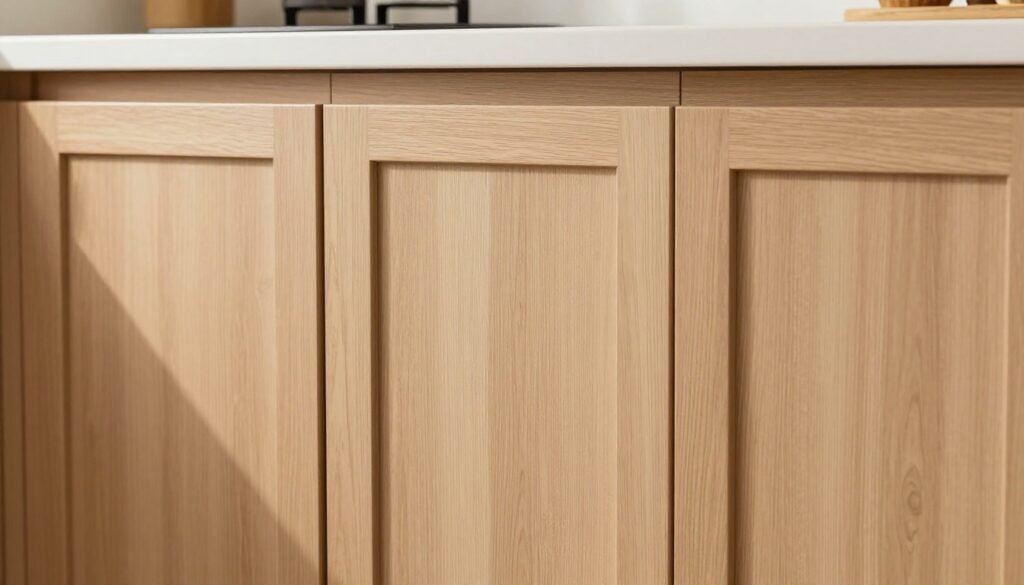
Shaker doors have a frame around the edge with a flat center panel set back slightly. That small border adds definition without feeling fussy. Because of that balance, Shaker works in a wide range of homes, from coastal to farmhouse to modern transitional.
In a busy family kitchen, Shaker’s shape is forgiving. The frame adds a little texture, so tiny smudges don’t jump out the way they can on a perfectly flat surface. At the same time, it still looks clean, especially in painted finishes.
Shaker also plays well with hardware. A simple bar pull pushes it more modern, while a classic knob makes it feel more traditional. This is one reason Shaker often feels like the “safe” choice, not boring, just flexible.
Good fit if you want:
- A timeless look that won’t feel dated next year
- Easy styling with many counter and backsplash options
- A middle ground between flat modern and ornate traditional
On the upkeep side, Shaker has more edges than slab doors. That means a bit more wiping around the inner frame. Still, it’s not hard to maintain, and most homeowners find the cleaning tradeoff worth it.
If you’re stuck between modern and traditional, Shaker usually gives you room to change finishes later without changing the cabinets.
Slab (flat-panel) cabinet doors: the clean, modern option
Slab, also called flat-panel, means the door face is one smooth piece with no frame. The look is simple and quiet, like a blank canvas. Because there’s less visual detail, slab doors can make a small kitchen feel more open.
This style pairs naturally with modern layouts and simple material choices. Think strong veining in stone, a bold backsplash, or warm wood tones. Slab doors let other parts of the kitchen take the spotlight.
However, flat surfaces show what life leaves behind. Fingerprints, oil splatter, and small scratches can be more noticeable, especially on darker colors or high-sheen finishes. If you cook a lot, you’ll probably wipe them more often.
Another practical detail is door hardware. Many slab kitchens use long pulls, or even a minimalist look with integrated pulls. That style choice can be great, but it affects comfort. Try a few options, because a pull that looks perfect can feel awkward in daily use.
Good fit if you want:
- A modern, low-detail look with clean lines
- A kitchen that feels larger, especially in tight spaces
- A simple backdrop for bold counters, lighting, or tile
Slab doors can be a smart budget move in some projects because the door shape is straightforward. Still, price depends on material, finish, and construction, so it’s better to compare quotes than assume.
Raised-panel cabinet doors: classic depth and traditional character
Raised-panel doors have a center panel that sits higher than the surrounding frame, creating depth and shadow lines. That detail reads as traditional, and it often matches older homes or formal spaces well.
If your kitchen already has decorative trim, arched doorways, or classic molding, raised-panel doors can look like they belong. They also work nicely in warm stains, because the profiles highlight the wood grain and add richness.
The tradeoff is cleaning. Raised profiles create more corners where grease and dust can collect. It’s not difficult, but it takes more passes with a cloth than Shaker or slab. If you want the look, plan for a little extra upkeep around the stove area.
Raised-panel doors can also feel visually “busy” in a small kitchen. In a large space, that detail can add charm. In a tight layout, it may compete with counters and backsplash patterns. The key is balance.
Good fit if you want:
- A traditional style with depth and shadow
- A warmer, more formal feel, often paired with stained finishes
- Extra visual detail without changing the layout
Raised-panel is a strong choice when the rest of the home leans classic. In contrast, a very modern home may feel mismatched with heavy door profiles.
Quick comparison and how to choose by budget, upkeep, and home style
Here’s a simple side-by-side view to help you sort your options.
| Cabinet door style | Overall look | Best match for home style | Upkeep feel | Budget notes |
|---|---|---|---|---|
| Shaker | Clean with light detail | Transitional, farmhouse, coastal, many others | Moderate, wipe the inner frame | Often mid-range, depends on finish |
| Slab (flat-panel) | Smooth, minimal | Modern, contemporary, simple spaces | Easiest shape, but shows prints more | Can be cost-effective, varies by material |
| Raised-panel | Detailed, classic | Traditional, formal, older homes | Most grooves and edges to clean | Can cost more due to detail |
The main takeaway: Shaker is the most flexible, slab looks the most modern, and raised-panel brings the most traditional character.
So how do you decide without overthinking it?
Start with your home’s “baseline.” If your interior trim is simple and your space is open, slab can feel natural. If your home has classic details, raised-panel often fits better. When your house sits in the middle, Shaker usually lands right.
Next, be honest about maintenance. If you hate wiping doors, think carefully about raised-panel. If you don’t mind quick wipe-downs, slab can be easy, just more frequent. Shaker splits the difference for many homeowners.
Finally, consider where you want to spend. Door style affects the look, but layout and storage usually affect daily life more. If budget is tight, choose a door you like, then protect function first with smart storage and durable finishes. Good cabinet design is like good shoes, it should look nice, but it has to work every day.
Conclusion: pick the door style you’ll enjoy living with
Shaker, slab (flat-panel), and raised-panel doors each create a different mood, even in the same kitchen. Match the style to your home, your cleaning habits, and the level of detail you want to see daily. If you’re torn, choose the option that fits your long-term comfort, not just a quick trend. The right cabinet door styles choice should feel good every time you walk in, does yours?