 Skip to content
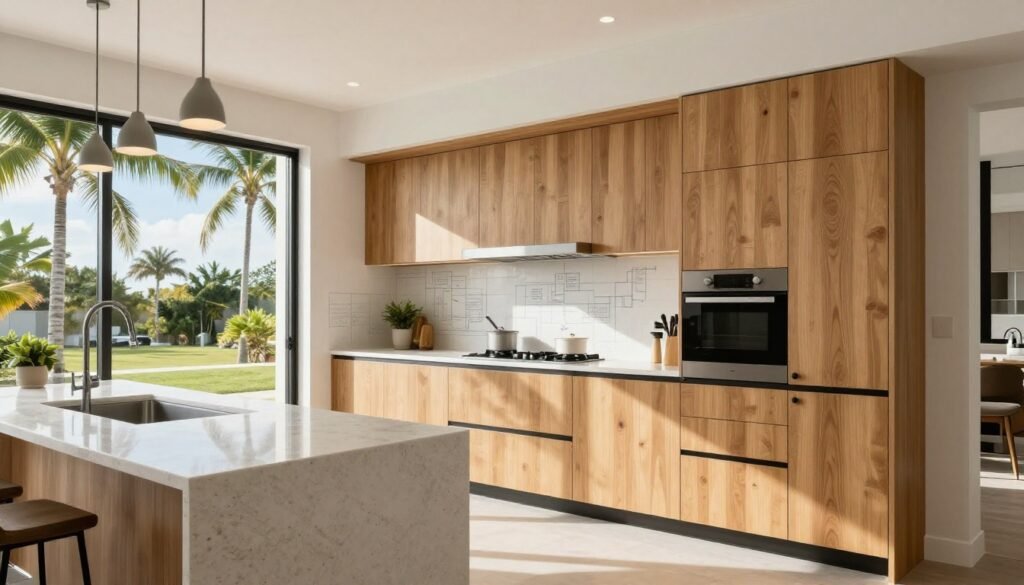
If you’re remodeling in Fort Myers this year, cabinets will shape how the whole project feels. They set the tone for storage, daily workflow, and resale value. The big question is usually the same: custom semi-custom cabinets, which route makes sense for your home, your schedule, and your budget?
Here’s the practical answer. Semi-custom often wins when you need a polished look fast and you can work within a brand’s size rules. Custom shines when your layout fights back, like tight condo kitchens, older homes with out-of-square walls, or a must-have built-in.
What Fort Myers remodel timelines look like in 2026 (and why cabinets matter)
Cabinet decisions affect more than style. They affect when you can order countertops, schedule plumbing trim-out, and lock in installation dates. In 2026, many Southwest Florida remodels still run into scheduling pinch points, especially when multiple trades stack up in the same week.
Lead times vary by manufacturer and season, but a contractor-ready rule of thumb is:
- Semi-custom cabinets often arrive in about 4 to 8 weeks.
- Custom cabinets often land in about 8 to 12+ weeks, depending on complexity and finish.
Those windows matter because countertops can’t be templated until cabinets are set and level. If you’re coordinating a full kitchen remodel, cabinet timing becomes the backbone of the calendar.
Costs also vary widely. Real quotes depend on door style, wood species, finishes, storage accessories, and how much filler work you need. For general context on cabinet categories and tradeoffs, see this overview from Angi’s guide to custom vs semi-custom cabinets.
Want to visualize what “finished” can look like before you commit? Reviewing real local work helps you pick proportions and details that fit Florida living. Start with a quick scan of a Fort Myers cabinet projects gallery and note what you’re drawn to, door style, crown height, and how they handle corner storage.
The cabinet choice isn’t just about price. It’s about whether your layout needs rules, or needs freedom.
Custom vs semi-custom cabinets, what you’re really buying
Think of semi-custom like a tailored suit. The brand starts with standard sizes, then allows controlled changes. You can usually adjust cabinet depths, tweak widths in set increments, choose more finishes, and add upgrades like pull-outs and soft-close hardware.
Custom cabinets start as raw material and become your layout. That means you can match odd ceiling lines, build around a stubborn soffit, or create a true furniture-style pantry wall with exact reveals. Custom also gives more control over cabinet design, like interior organizers, appliance garages, or a flush inset look that needs tighter tolerances.
Here’s a side-by-side comparison to keep the decision clean.
| Feature | Semi-custom cabinets | Custom cabinets |
|---|---|---|
| Sizing | Standard sizes with limited modifications | Built to exact dimensions |
| Layout flexibility | Strong for most kitchens, limited on tricky walls | Best for tight, angled, or out-of-square spaces |
| Style options | Many door styles and finishes, depends on brand | Nearly unlimited, including custom door profiles |
| Storage upgrades | Wide menu of pull-outs and organizers | Fully tailored storage, including odd niches |
| Typical cost (SW Florida ranges) | $200 to $600 per linear foot | $500 to $1,200 per linear foot |
| Typical lead time | 4 to 8 weeks | 8 to 12+ weeks |
| Best fit | Most remodels where boxes can follow standard rules | High-end finishes, unique layouts, built-ins |
| Common risk | “Almost fits” gaps that need filler panels | Longer timeline and higher scope creep |
Takeaway: Semi-custom is often the value sweet spot. Custom pays off when the room has quirks, or the finish expectations are very specific.
Budget and lead-time ranges for Fort Myers in 2026 (with real-world caveats)
Homeowners want a straight answer, but cabinet pricing is more like building a car than buying one. Two kitchens can have the same footprint and very different totals.
Still, these ranges help planning:
- Semi-custom: roughly $200 to $600 per linear foot in many projects.
- Custom: roughly $500 to $1,200 per linear foot, and more when you add specialty finishes and built-ins.
For a simple example, a kitchen with about 20 linear feet of cabinetry might land around $4,000 to $12,000 for semi-custom cabinets at the low-to-mid range, and $10,000 to $24,000+ for many custom scopes. Installation can add several thousand dollars more depending on tear-out, wall repairs, and how level the floors are.
Local quotes vary for good reasons: material quality, finish system, door construction, and accessories all move the number. Timing also changes pricing. If you need cabinets fast, rush fees or limited selections can nudge you into a different tier.
If you’re trying to balance cost and confidence, it helps to work with a team that can explain what’s behind the quote, not just the total. You can also learn a lot from other homeowners’ experiences, especially about communication and follow-through. Browse TEC Cabinetry client reviews and look for comments about timelines, punch lists, and how problems were handled.
Southwest Florida durability tips (humidity, storms, and everyday wear)
Fort Myers homes deal with long humid seasons, salty air near the coast, and occasional storm-driven moisture. Cabinets can last for years here, but details matter.
Start with materials and edges. Plywood boxes tend to handle humidity better than low-grade particleboard. Regardless of box material, insist on well-sealed edges and a finish that’s meant for kitchens, not furniture.
Next, focus on the “hidden” areas:
- Ask for sealed toe-kicks and clean caulk lines where cabinets meet tile. This helps with mop water and minor spills.
- Keep air moving. Poor ventilation under sinks and in pantry corners can lead to musty odors. Simple fixes include leaving breathing space, using vented sink bases when possible, and addressing leaks fast.
- Choose quality hinges and slides with corrosion-resistant finishes, especially in coastal neighborhoods.
For storm concerns, the biggest win is proper installation. A strong box still fails if it isn’t secured correctly. Make sure installers fasten cabinets into studs where possible, use the right screws, and keep everything level so doors don’t rack over time.
A simple decision flow: budget, timeline, then fit and finish
When you’re stuck choosing, use this quick flow to get unstuck.
- Set the budget range first. If the cabinet line item has a hard ceiling, start with semi-custom and upgrade storage where it counts.
- Check the calendar. If you need the kitchen back by a specific date, semi-custom usually offers more predictable delivery.
- Audit the room for “problem zones.” Out-of-square corners, low soffits, angled walls, or a built-in refrigerator wall often push you toward custom.
- Define your finish expectations. If you want a very specific stain match, special paint sheen, or inset doors with tight gaps, custom may be the safer bet.
If you want guidance from people who do this every day, get to know the team and process first. A good starting point is about TEC Cabinetry Plus, especially if you prefer a design-to-install approach.
Questions to ask cabinet shops and installers (plus common pitfalls)
Before you sign, ask questions that protect your timeline and the final look.
- What’s included in the quote? (design, delivery, install, hardware, filler panels, crown, light rail)
- What cabinet box material is standard? Ask about plywood, edge banding, and back panel thickness.
- What finish system is used? Also ask how it handles moisture and cleaning products.
- How will you handle out-of-level floors and out-of-plumb walls?
- Who measures, and when does the final measure happen?
- What’s the plan for changes and delays? Get it in writing.
Common pitfalls to avoid:
- Choosing cabinets before confirming appliance specs, especially fridge depth and hood clearance.
- Underestimating filler needs, which can change the look and cost.
- Skipping a realistic storage plan, then paying later for add-ons.
- Ignoring sink-base protection, leaks happen, and damage spreads fast.
Conclusion
Custom and semi-custom both work well in Fort Myers, as long as they match the room and the schedule. Semi-custom often delivers the best balance of speed and polish. Custom is worth it when the space needs exact sizing and higher control over details. Either way, focus on materials, installation quality, and moisture-smart choices, then you’ll enjoy the upgrade for years. If you’re planning a 2026 remodel, a clear scope and a solid cabinet design plan will make every other decision easier.
