
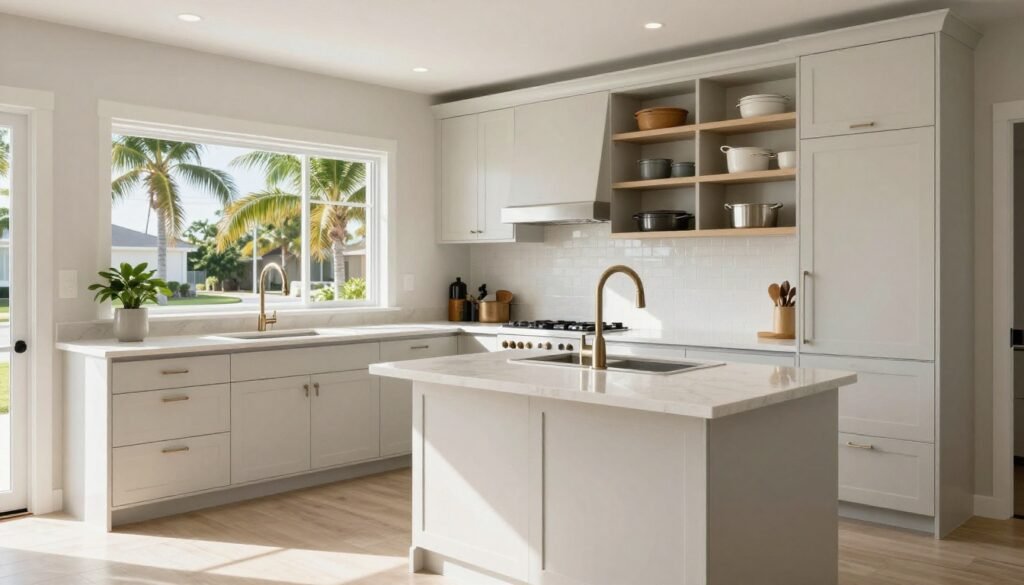
Buying kitchen cabinets Fort Myers homeowners actually love living with is less about chasing a style and more about getting the details right. In Southwest Florida, heat, humidity, and salty air can turn a “great deal” into peeling finishes, sticky doors, and swollen boxes.
This guide breaks the process into practical choices you can verify, from cabinet construction to finishes to install standards. You’ll also find 2026 budget ranges (as estimates) and red flags to avoid before you sign anything.
Step one: plan for how your kitchen works (not how it looks)
Before you compare door styles, lock down what your kitchen needs to do every day. Think of cabinets like shoes. The prettiest pair still fails if it doesn’t fit.
Start with a quick “use map.” Note where you prep, cook, clean, serve, and stash snacks. Then measure what you own, not what you wish you owned (stand mixers, air fryers, large pots, recycling bins).
A short decision checklist helps keep cabinet quotes apples-to-apples:
- Storage pain points: Where do you fight clutter now, corners, pantry, trash, or dishes?
- Must-have upgrades: Deep drawer bases, pull-out trash, tray dividers, spice pull-outs, or a beverage zone.
- Layout constraints: Windows, soffits, door swings, and island clearances (walkways matter in busy homes).
- Future-proofing: Aging-in-place features like wider pull-outs and fewer “reach-and-bend” shelves.
Also, decide what you’re keeping. If appliances stay, confirm exact widths and door clearances. If flooring changes, plan cabinet height so the dishwasher still slides out cleanly.
To see how different layouts and storage ideas look in real Southwest Florida homes, browse a local cabinet portfolio before you finalize your wish list.
Choose materials that handle Fort Myers humidity and coastal air
Florida kitchens punish weak materials. Moisture finds edges, seams, and screw holes, then it slowly wins.
For cabinet boxes, prioritize plywood construction over particleboard. Particleboard can swell fast after even small leaks. Plywood costs more, but it tends to stay square, which helps doors and drawers keep working year after year.
Door and drawer-front material matters too. Painted wood can look amazing, yet it needs strong prep and a durable topcoat. If your kitchen gets heavy use (or you run the AC less), consider more moisture-tolerant options for select areas, like thermofoil or rigid thermofoil for easy wipe-down zones. Ask your designer what they recommend for sink-base cabinets, which take the most abuse.
A few Fort Myers friendly specs to ask for:
- Thicker backs and solid fastening: Look for sturdy backs and secure mounting points, not flimsy panels.
- Quality edge-banding: Sealed edges reduce moisture entry on interior panels and shelves.
- Moisture-resistant finishes: Matte and satin finishes often hide fingerprints and wear better than high-gloss in real life.
- Rust-resistant hardware: Soft-close hinges and slides should resist corrosion. Coastal air is hard on cheap metal.
If moisture can reach raw wood or exposed seams, it will. Pay for sealed edges and solid boxes first, then worry about decorative upgrades.
Ventilation is part of cabinet performance. Use a vented range hood when possible, run it during cooking, and keep indoor humidity in check. Even great cabinets struggle in a damp room.
2026 cabinet design trends that still feel “you” in five years
Trends matter, but your home matters more. In 2026, homeowners are moving toward warmer looks, calmer lines, and smarter storage, with fewer fussy details. The NKBA 2026 Kitchen Trends Report points to clean styles, natural tones, and function-led spaces, which lines up well with Florida living.
For Fort Myers homes, these choices tend to age well:
Warm woods are back, and they’re easier to live with than bright white. Florida light can make stark whites feel harsh, while wood tones add depth. A recent Florida-focused design note also points to the shift away from all-white, since homeowners want warmer finishes (see Florida Realtors on wood tones in 2026 kitchens).
Two-tone layouts also keep kitchens from feeling flat. Try a light perimeter with a darker island, or wood lowers with soft-painted uppers.
When you choose a door style, match it to your maintenance tolerance:
- Shaker stays popular because it fits most homes.
- Slab doors feel modern and are easy to wipe clean.
- Inset looks high-end but needs precise installation and stable materials in humid climates.
Good cabinet design also means planning lighting early. Under-cabinet lighting reduces shadows on counters, and it makes even simple cabinets look more finished at night.
2026 cost ranges for Fort Myers kitchen cabinets, plus an install checklist
Prices vary by kitchen size, material, door style, storage accessories, and how much custom work you need. As a starting point, here are realistic 2026 estimates for installed cabinetry in the Fort Myers area.
Here’s a quick comparison to help you budget.
| Cabinet level | Typical installed range (2026 estimate) | Best fit |
|---|---|---|
| Stock | $6,000 to $14,000 | Tight budgets, simple layouts |
| Semi-custom | $12,000 to $28,000 | Most remodels, better sizing and storage |
| Custom | $25,000 to $60,000+ | Unique layouts, premium finishes, full personalization |
In linear-foot terms, many homeowners see rough ranges like $100 to $250 for stock, $200 to $400 for semi-custom, and $400 to $800+ for custom, depending on features and finish quality. Humidity-resistant upgrades can raise costs, yet they often pay off in fewer repairs.
Installation is a big slice of the total. For general pricing context on labor and install factors, review HomeLight’s 2026 cabinet installation cost guide, then compare it to local quotes.
Quick coastal installation checklist
Don’t treat installation like an afterthought. Use these standards in your contract and final walkthrough:
- Acclimation: Cabinets sit in the home 48 to 72 hours before install.
- Level and square: Installers shim and level across the whole run, not cabinet-by-cabinet.
- Moisture protection: Sink-base and dishwasher areas get extra sealing where water can reach.
- Proper fasteners: Corrosion-resistant screws and correct anchoring into studs or blocking.
- Sealed cuts: Any field-cut edges get sealed, not left raw.
Red flags that cost more later
If you spot these, pause and ask questions before paying a deposit:
- Quotes that don’t list box material, finish type, and hardware grade.
- Particleboard boxes in high-risk zones (sink base, near exterior doors).
- Weak joinery, lots of staples, or thin backs that flex during handling.
- Installers who skip acclimation or won’t discuss humidity control.
- No clear warranty terms, no written scope, or vague “allowances” everywhere.
For a smoother process, it helps to work with a team that designs, measures, and installs with local conditions in mind. You can also read customer testimonials to see what homeowners mention after the job is done, then schedule planning and pricing through the TEC Cabinetry Plus contact page.
Conclusion
Great cabinets don’t just look good on day one, they stay solid through Fort Myers summers, weekend cooking, and the occasional sink leak. Focus on durable box construction, sealed finishes, and an install plan that respects humidity. Once those basics are set, the fun part (style) becomes much easier. If you’re ready to move forward, start with a measured plan and choose quality you can verify, not promises you can’t.